KORENA
DrewnoFinished piecesMateriałySkładyMagazyn

Otrzymuj powiadomienia

Każda deska jest niepowtarzalna. Gdy się sprzeda, znika. Piszemy, gdy pojawiają się nowe sztuki: świeże dostawy, nowe gatunki i deski dopasowane do projektu.

Kilka wiadomości miesięcznie. Bez spamu, możesz zrezygnować w każdej chwili.

KORENA, wysokiej jakości drewno liściaste

Jedna sztuka naraz.

Zweryfikowane drewno liściaste wysokiej jakości, sprzedawane sztuka po sztuce. Każda deska jest fotografowana, mierzona i wysyłana ze składu partnerskiego z paszportem drewna.

Sklep

  • Przeglądaj produkty
  • Archiwum sprzedanych
  • Śledź zamówienie

Wiedza

  • Magazyn
  • Przewodniki po gatunkach
  • Słownik
  • Porównaj
  • Autorzy

Pomoc

  • O nas
  • Jak to działa
  • Zostań składem partnerskim
  • Znajdź deskę
  • Pomoc
  • Wzory dokumentów
  • Dla mediów

Zakupy

  • Warunki sprzedaży
  • Prawo odstąpienia
  • Zwroty i gwarancja
  • Wysyłka i dostawa

Zaufanie

  • Polityka prywatności
  • Polityka plików cookie
  • Pochodzenie drewna i EUDR
  • Dostępność

Informacje prawne

  • Nota prawna / informacje o firmie
  • Dopuszczalne użytkowanie
  • Własność intelektualna i treści

© 2026 KORENA. Wszelkie prawa zastrzeżone.

Operatorem jest Martial Labs Ltd. (BG, EIK 207453941). KORENA jest nazwą handlową Martial Labs Ltd.

Szanujemy Twoją prywatność

Używamy niezbędnych plików cookie, aby witryna działała. Za Twoją zgodą użyjemy również plików cookie do analityki, spersonalizowanych treści i reklam. W każdej chwili możesz zmienić decyzję na stronie ustawień zgody. Zobacz naszą politykę plików cookie i politykę prywatności.

  1. Strona główna
  2. /
  3. Gatunki
  4. /
  5. London Plane

Platanus × acerifolia

London Plane

Quartersawn London Plane reveals lacewood: large medullary rays catch the light in dense, scaly flecks. The slab's signature, and its whole reason for being on this list.

  • Uprawiane i pozyskiwane w Europie.
  • Grupa botaniczna. Drewno iglaste pochodzi z drzew iglastych, a liściaste z drzew liściastych.
  • Rodzina botaniczna, do której należy gatunek.
Powiadom mnie, gdy się pojawiGatunek referencyjny. Obecnie brak dostępnych sztuk.
  • Dopasowanie do projektu
  • Dostępne
  • Wygląd
  • Obróbka
  • Praca drewna
  • Cena
  • Bezpieczeństwo i pozyskiwanie
  • Pytania
  • Dane techniczne

Czy pasuje do Twojego projektu?

Świetne do

  • Quartersawn tabletops where the lacewood figure is the feature
  • Cabinet door panels and drawer fronts
  • Wall panelling and feature joinery
  • Turned bowls and hollow forms
  • Serving boards and kitchen pieces (interior, finished)
  • Veneer-look solid furniture

Brak drewna London Plane w bieżącej dostawie

Dostępne podobne gatunki

Obecnie nie ma drewna London Plane. Te gatunki nadają się do podobnych projektów i są dostępne.
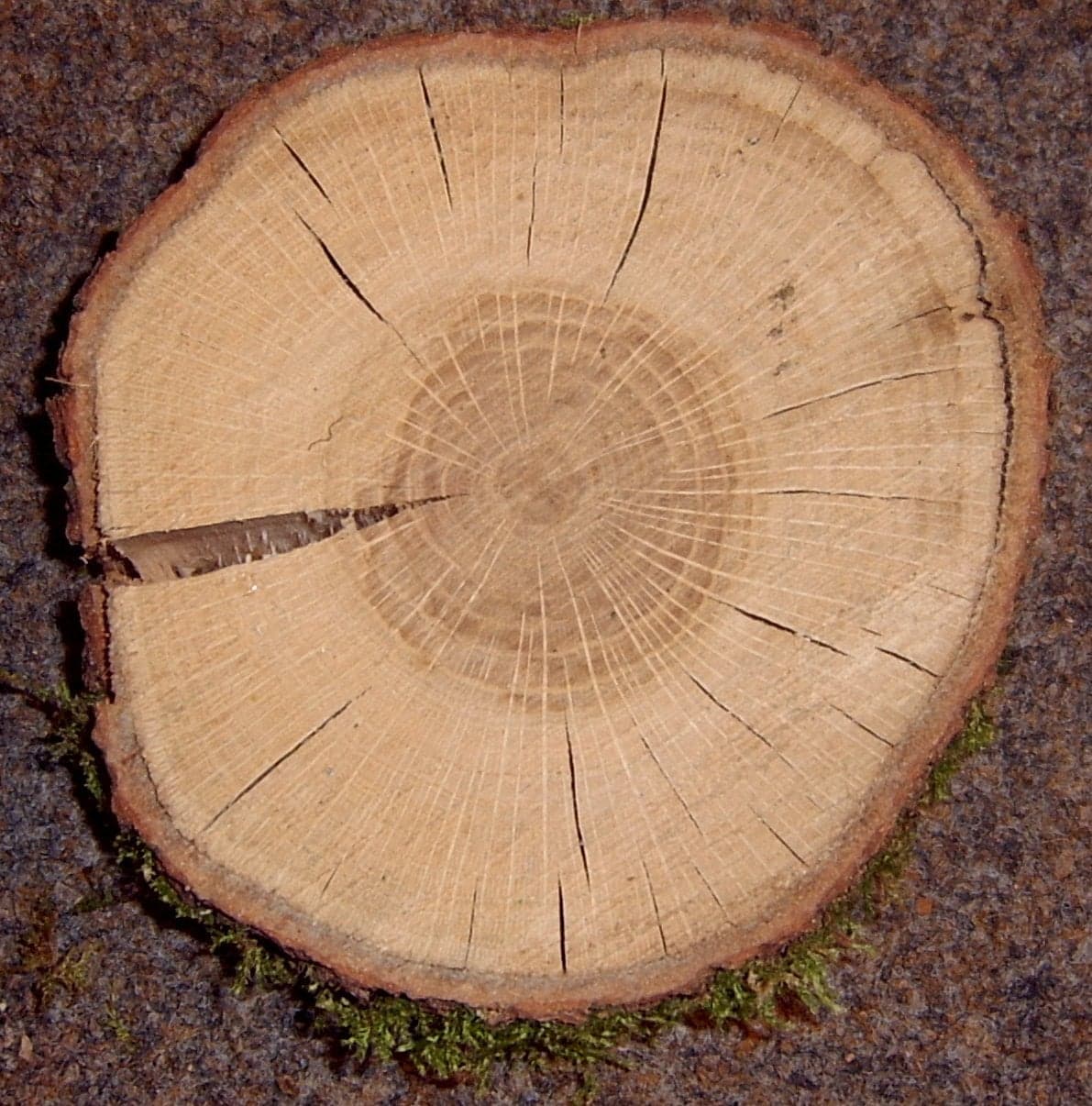
  • Usłojenie Saman

    Saman

    Samanea saman

    4 sztuki

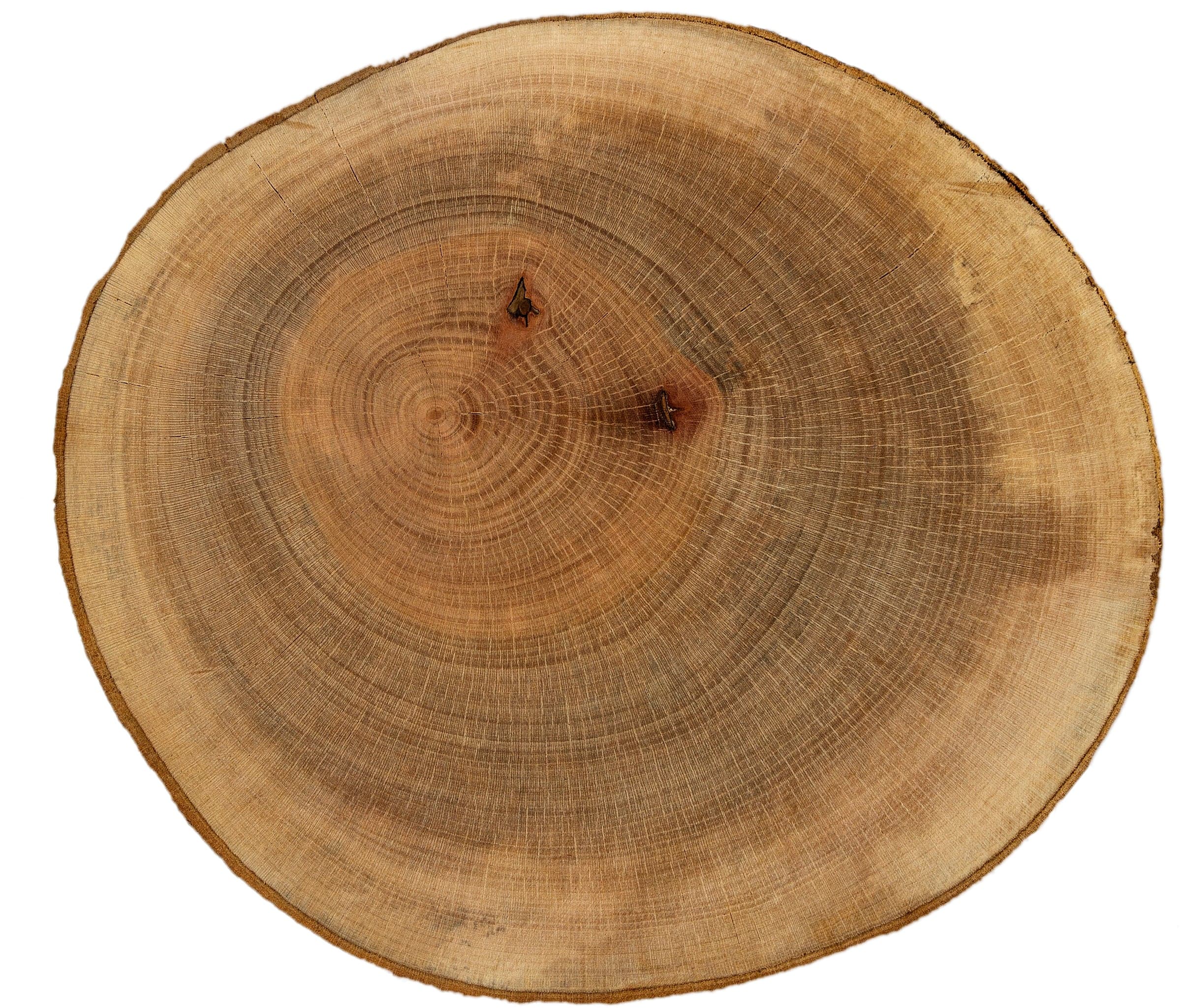
  • Usłojenie European Oak

    European Oak

    Quercus robur

    6 sztuk

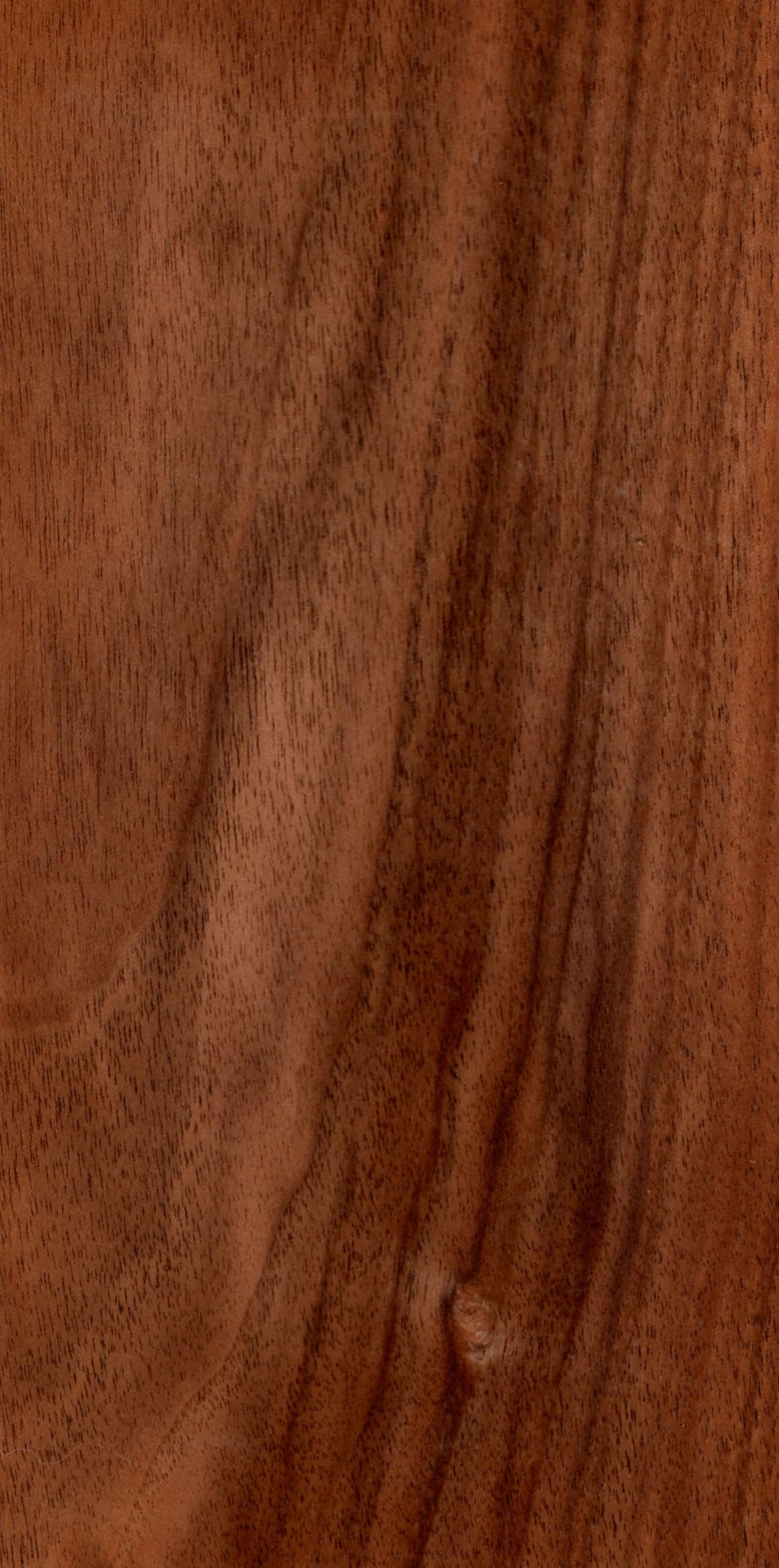
  • Usłojenie European Walnut

    European Walnut

    Juglans regia

    9 sztuk

Otrzymuj powiadomienia o drewnie London Plane

Wyślemy Ci wiadomość, gdy w KORENA pojawią się nowe deski London Plane. Każda sztuka jest niepowtarzalna, więc warto wiedzieć wcześniej.

Kilka wiadomości miesięcznie. Bez spamu, możesz zrezygnować w każdej chwili.

Wygląd drewna

Jak wygląda

Straight grain, fine-to-medium texture, pinkish-brown heartwood that warms with age. Flatsawn faces are quiet and clean. Quartersawn is where it earns its name in the trade, lacewood, with broad ray flecks that read almost like snakeskin under finish. Two faces of the same board can look like two different woods.

  • Heartwood pinkish-brown to light reddish-tan
  • Sapwood pale cream, often left in for contrast
  • Quartersawn rays appear as darker flecks against the background
  • Warms and deepens under oil; ambers slightly with age
  • Flatsawn and quartersawn faces of one board can look like different species
  • Straight; lacewood figure on quartersawn faces.

Obróbka

Obróbka

Saws, sands, turns, and carves well. Planing is the one to watch: the medullary rays that make quartersawn faces beautiful also tear out under dull blades. Sharp tools, light cuts, and a finish scraper or 220-grit pass to clean up. Glues and screws without drama.

Wykończenie

Takes oil and hardwax oil cleanly. The lacewood figure deepens dramatically under any clear finish. Test on an offcut before committing, because the contrast jumps. Stains can muddy the rays; we'd avoid them. Sand to 180–220 and stop.

Suszenie

Tangential shrinkage is high (around 10%) and roughly twice the radial figure, so cup and distortion are real risks. Dries best slowly, well-stickered, with weight on top. Once stable it holds shape indoors, but it's not a wood to rush through a kiln.

Jak bardzo będzie pracować?

Drewno pęcznieje i kurczy się w poprzek szerokości, gdy powietrze staje się wilgotniejsze lub suchsze. Przed zaprojektowaniem mocowań oszacuj sezonową pracę blatu z drewna London Plane.

Sposób przetarcia
Miejsce użytkowania

Przewidywana sezonowa praca

około 11,7 mm

Przymocuj blat łącznikami lub wspornikami w podłużnych otworach, bez kleju i mocno dokręconych wkrętów.

Liniowy model skurczu: szerokość × (skurcz ÷ 28 % punktu nasycenia włókien) × sezonowa zmiana wilgotności. Dla gatunku London Plane używa skurczu stycznego wynoszącego 10,25 %. To wartość do planowania, a nie gwarancja.

Ile kosztuje

Bezpieczeństwo i pozyskiwanie

  • Uprawiane i pozyskiwane w Europie.
  • Status na Czerwonej liście IUCN: globalna ocena zagrożenia tego gatunku.
  • Not commonly flagged as a dust irritant or sensitiser. Standard shop dust extraction is enough. Food-contact safe once finished, fine for boards and serving pieces.

Przeczytaj pełny przewodnikSzczegółowe informacje o rysunku drewna, zmianie barwy, obróbce i stabilności.+

What London Plane actually is#

Platanus x acerifolia is bought for one thing: lacewood.

The species has exceptionally large rays, the ribbons of cells that run radially through a trunk. In most timbers the rays are small enough to be barely visible, and in oak they show as the familiar silvery fleck on quartersawn faces. In London Plane they are so large that a quartersawn face is covered in a dense, regular flecked pattern across the entire surface.

That figure is called lacewood, and it exists only on the quarter. A flatsawn London Plane board is comparatively plain, a light reddish brown with modest figure. The same log cut differently is one of the most distinctive decorative surfaces in European timber.

If you are buying this species, you are buying quartersawn stock, and if you are offered flatsawn plane at a lacewood price, the cut is the thing to check.

The naming confusion#

Three species get called sycamore in different places and they are not related.

London Plane is Platanus x acerifolia, a hybrid plane. American sycamore is Platanus occidentalis, its close relative and also a source of lacewood. European Sycamore is Acer pseudoplatanus, a maple, and has nothing to do with either.

They look different, work differently and cost differently. Buy on the botanical name.

Pytania kupujących

Pytania kupujących

What is lacewood?

+

Lacewood is quartersawn London Plane. The species has exceptionally large rays, and cutting on the quarter exposes them as a dense flecked pattern across the whole surface that looks like lace. It is one of the most distinctive figures available from any European species, and it exists only on the quartersawn face. Flatsawn plane is comparatively plain.

Is London Plane the same as sycamore?

+

No, and the naming is a mess. London Plane is Platanus x acerifolia, a plane tree. American sycamore is Platanus occidentalis, its close relative. European Sycamore is Acer pseudoplatanus, a maple, and unrelated to both. All three are sometimes called sycamore somewhere. Check the botanical name.

How stable is it?

+

Not very. Volumetric shrinkage of 15.0 percent is high and tangential shrinkage of 9.5 percent against radial at 5.5 percent is a wide differential, so flatsawn boards cup. Since the reason to buy this species is the quartersawn lacewood figure, and quartersawn stock is much more stable, the figure and the stability come together.

Can it be used outdoors?

+

No. It is rated decay class 5, perishable, with poor insect resistance. London Plane is an interior decorative timber only.

Właściwości mechaniczne

Dane techniczne

Opublikowane wartości referencyjne. Gdy źródła się różnią, podajemy zakres, a w powyższych skalach stosujemy wartość typową.

Gęstość (kg/m³)Masa metra sześciennego przy wilgotności około 12 %. Cięższe drewno jest zwykle twardsze i mocniejsze.500–620 kg/m³typowo 560 kg/m³
Twardość Janki (N)Siła potrzebna do wciśnięcia stalowej kulki do połowy w drewno. Standardowa miara odporności na wgniecenia.3,800–4,600 Ntypowo 4180 N
MOR: wytrzymałość na zginanie (MPa)Wytrzymałość na zginanie: obciążenie, przy którym belka pęka.70–80 MPa
MOE: moduł sprężystości (GPa)Sztywność przy zginaniu: stopień ugięcia półki lub blatu pod obciążeniem.8.0–10.0 GPa
Skurcz promieniowySkurcz w poprzek słojów, od drewna mokrego do całkowicie suchego. W tym kierunku pracują deski przetarte promieniowo.5.5–6.5 %
Skurcz styczny
Usłojenie London Plane

Roger Culos, via Wikimedia Commons

Mocne strony

  • Bezpieczne dla żywnościNadaje się na deski, misy i powierzchnie mające kontakt z żywnością.
  • Dobrze się gnieOcena gięcia parowego: 4 z 5. Pozwala uzyskać ciasne krzywizny.

Uwaga

Platanus × acerifolia is the hybrid planted along avenues and squares across Europe, Paris, Milan, Sofia, every London street. KORENA sources it from urban forestry: trees removed for safety, age, or development, then milled rather than chipped. The provenance is local, traceable, and tells a story buyers respond to.

  • Decay class 5 (perishable), interior use only; it won't last outdoors. The hybrid is not IUCN-evaluated and carries no CITES listing. Sourcing is the strong story here: urban trees that would otherwise be chipped, given a second life as furniture. EUDR due diligence is in preparation and becomes mandatory for large operators from 30 December 2026, and the passport behind each slab QR is built to carry its provenance.

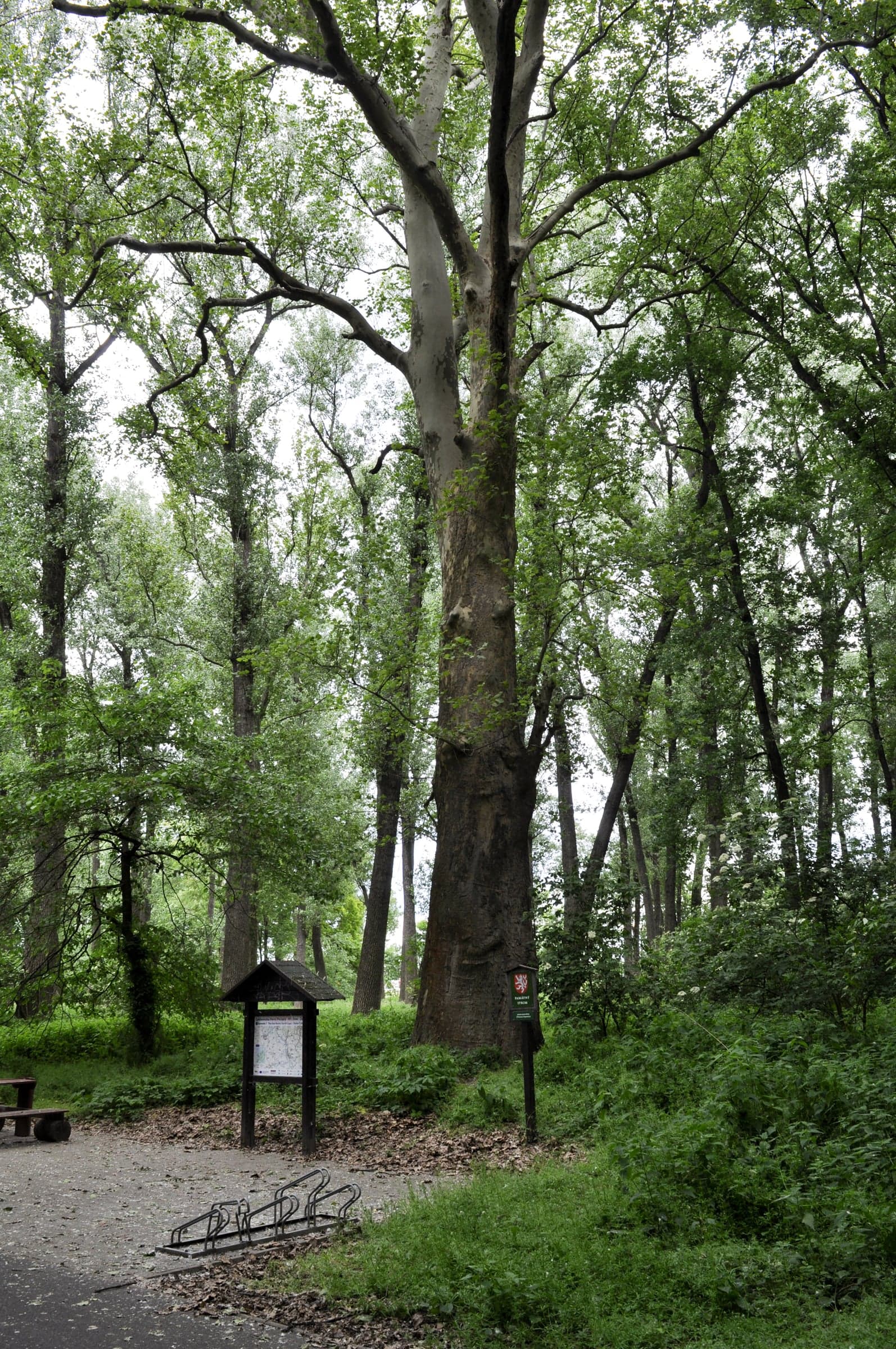
  • Drzewo London Plane

    Jirka Dl, via Wikimedia Commons

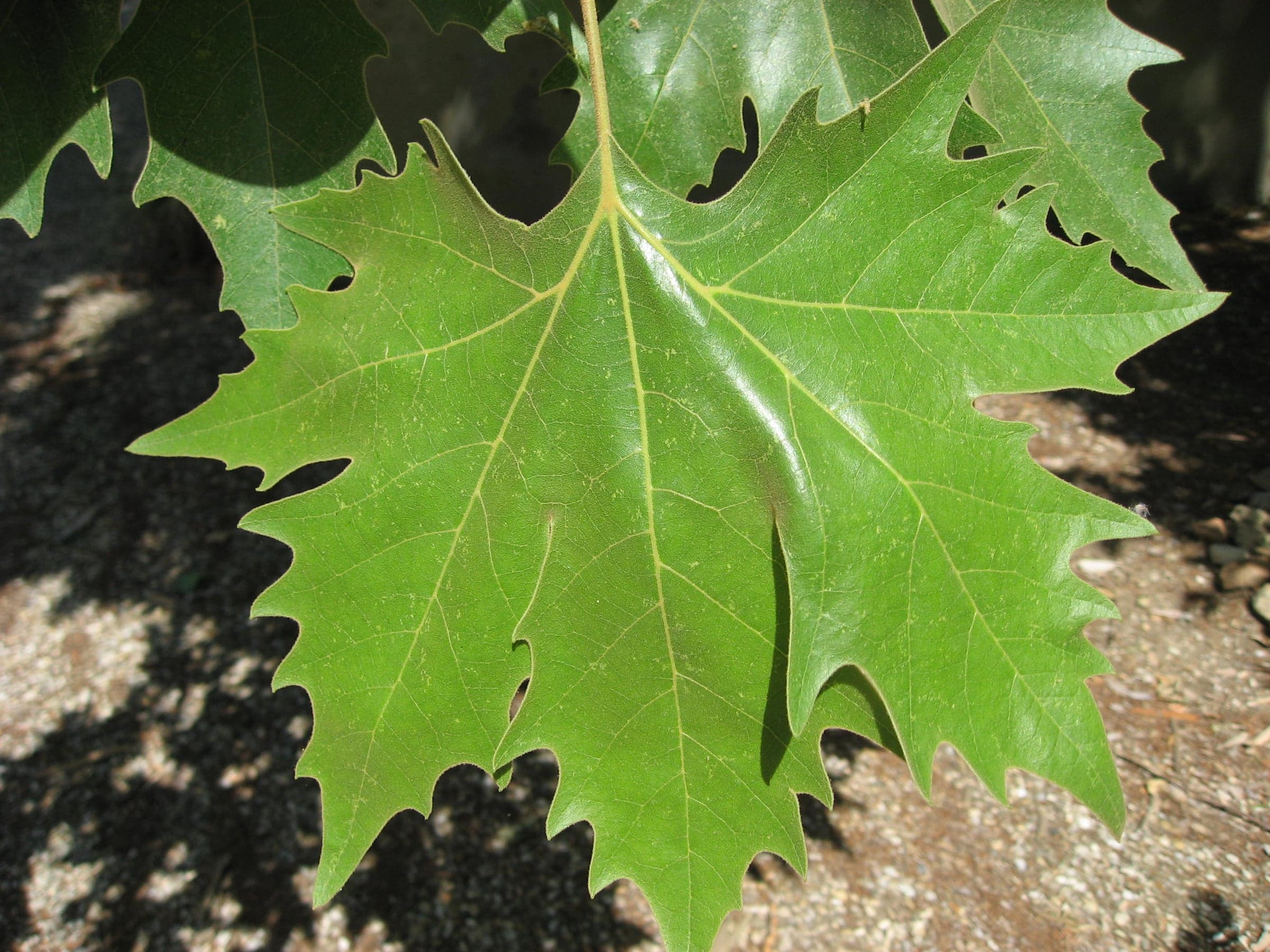
    London Plane: Liść
    Liść
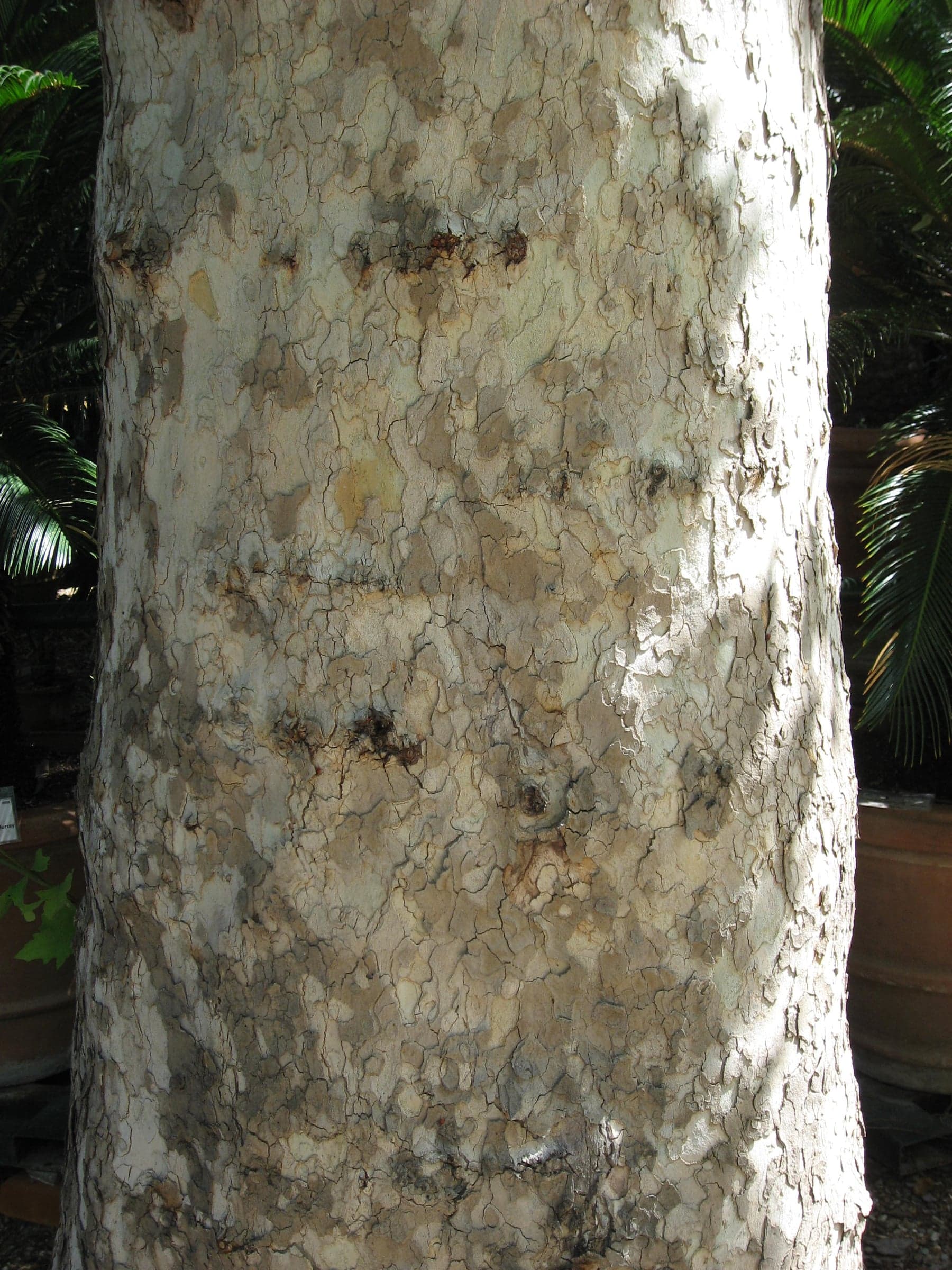
    London Plane: Kora
    Kora

    Urban timber#

    London Plane is the classic European street tree, planted through the nineteenth and twentieth centuries for its tolerance of air pollution and its willingness to be pruned hard.

    Almost all timber reaching the market comes from municipal felling rather than forestry, which shapes what is available. Sizes can be generous, because street trees grow large. But the wood frequently carries inclusions, bark pockets and irregular grain from decades of pruning wounds, and metal is a genuine risk in urban timber.

    That last point matters practically: a nail or a cable fragment embedded in an urban log will destroy a bandsaw blade. Reputable yards scan for metal, and it is worth asking.

    The stability problem, which resolves itself#

    Volumetric shrinkage of 15.0 percent is high, and the tangential to radial differential of 9.5 against 5.5 percent is wide. Flatsawn London Plane cups noticeably.

    This turns out to matter less than it might, because the reason to buy the species is the quartersawn figure, and quartersawn stock is substantially more stable across its width. The figure and the stability arrive together.

    It also dries with a tendency to distort and is susceptible to fungal staining if not dried promptly, so stock that sat before conversion may carry grey discolouration.

    At the bench#

    At 4,180 N it is moderately soft and easy on tooling.

    The large rays are the machining consideration. On a quartersawn face they can lift or flake under a heavy cut, taking chunks out of the very figure you are working to expose. Light cuts, sharp tooling and a scraper for the final surface.

    It glues and finishes well and turns reasonably. It sands to a good surface, though care is needed not to round over the ray flecks.

    Finishing#

    Lacewood looks best under a clear finish that lets the ray contrast do the work. An oil finish deepens the reddish brown background and increases the contrast with the pale flecks.

    Stain tends to muddy the figure, since the rays and the background absorb differently and the effect is to reduce rather than enhance the pattern.

    Where London Plane is the right answer#

    Decorative panels, veneer, cabinet fronts, box work, turned pieces and any application where quartersawn lacewood figure is the design. It is a feature timber rather than a structural one.

    It is the wrong answer outdoors at decay class 5, for anything structural, and for a wide flatsawn surface that must stay flat.

    Sourcing and EUDR#

    Not CITES listed and reported as Not Evaluated by the IUCN. Because supply comes largely from urban municipal felling rather than forestry, chains are short and local but non-standardised. KORENA records the yard and region on every listing.

    Where does the timber come from?

    +

    Largely from urban felling. London Plane is the classic city street tree across Europe, planted for its tolerance of pollution and hard pruning, and most timber reaching the market comes from municipal removals rather than forestry. Sizes can be large but the wood often contains inclusions and irregularities from pruning wounds.

    Skurcz wzdłuż słojów. W tym kierunku pracują deski przetarte stycznie i większość desek KORENA.
    9.5–11.0 %
    Skurcz objętościowyCałkowita zmiana objętości od drewna mokrego do całkowicie suchego. Niższa wartość oznacza większą stabilność.15.0–17.0 %
    Naturalna trwałość (EN 350)Europejska norma naturalnej odporności na rozkład, od 1 (bardzo trwałe) do 5 (nietrwałe).Class 5 — Perishable

    Źródła

    • The Wood Database(dostęp: 2026-05-09)
    • USDA FPL Wood Handbook FPL-GTR-190 (2010)(dostęp: 2026-05-09)
    • Meier, E. — WOOD! Identifying and Using Hundreds of Woods Worldwide (2015)(dostęp: 2026-05-09)

    W skrócie

    Poziomy mają stałe przedziały dla wszystkich gatunków prezentowanych przez KORENA, dzięki czemu można je bezpośrednio porównywać. Pod każdym widnieje zmierzona wartość.
    TwardośćOdporność na wgniecenia i zużycieŚrednio twarde

    Twardość Janki: 4180 N

    O 16 % miększe od dębu europejskiego

    MasaJak ciężka jest deska przy podnoszeniuŚrednie

    560 kg/m³

    StabilnośćJak niewiele pracuje wraz ze zmianą pór rokuMocno pracuje

    16,0 % skurczu objętościowego

    ObróbkaPiłowanie, struganie, szlifowanie i klejenieUmiarkowane

    3,9 / 5, średnia ocena obróbki

    Zastosowanie na zewnątrzNaturalna odporność na rozkład, EN 350Tylko do wnętrz

    Klasa 5 według EN 350

    • Piłowanie · Bardzo dobraJak czyste daje cięcie i jak szybko tępi brzeszczoty.1 = trudna · 5 = doskonała
    • Struganie · DobraJak gładką pozostawia powierzchnię i jak często wyrywa włókna.1 = trudna · 5 = doskonała
    • Szlifowanie · Bardzo dobraJak szybko można je wyszlifować na gładko bez zapychania papieru.1 = trudna · 5 = doskonała
    • Toczenie · Bardzo dobraJak zachowuje się podczas toczenia i wykańczania na tokarce.1 = trudna · 5 = doskonała
    • Rzeźbienie · Bardzo dobraJak wyraźnie zachowuje detale wykonywane dłutem.1 = trudna · 5 = doskonała
    • Klejenie · Bardzo dobraJak niezawodnie trzymają połączenia klejone.1 = trudna · 5 = doskonała
    • Trzymanie wkrętów / gwoździ · Bardzo dobraJak dobrze trzyma wkręty i gwoździe bez pękania.1 = trudna · 5 = doskonała
    • Gięcie parowe · Bardzo dobraJak dobrze przyjmuje krzywizny po parowaniu.1 = trudna · 5 = doskonała

    Nie ma jeszcze rynkowej ceny referencyjnej dla drewna London Plane. Każda sztuka KORENA jest wyceniana osobno przez skład partnerski.

    Nie nadaje się na zewnątrz bez zabezpieczenia
    Naturalna trwałość to klasa 5 z 5 według EN 350. Stosuj we wnętrzach albo pod regularnie odnawianą powłoką.
  • Pracuje bardziej niż większość gatunkówSzerokie blaty wymagają łączników lub mocowań w podłużnych otworach oraz miejsca na ruch. Skorzystaj z kalkulatora poniżej.
  • Dotknij etykiety, aby zobaczyć szczegóły.