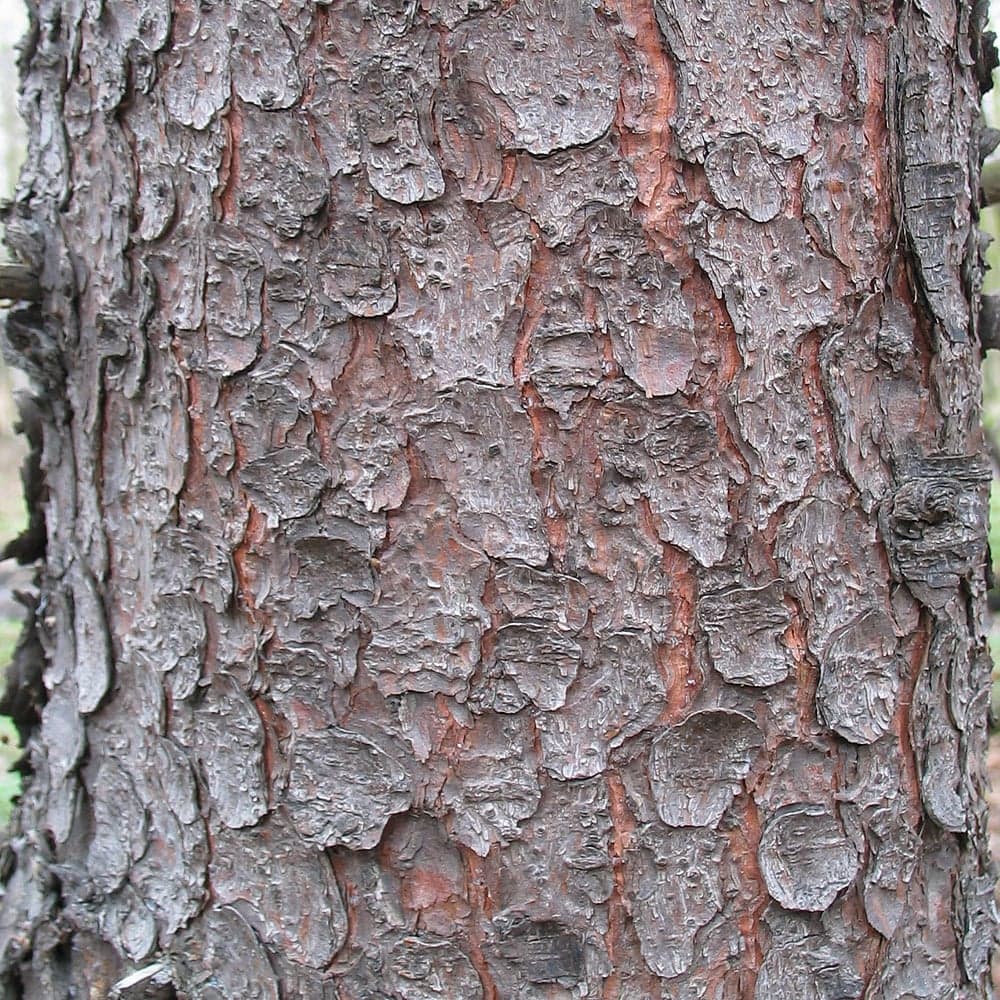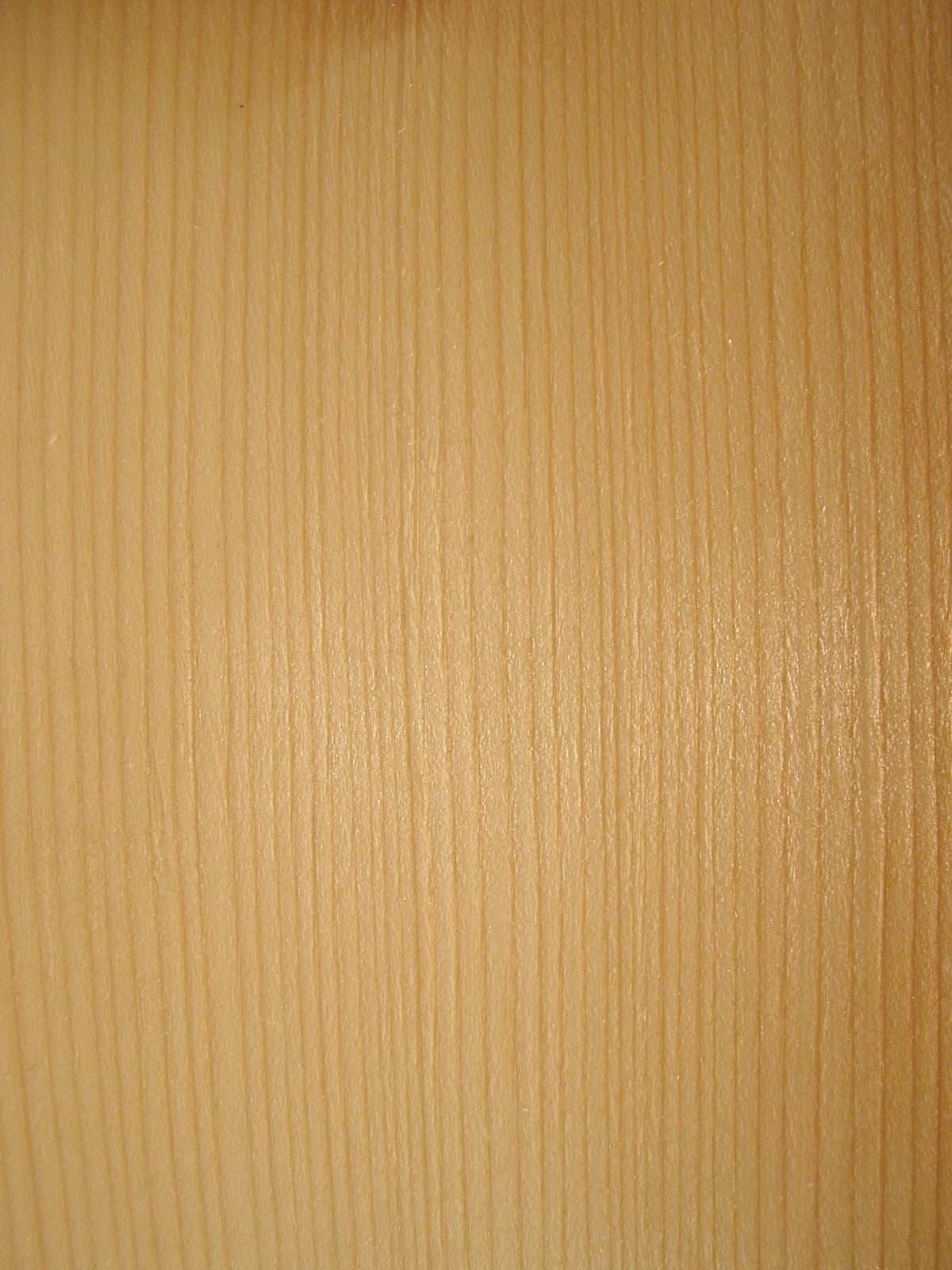
Picea abies
The most abundant conifer in Europe and the lightest slab material KORENA lists. Pale, even, easy at the bench, and soft enough that you should choose it deliberately.
Dotknij etykiety, aby zobaczyć szczegóły.
Obecnie nie ma drewna Norway Spruce. Te gatunki nadają się do podobnych projektów i są dostępne.
Wyślemy Ci wiadomość, gdy w KORENA pojawią się nowe deski Norway Spruce. Każda sztuka jest niepowtarzalna, więc warto wiedzieć wcześniej.
Wygląd drewna
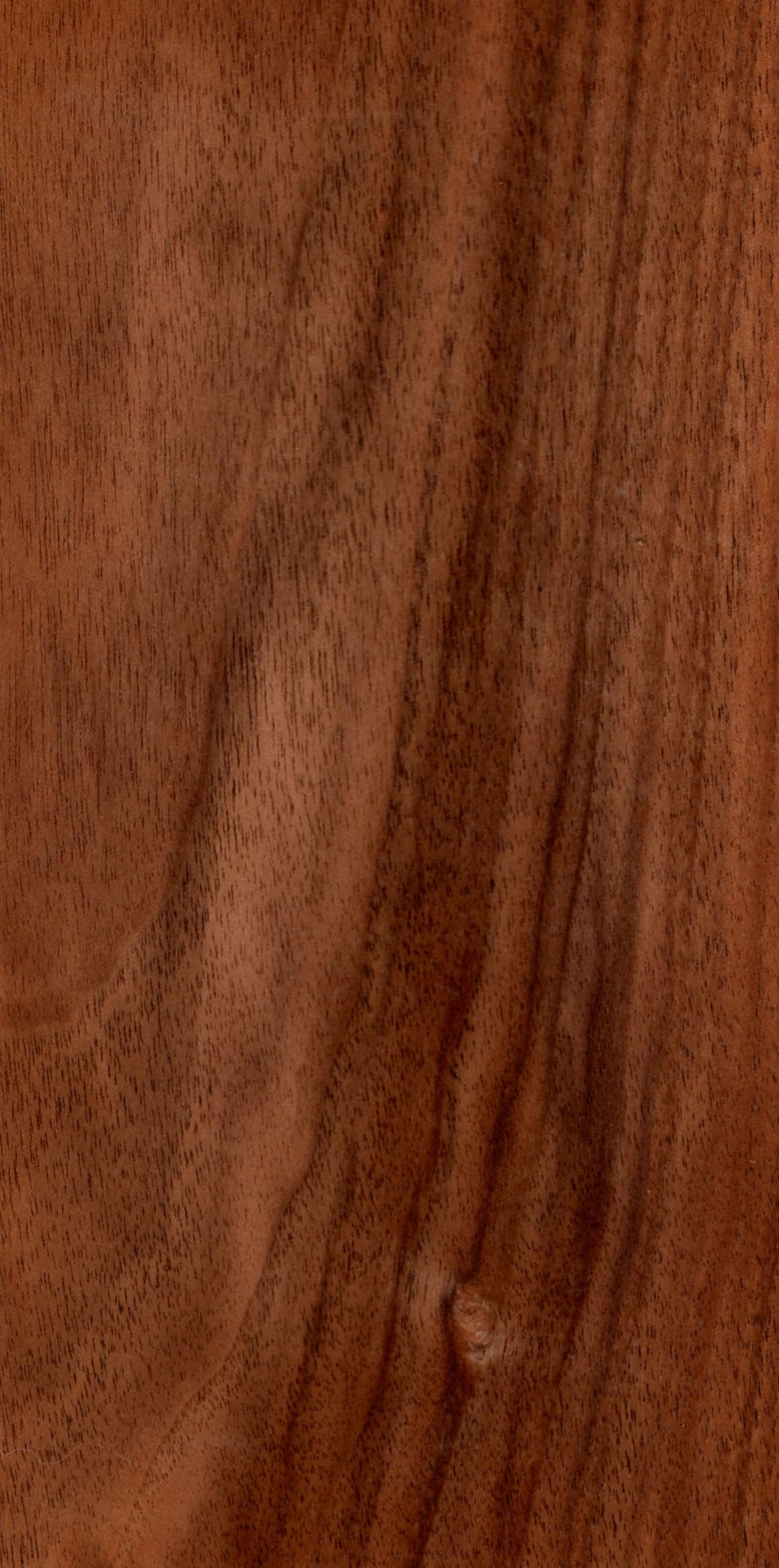
Pale cream to light yellow throughout, with almost no colour separation between heartwood and sapwood. The grain is straight and the texture fine and even. What makes a spruce slab worth looking at is rarely colour and almost always structure: tight annual rings, resin pockets that read as amber flecks, and the occasional cluster of small sound knots that a maker can either feature or cut around.
Obróbka
Easy in every operation as long as you stay away from knots. Spruce is soft enough that sharp tools matter more than powerful ones: dull cutters crush the earlywood rather than slicing it, leaving a fuzzy surface that no amount of sanding fully recovers. Knots are hard, resinous and prone to tearing out, so plan cuts around them rather than through them. It glues reliably and takes screws well if you pilot near edges.
The one genuine difficulty with spruce. Its uneven density between earlywood and latewood makes it absorb stain unevenly, so pigment stains blotch badly. Use a conditioner first, or skip stain entirely. Clear oils, hardwax oils and water-based lacquers all sit well and keep the pale colour. If you want warmth, a single coat of shellac before the topcoat evens absorption without muddying the grain.
Dries quickly and with relatively little degrade, which is one reason it dominates European construction timber. Slab stock still needs patience: at 50 mm and above, resin pockets can bleed if the kiln schedule runs hot, and case hardening shows up as cupping once you machine the first face. Air drying followed by a gentle kiln finish gives the cleanest result. Expect movement in service to be modest, since volumetric shrinkage is around 12.9 percent.
Drewno pęcznieje i kurczy się w poprzek szerokości, gdy powietrze staje się wilgotniejsze lub suchsze. Przed zaprojektowaniem mocowań oszacuj sezonową pracę blatu z drewna Norway Spruce.
Przewidywana sezonowa praca
około 9,4 mm
Przymocuj blat łącznikami lub wspornikami w podłużnych otworach, bez kleju i mocno dokręconych wkrętów.
Liniowy model skurczu: szerokość × (skurcz ÷ 28 % punktu nasycenia włókien) × sezonowa zmiana wilgotności. Dla gatunku Norway Spruce używa skurczu stycznego wynoszącego 8,2 %. To wartość do planowania, a nie gwarancja.
Bieżące ceny drewna Norway Spruce w całej Europie za metr sześcienny bez VAT. Dotknij dowolnej ceny, aby zobaczyć szczegóły.
Spruce dust has been reported to cause skin irritation and asthma-like respiratory effects, which puts it in the same bracket as most softwood dust. Extraction at the machine and a P2 mask during extended sanding are sensible. No specific toxicity beyond that is documented.
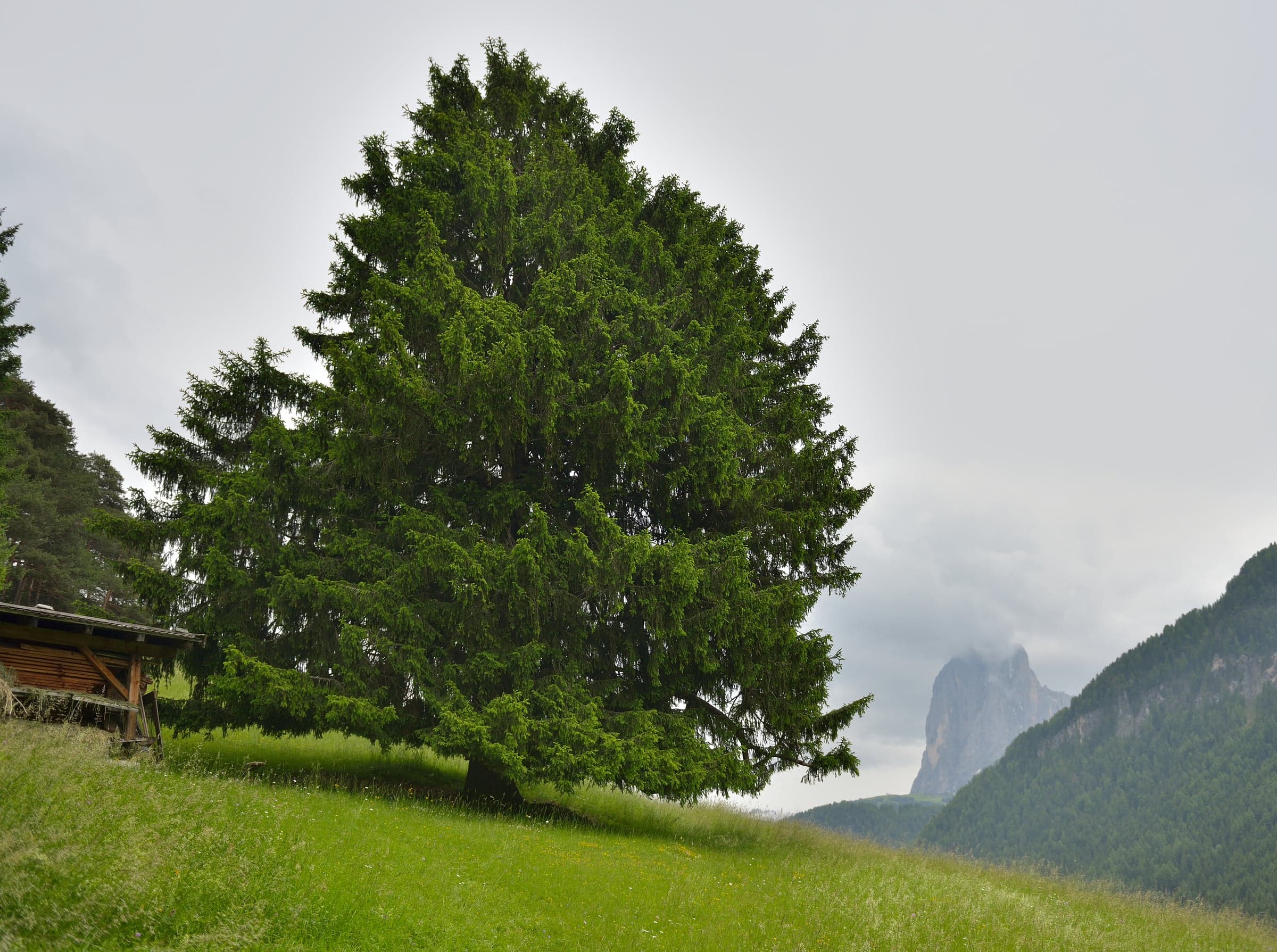
Picea abies covers the largest natural range of any European conifer, running from the Alps and Carpathians north through Scandinavia and east into Russia. Slab-grade stock reaching KORENA is nearly always from managed Alpine or Carpathian forests where FSC or PEFC certification is standard, which keeps EUDR documentation straightforward.
Not listed in the CITES Appendices and assessed by the IUCN as Least Concern. Supply across the EU is abundant and well certified, though bark beetle damage in central Europe has pushed large volumes of salvage timber into the market in recent years. Salvage stock is legitimate and often excellent value, but it should be declared as such because staining from blue fungus is common in it.
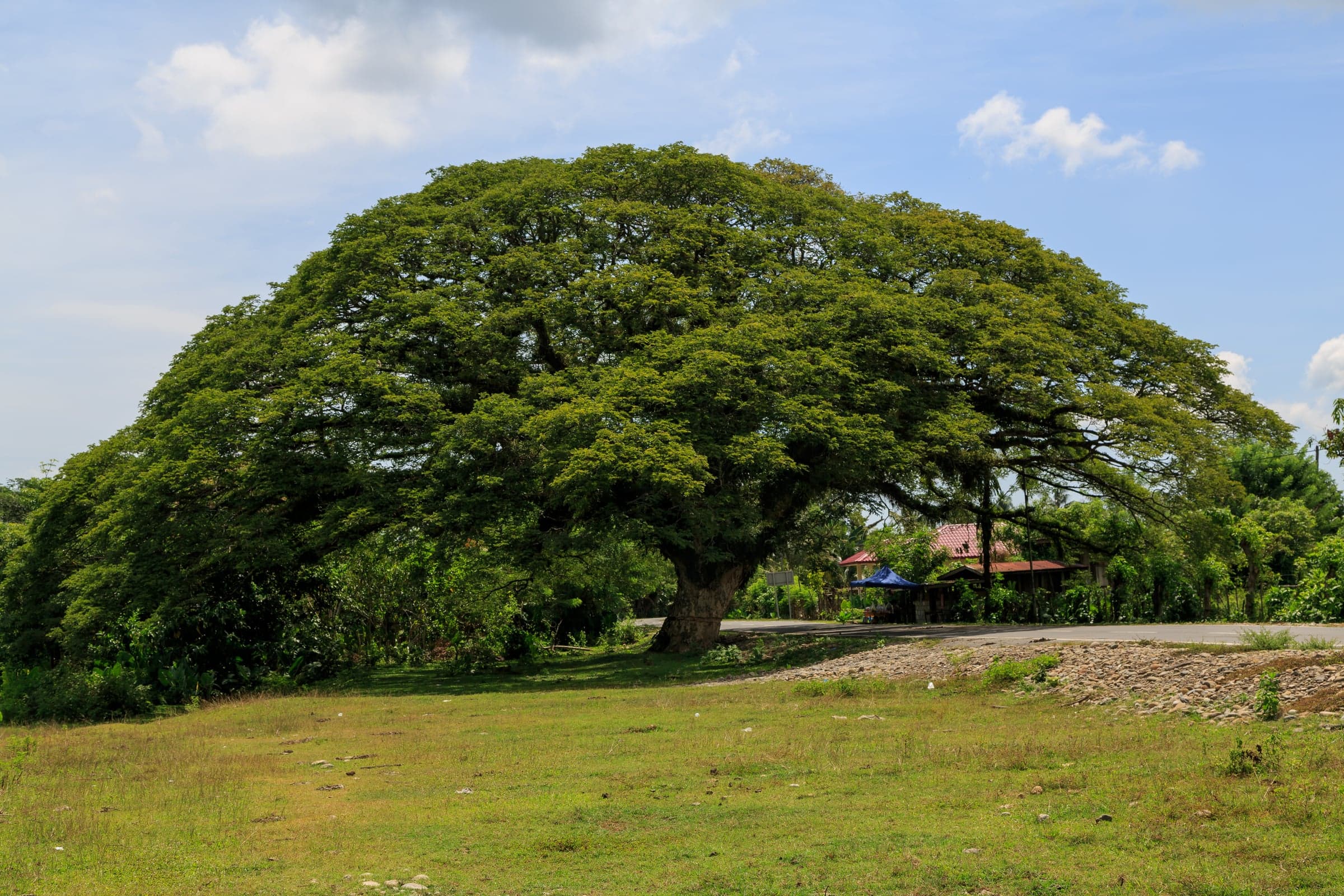
Picea abies is the default European conifer. It covers more forest area than any other species on the continent and supplies most of the structural timber used in EU construction. That ubiquity works against it when people shop for slabs, because a wood you can buy as a stud is easy to dismiss as a wood you cannot build furniture from. The dismissal is half right. Spruce is genuinely soft, and a spruce tabletop will carry the record of everything set down on it. What the reputation misses is that spruce is also stiff for its weight, dimensionally reasonable once dried, and capable of a pale, quiet surface that no hardwood can imitate.
Colour tells you very little. Spruce runs cream to pale yellow with effectively no heartwood boundary, so unlike walnut or oak you cannot judge a board by its tonal range. Structure is what matters.
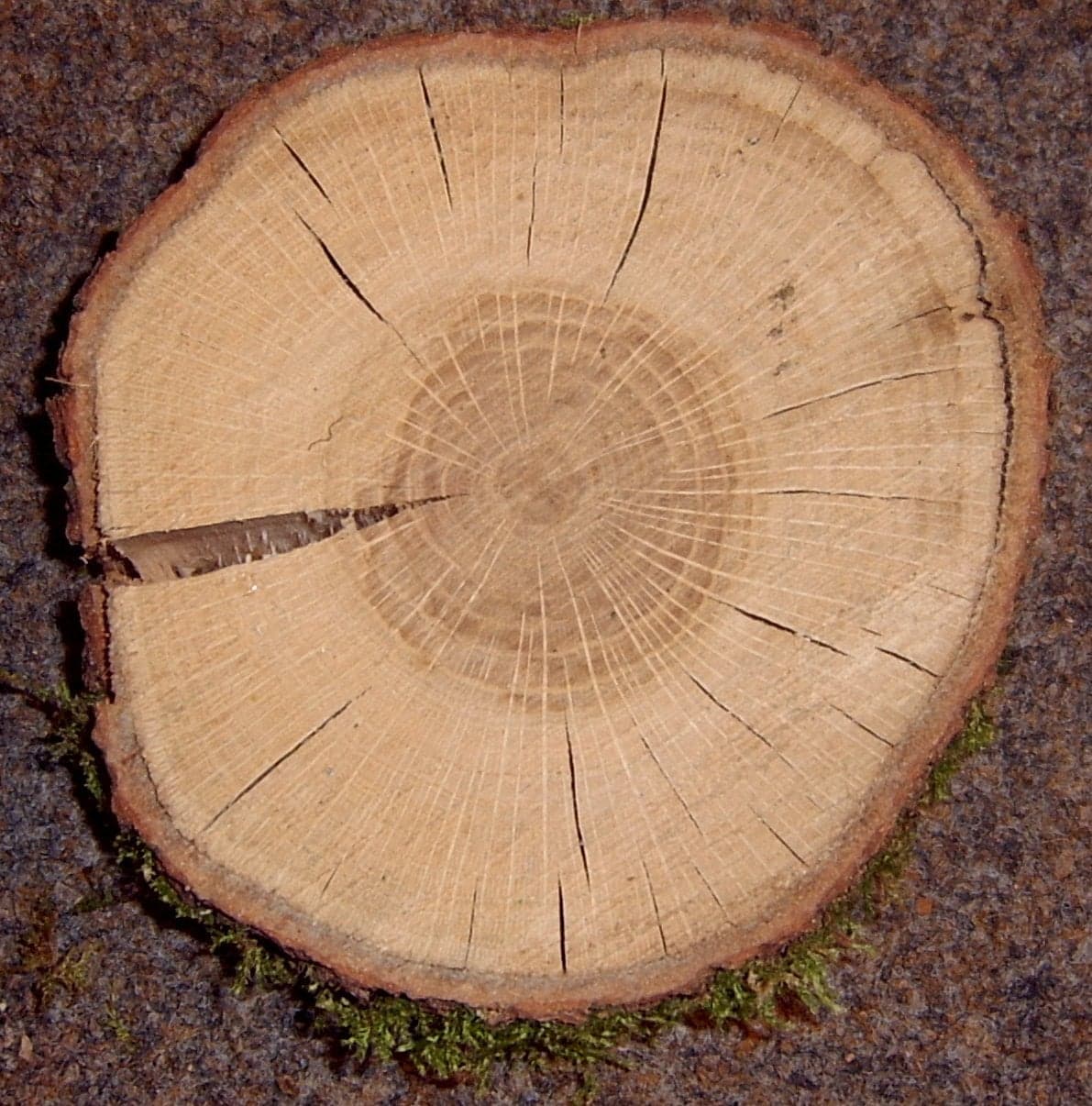
Look first at ring spacing. Slow-grown Alpine spruce with rings a millimetre or two apart is denser, stiffer and considerably more stable than fast-grown lowland stock with rings five millimetres apart. The difference in service is real: the tight-ringed board stays flatter and dents less.
Look next at the knots. Spruce knots are hard, resinous, and much darker than the surrounding wood. Small sound knots are a design feature and hold fine. Large knots, and especially knot clusters near an edge, are weak points that will move independently of the board around them.
Finally, look for resin pockets and blue stain. Pockets read as amber streaks and are harmless once sealed. Blue stain is a grey-blue discolouration caused by fungus, common in salvage timber from bark beetle damage, and it does not weaken the wood. It changes the look completely, which is either the point or a problem depending on the piece.
Spruce rewards sharp tools and punishes dull ones more than almost anything else KORENA lists. Because the earlywood is so much softer than the latewood, a blunt cutter compresses the soft bands instead of severing them. The surface that comes off looks acceptable until finish goes on, at which point the crushed fibres swell and the whole face turns fuzzy.
Plane with a freshly honed iron and a tight mouth, take light cuts, and finish with a card scraper rather than aggressive sanding. If you must sand, stop at 180 grit. Going finer burnishes the latewood and makes the blotching problem worse.
Glue-up is straightforward. Spruce takes PVA and polyurethane adhesives reliably, and its low density means clamping pressure should be moderate. Over-clamping starves the joint by crushing the fibres either side of it.
Screws hold acceptably but not brilliantly. Pilot everything within 50 mm of an end grain edge, and prefer a coarse thread. For anything load bearing, through-bolts with washers distribute the load far better than screws into the face.
Spruce dries fast and relatively cleanly, which is exactly why it dominates commodity timber. Slabs behave differently from boards. At 50 mm and thicker, an aggressive kiln schedule drives moisture out of the surface much faster than the core can follow, and the result is case hardening: the slab looks flat until you machine one face, then cups as the internal stress releases.
The safest route for slab stock is air drying under cover to roughly 20 percent, then a slow kiln finish to bring it to 8 to 10 percent for interior use. Ask the yard which schedule was used. On KORENA listings the drying method and measured moisture are recorded on the passport, so you are not guessing.
In service, expect meaningful seasonal movement. Tangential shrinkage is around 8.2 percent against 3.9 percent radial, so a wide flatsawn top will want to cup toward the bark face as humidity drops. Quartersawn stock moves roughly half as much across its width and is worth seeking out for anything that must stay flat.
Spruce earns its place when weight matters, when the budget will not carry oak, or when the design wants a pale surface that stays pale. A three metre bench top in oak is a two person lift; in spruce one person can move it. Wall panelling in spruce reflects light in a way that darker species cannot. And for anything that will be painted, spending on a hardwood is money burnt.
It is the wrong answer for a heavily used dining surface, for anything outdoors without treatment, and for a piece where a rich stained colour is the goal.
Supply is abundant and certification is the norm across Alpine and Carpathian sources, which makes the due diligence path short. One current wrinkle is worth knowing: bark beetle outbreaks across central Europe have pushed large volumes of salvage timber into the market. Salvage stock is entirely legitimate, often good value, and frequently carries blue stain. It should be declared rather than discovered, and any KORENA listing that is salvage says so.
Pytania kupujących
It sits at 1,680 N on the Janka scale, which is soft for a tabletop that will see daily use. It works if you accept dents as part of the character, or if the top is protected by a hardwax oil that is easy to refresh. For a surface that must stay unmarked, European oak at 4,980 N or ash are better matched.
Spruce has a large density difference between the pale earlywood and the darker latewood, so pigment lodges unevenly. Apply a wood conditioner or a thin shellac washcoat before staining, or leave it unstained and use a clear oil. Testing on an offcut from the same slab is the only reliable check, because blotching varies board to board.
Resin pockets, which are normal in spruce and not a defect in the structural sense. They can weep slightly if the slab is warmed by sunlight or underfloor heating. Sealing with shellac before the topcoat locks them down. On a measured KORENA slab any pocket large enough to matter is mapped in the defect outline.
Not without treatment. The heartwood is rated slightly resistant to non-resistant to decay, so untreated spruce outdoors will fail within a few seasons. European larch or Douglas fir are the better choices from this group when moisture exposure is part of the brief.
Volumetric shrinkage is around 12.9 percent with tangential movement roughly twice radial, so a wide flatsawn top will change noticeably between a humid summer and a heated winter. Allow the top to float on slotted fasteners rather than fixing it rigidly, and let the slab acclimatise in the room for two weeks before final flattening.
Właściwości mechaniczne
Opublikowane wartości referencyjne. Gdy źródła się różnią, podajemy zakres, a w powyższych skalach stosujemy wartość typową.
| Gęstość (kg/m³)Masa metra sześciennego przy wilgotności około 12 %. Cięższe drewno jest zwykle twardsze i mocniejsze. | 405 kg/m³ |
|---|---|
| Twardość Janki (N)Siła potrzebna do wciśnięcia stalowej kulki do połowy w drewno. Standardowa miara odporności na wgniecenia. | 1,680 N |
| MOR: wytrzymałość na zginanie (MPa)Wytrzymałość na zginanie: obciążenie, przy którym belka pęka. | 63 MPa |
| MOE: moduł sprężystości (GPa)Sztywność przy zginaniu: stopień ugięcia półki lub blatu pod obciążeniem. | 9.7 GPa |
| Skurcz promieniowySkurcz w poprzek słojów, od drewna mokrego do całkowicie suchego. W tym kierunku pracują deski przetarte promieniowo. | 3.9 % |
| Skurcz stycznySkurcz wzdłuż słojów. W tym kierunku pracują deski przetarte stycznie i większość desek KORENA. | 8.2 % |
| Skurcz objętościowyCałkowita zmiana objętości od drewna mokrego do całkowicie suchego. Niższa wartość oznacza większą stabilność. | 12.9 % |
| Naturalna trwałość (EN 350)Europejska norma naturalnej odporności na rozkład, od 1 (bardzo trwałe) do 5 (nietrwałe). | Class 4 — Slightly durable |
Twardość Janki: 1680 N
O 66 % miększe od dębu europejskiego
405 kg/m³
12,9 % skurczu objętościowego
3,7 / 5, średnia ocena obróbki
Klasa 4 według EN 350
Dlaczego deska kosztuje więcej?
To ceny surowego drewna. Deska jest najlepszym wycinkiem kłody, suszonym przez co najmniej rok, a następnie sprawdzanym i mierzonym sztuka po sztuce. Tylko niewielka część każdej kłody staje się deską.
Źródło: KORENA Timber Index · Najnowsze dane: 24 wrz 2026
Zobacz wszystkie ceny regionalne