KORENA
DrevoFinished piecesMateriálPartnerské skladyMagazín

Dostávajte upozornenia

Každá fošňa je jedinečná. Keď sa predá, ďalšia rovnaká už nebude. Pri zaradení nových kusov vám pošleme e-mail: nové prírastky, nové dreviny a dosky vybrané podľa zadania projektu.

Niekoľko e-mailov mesačne. Žiadny spam, odber môžete kedykoľvek zrušiť.

KORENA, prémiové tvrdé drevo

Jeden kus za druhým.

Overené prémiové tvrdé drevo predávané po jednotlivých kusoch. Každú fošňu fotografujeme, meriame a odosielame z partnerského skladu s pasom dreva.

Obchod

  • Prezerať produkty
  • Archív predaných fošní
  • Sledovať objednávku

Informácie

  • Magazín
  • Sprievodcovia druhmi
  • Slovník
  • Porovnanie
  • Autori

Pomoc

  • O nás
  • Ako to funguje
  • Stať sa partnerským skladom
  • Nájsť fošňu
  • Podpora
  • Vzory dokumentov
  • Pre médiá

Nákup

  • Podmienky predaja
  • Právo na odstúpenie
  • Vrátenie a záruka
  • Preprava a doručenie

Dôvera

  • Zásady ochrany súkromia
  • Zásady používania súborov cookie
  • Pôvod dreva a EUDR
  • Prístupnosť

Tiráž

  • Právne informácie / Tiráž
  • Prijateľné používanie
  • Duševné vlastníctvo a obsah

© 2026 KORENA. Všetky práva vyhradené.

Prevádzkovateľom je Martial Labs Ltd. (BG, EIK 207453941). KORENA je obchodný názov spoločnosti Martial Labs Ltd.

Rešpektujeme vaše súkromie

Používame nevyhnutné súbory cookie, aby stránka fungovala. S vaším súhlasom by sme používali aj súbory cookie na analytiku, prispôsobenie obsahu a reklamu. Svoje rozhodnutie môžete kedykoľvek zmeniť na stránke nastavení súhlasu. Pozrite si naše zásady používania súborov cookie a zásady ochrany súkromia.

  1. Domov
  2. /
  3. Dreviny
  4. /
  5. European Cherry

Prunus avium

European Cherry

A refined cabinet wood with fine, even grain that ages from pinkish-tan to a deep reddish-brown.

  • Pestované a vyťažené v Európe.
  • Botanická skupina. Ihličnaté dreviny sú ihličnany, listnaté dreviny sú širokolisté stromy.
  • Botanická čeľaď, do ktorej drevina patrí.
Upozorniť ma, keď pribudneReferenčná drevina. Momentálne nie je skladom žiadny kus.
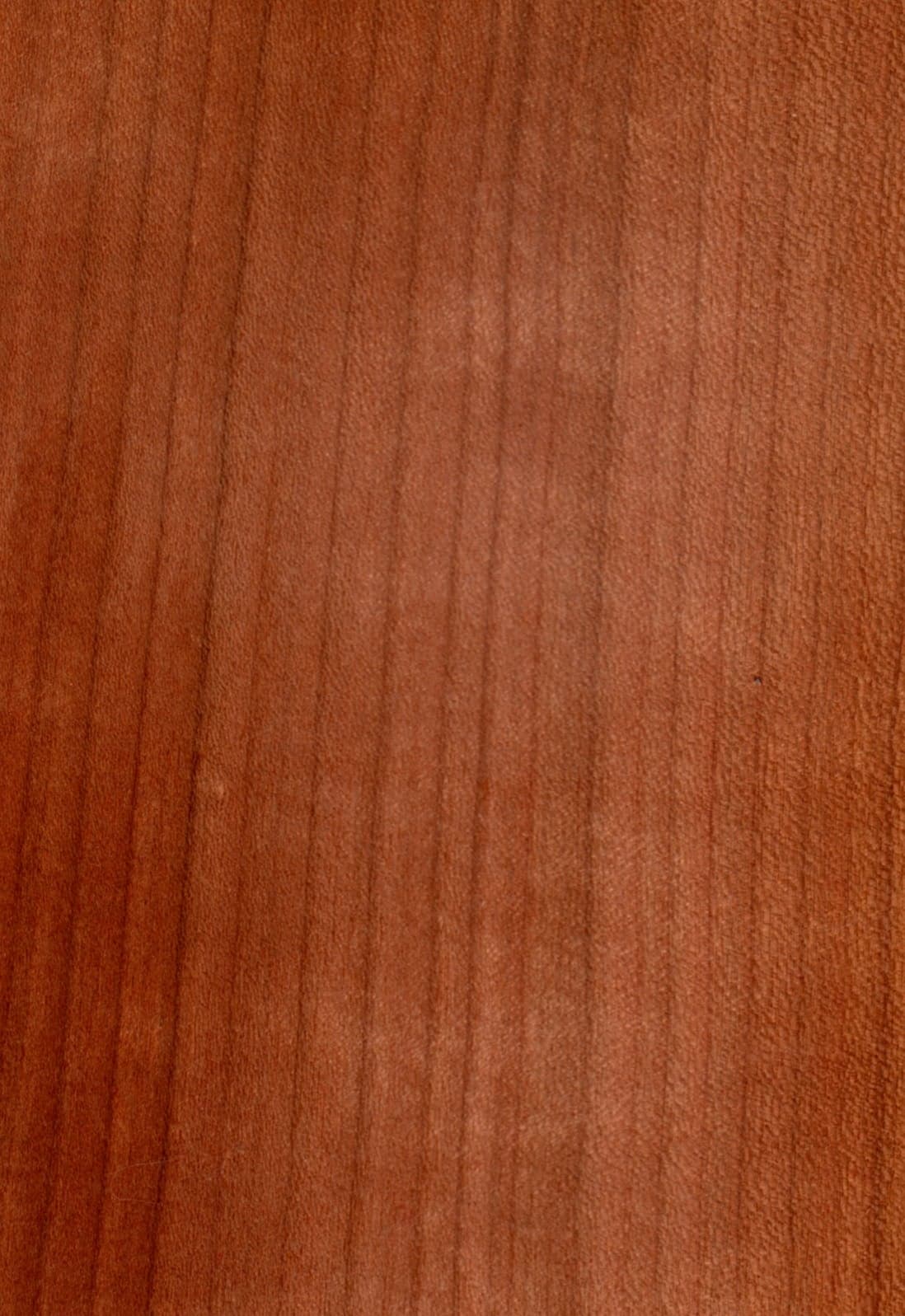
Kresba dreva European Cherry
  • Vhodnosť na projekt
  • Skladom
  • Vzhľad
  • Opracovanie
  • Pohyb dreva
  • Cena
  • Bezpečnosť a pôvod
  • Otázky
  • Technické údaje

Hodí sa na váš projekt?

Výborné na

  • Fine cabinetry and built-ins
  • Dining and occasional tables
  • Chairs and bench seats
  • Boxes, trays, and small casework
  • Turned bowls and handles
  • Interior architectural joinery
  • Musical instrument parts

Drevina European Cherry nie je v aktuálnej ponuke

Podobné dreviny skladom

Drevina European Cherry momentálne nie je dostupná. Tieto dreviny sa hodia na rovnaké projekty a sú z nich dostupné kusy.
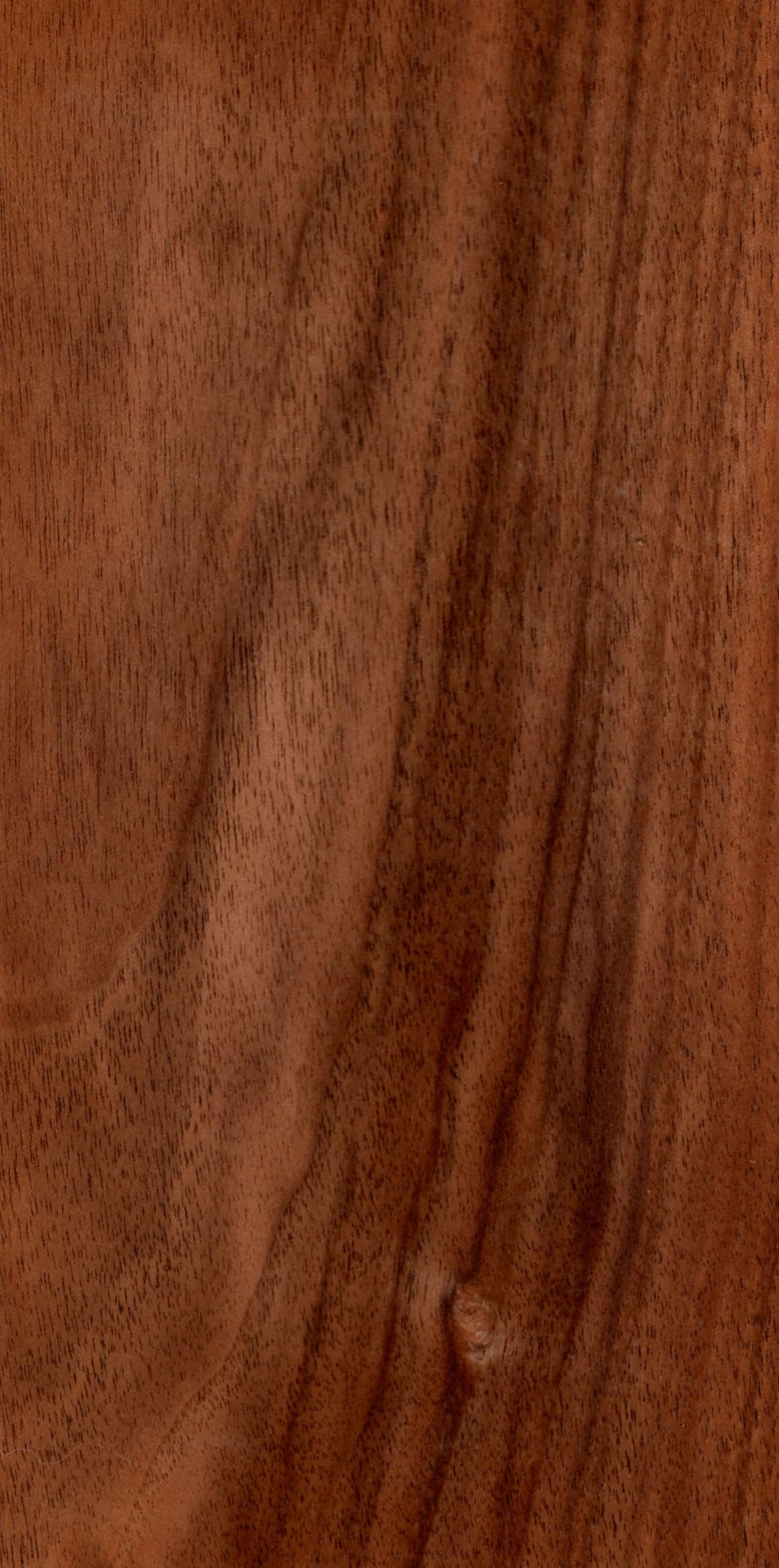
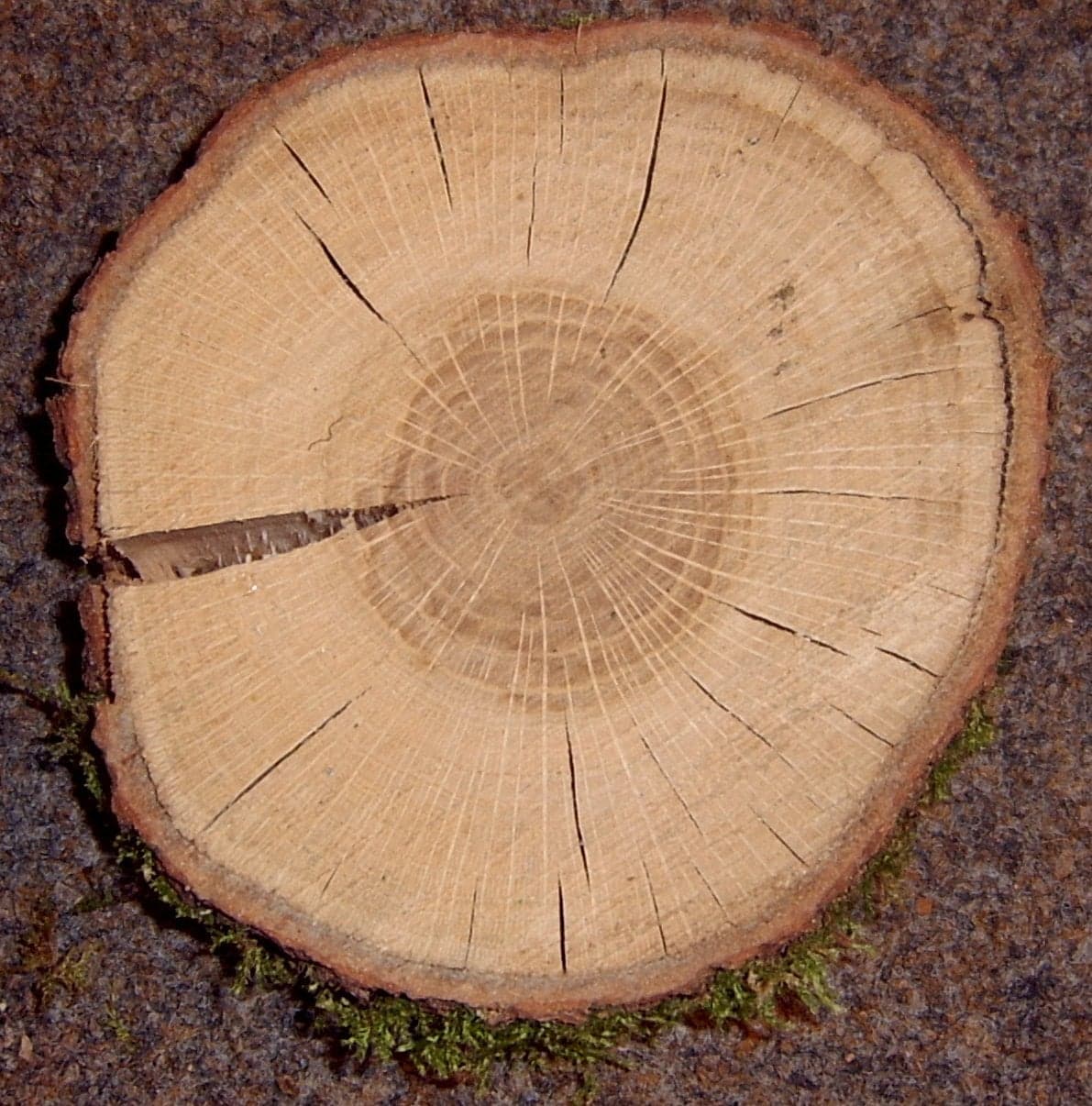
  • Kresba dreva European Walnut

    European Walnut

    Juglans regia

    9 kusov

  • Kresba dreva European Oak

    European Oak

    Quercus robur

    6 kusov

  • Kresba dreva Saman

    Saman

    Samanea saman

    4 kusy

Upozorniť na drevinu European Cherry

Keď na KORENA pribudnú nové fošne z dreviny European Cherry, pošleme vám e-mail. Každý kus je jedinečný, preto sa oplatí vedieť o ňom včas.

Niekoľko e-mailov mesačne. Žiadny spam, odber môžete kedykoľvek zrušiť.

Vzhľad dreva

Ako vyzerá

Fine, straight grain with a smooth, even texture. Heartwood opens pinkish-tan to warm salmon, with a paler cream sapwood that is usually distinct. Figure is generally quiet, occasional gum streaks, small pin knots, and the odd ribbon or curl. The headline trait is its colour shift: under light and over a few months, the wood deepens through honey to a rich reddish-brown, and continues to mature for years. Boards stored unevenly will tan unevenly, so rotate stock during storage.

  • Fresh heartwood: pinkish-tan to warm salmon
  • Pale cream sapwood, usually distinct from heartwood
  • Ages through honey to deep reddish-brown over months and years
  • Light exposure drives the colour shift, uneven storage gives uneven tan
  • Occasional gum streaks and small pin knots
  • Quiet figure overall, with the odd ribbon or curl
  • Fine, straight grain.

Opracovanie

Opracovanie

Easy to work with hand and machine tools. Planes and sands cleanly with sharp edges; gum pockets can clog cutters, so check stock before milling. Glues and screws well. Steam-bending is moderate, workable for gentle curves, less reliable for tight radii. Turns and carves predictably.

Povrchová úprava

Sands to a glassy surface at 180–220 grit. Takes oil, hardwax, shellac, and water-based finishes cleanly. A thin seal coat of dewaxed shellac or sanding sealer evens out any blotch on flat-sawn faces before topcoats. Avoid heavy stains, they fight the wood's own colour development. For commissions, expose offcuts to daylight alongside the finished piece so clients can see how the colour will move.

Sušenie

Dries fairly quickly but is prone to warp, cup, and surface checking if rushed. Sticker carefully and weight the top of the stack. End-seal green stock. Once at EMC, it is stable in service with moderate tangential movement.

Ako veľmi bude pracovať?

Drevo sa so zmenou vlhkosti vzduchu naprieč šírkou rozťahuje a zosycha. Pred návrhom spojov odhadnite sezónny pohyb dosky z dreviny European Cherry.

Rez
Kde sa bude používať

Očakávaný sezónny pohyb

približne 9,1 mm

Dosku upevnite príchytkami alebo drážkovanými konzolami, nie lepidlom či pevne utiahnutými skrutkami.

Model lineárneho zosychania: šírka × (zosychanie ÷ 28 % nasýtenie vlákien) × sezónna zmena vlhkosti. Pre drevinu European Cherry používa 8 % tangenciálne zosychanie. Ide o plánovací odhad, nie záruku.

Koľko stojí

Bezpečnosť a pôvod

  • Pestované a vyťažené v Európe.
  • Stav v Červenom zozname IUCN: globálne posúdenie ohrozenia tejto dreviny.
  • Not commonly flagged as a dust sensitiser, and considered food-contact safe once finished appropriately. Standard fine-dust extraction and a mask are still sensible at the sander.

Prečítať celý sprievodcaPodrobné poznámky o kresbe, zmene farby, opracovaní a stabilite.+

What European Cherry actually is#

Prunus avium is bought for a colour it does not yet have.

Fresh cherry is a pale pinkish tan, unremarkable and easily mistaken for a lesser wood. Within six months of light exposure it deepens substantially, and within a year it reaches the rich reddish brown that people actually mean when they say cherry. The change continues, more slowly, for years.

This single behaviour governs almost every decision about buying, finishing and using the species.

Working with the darkening rather than against it#

Three practical consequences follow.

First, do not choose a slab on its current colour. What you see on the bench is a stage, not the result. Two boards that look different today may match in a year, and two that match today may not.

Second, uneven light exposure prints permanently. A rug on a cherry floor, a lamp base on a cherry table, a stack of books left in one place: each leaves a lighter patch as the surrounding wood darkens around it. The patch does eventually even out if the object is moved, but it takes months. The sensible approach is to let a new piece darken evenly for the first few months before putting anything on it permanently.

Third, a UV inhibiting finish slows the process but does not stop it, and it will not preserve the pale fresh colour indefinitely. If you want pale, choose a different species.

Otázky kupujúcich

Otázky kupujúcich

How much does cherry darken?

+

A great deal, and quickly. Fresh cherry is pale pinkish tan and within a year of light exposure it deepens to a rich reddish brown. Most of the change happens in the first six months. This is why cherry furniture looks nothing like cherry lumber, and why buying on the freshly machined colour misleads.

Why does my cherry have patchy colour after finishing?

+

Two causes. Cherry blotches badly under pigment stain because of its fine uneven density, so use a dye, a gel stain or a washcoat. The other is uneven light exposure: anything covering part of a surface, a rug, a lamp base, a stack of books, will leave a permanently lighter patch as the rest darkens around it. Let a piece darken evenly before placing objects on it.

How is European Cherry different from American Black Cherry?

+

European cherry, Prunus avium, is harder at 5,120 N against 4,226 N and slightly denser. American black cherry, Prunus serotina, is available in larger and more consistent sizes because it is grown as a forestry species. Colour and figure are similar and both darken dramatically. European cherry tends to have more gum pockets.

What are the small dark flecks in the wood?

Mechanické vlastnosti

Technické údaje

Zverejnené referenčné hodnoty. Ak sa zdroje nezhodujú, uvádza sa rozsah a v stupniciach vyššie sa používa typická hodnota.

Hustota (kg/m³)Hmotnosť kubického metra pri vlhkosti približne 12 %. Ťažšie drevo býva tvrdšie a pevnejšie.550–650 kg/m³typická hodnota 600 kg/m³
Tvrdosť podľa Janku (N)Sila potrebná na zatlačenie oceľovej guľôčky do polovice jej priemeru do dreva. Štandardná miera odolnosti proti preliačeniu.4,700–5,500 Ntypická hodnota 5 120 N
MOR: modul pevnosti v ohybe (MPa)Pevnosť v ohybe: zaťaženie, pri ktorom sa nosník zlomí.95–110 MPa
MOE: modul pružnosti (GPa)Tuhosť v ohybe: ako veľmi sa polica alebo doska prehne pod zaťažením.9.5–11.0 GPa
Radiálne zosychanieZosychanie naprieč letokruhmi od čerstvého po úplne vysušené drevo. Takto pracujú radiálne rezané dosky.4.5–5.5 %

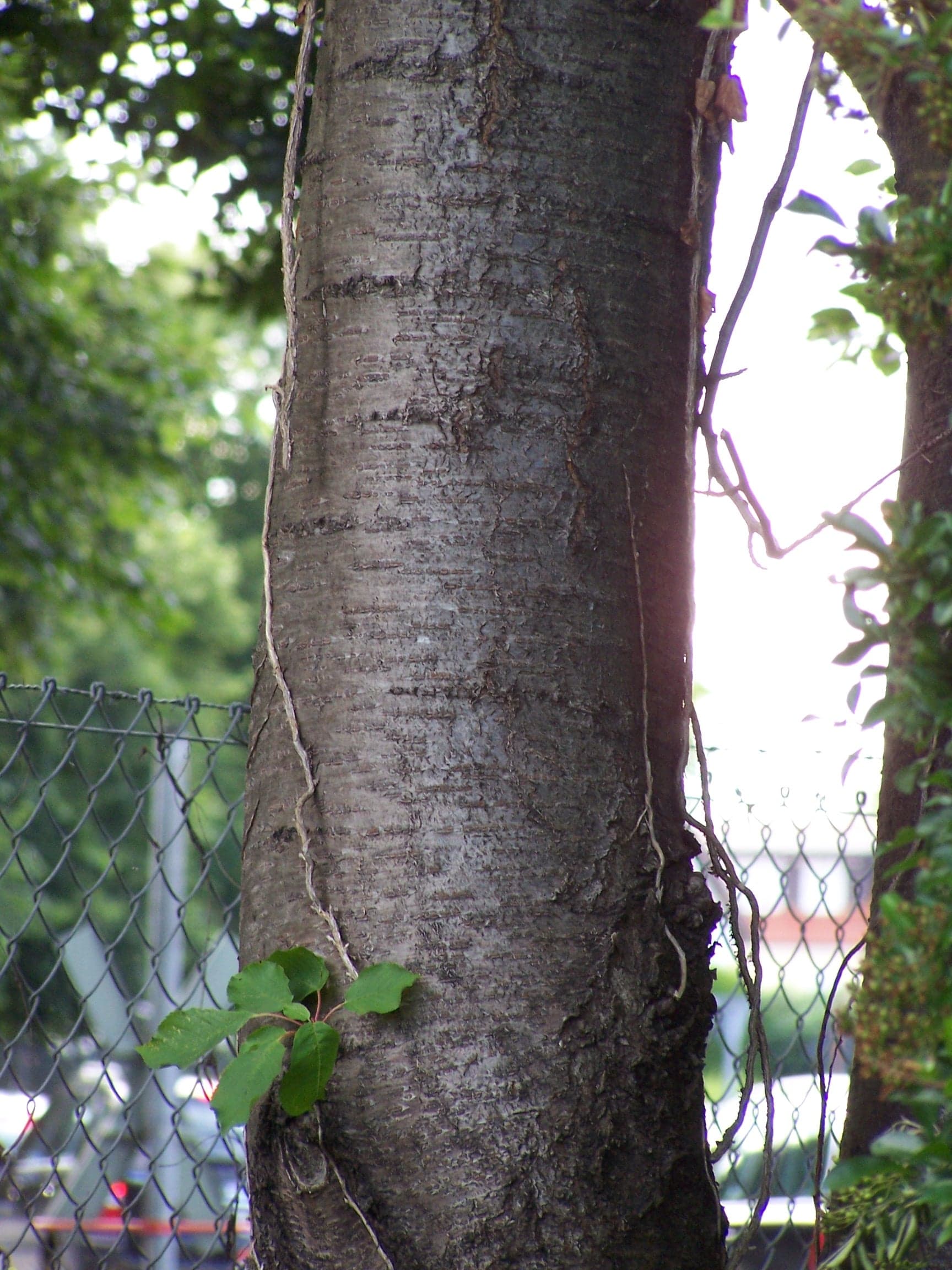
Achim Raschka (talk), via Wikimedia Commons

Silné stránky

  • Vhodné na styk s potravinamiVhodné na dosky, misy a povrchy, ktoré prichádzajú do styku s potravinami.
  • Vhodné pre začiatočníkovDobre sa opracúva a nie je také tvrdé, aby nadmerne opotrebovalo nástroje.

Pozor

Native across Europe and into western Asia. Grown in mixed hardwood forests from the UK and France through Germany, Austria, Italy, and the Balkans. Most commercial stock comes from central European yards, often from orchard thinnings or managed woodlots.

  • Native European hardwood, IUCN Least Concern, no CITES listing. Often sourced from small woodlots and orchard clearance, so volumes per parcel can be modest. Decay class 3, moderately durable, means it is an interior wood; not for ground contact or unprotected exterior use. Ask for FSC or PEFC chain-of-custody where the project requires it.

  • European Cherry: Kôra
    Kôra

    Reading a cherry slab#

    Colour runs pale pinkish tan when fresh, deepening to reddish brown. Sapwood is narrow and pale cream, and it does not darken at the same rate as the heartwood, so contrast changes over time.

    The grain is fine, close and usually straight, with a satiny lustre that is characteristic of the species.

    Gum pockets are the thing to look for: small resin filled cavities that occur in all Prunus species and are more frequent in European cherry than in American. They are not structural defects and many makers consider them part of the character. Larger ones can be filled.

    At the bench#

    Cherry is one of the most pleasant woods in this catalogue to work. At 5,120 N it is moderately hard, it cuts cleanly, it turns and carves well, it glues reliably and it takes fastenings securely.

    The fine close grain holds crisp detail and sands to an excellent surface.

    The one difficulty is burning. Cherry scorches easily under a router bit or a dull saw blade, and the burn marks are dark and stubborn on a wood this pale. Sharp tooling, appropriate feed rates and light final passes avoid it.

    The finishing trap#

    Cherry blotches badly under pigment stain. The fine uneven density makes absorption patchy, and the result is a mottled surface that looks like a mistake because it is one.

    Use a dye, a gel stain that sits on the surface, or seal with a thin washcoat first. Test on an offcut every time.

    The better answer is usually to skip stain entirely. Cherry is going to arrive at a rich reddish brown by itself, and staining it to get there early tends to produce a muddier colour than patience would.

    Movement#

    Volumetric shrinkage of 11.5 percent is moderate, with tangential at 7.5 percent against radial at 4.5 percent. That differential is reasonable and cherry behaves acceptably in wide boards.

    Decay class 3 makes it moderately durable, adequate for protected exterior joinery but not for exposure.

    Where European Cherry is the right answer#

    Fine furniture, tabletops, cabinetry, turned and carved work, and interior joinery where warmth is the design intent. It is one of the most rewarding species here for a piece intended to be lived with for decades, because it genuinely improves.

    It is the wrong answer where a stable pale colour is needed, and wrong outdoors.

    Sourcing and EUDR#

    Not CITES listed and assessed as Least Concern. Common across Europe and often felled from orchards and gardens as well as forestry, so sizes are variable and provenance chains are shorter and less standardised than for a commodity species.

    Orchard cherry against forest cherry#

    Prunus avium reaches the timber market from two quite different places, and the wood differs accordingly.

    Forest grown cherry, drawn up among other trees, produces straighter trunks with fewer low branches, longer clean lengths and more uniform colour. It is the better material for matched furniture components.

    Orchard cherry, grown in the open for fruit and felled at the end of its productive life, branches low and spreads. Trunks are shorter and more irregular, knots are more frequent, and figure is more variable. It also produces more gum pockets.

    Neither is better in the abstract. For a run of matched drawer fronts, forest grown is far easier to work with. For a single characterful slab, the orchard tree usually has more to look at.

    Steaming, and whether you want it#

    Some European cherry is steamed during drying, which deepens and evens the colour toward a more uniform reddish brown and reduces the contrast with the sapwood.

    Unsteamed cherry starts paler and develops its colour naturally through light exposure, which produces a more luminous result over time but requires patience and even exposure.

    For a piece intended to be lived with, unsteamed and patient is generally the better outcome. For a commission that has to look finished on delivery, steamed stock gets there sooner.

    +

    Gum pockets, small resin filled cavities that are characteristic of Prunus species and more common in European cherry than American. They are not a structural defect and many makers regard them as part of the character. Larger ones can be filled. On a measured KORENA slab, any pocket large enough to matter appears in the defect outline.

    Can cherry be used outdoors?

    +

    Not really. At decay class 3 it is moderately durable, which is adequate for protected exterior joinery under a maintained finish but not for exposure or ground contact. It is also far too valuable a furniture timber to put outside.

    Tangenciálne zosychanieZosychanie pozdĺž letokruhov. Takto pracujú tangenciálne rezané dosky a väčšina fošní.
    7.5–8.5 %
    Objemové zosychanieCelková zmena objemu od čerstvého po úplne vysušené drevo. Nižšia hodnota znamená vyššiu stabilitu.11.5–13.0 %
    Prirodzená trvanlivosť (EN 350)Európska norma prirodzenej odolnosti proti rozkladu od 1 (veľmi trvanlivé) po 5 (netrvanlivé).Class 3 — Moderately durable

    Zdroje

    • The Wood Database(prístup 2026-05-09)
    • USDA FPL Wood Handbook FPL-GTR-190 (2010)(prístup 2026-05-09)
    • Meier, E. — WOOD! Identifying and Using Hundreds of Woods Worldwide (2015)(prístup 2026-05-09)

    Stručný prehľad

    Úrovne používajú rovnaké pevné pásma pri všetkých drevinách v ponuke KORENA, takže sa dajú priamo porovnať. Nameraná hodnota je uvedená pod každou úrovňou.
    TvrdosťOdolnosť proti preliačeniu a opotrebovaniuStredne tvrdé

    Tvrdosť podľa Janku 5 120 N

    O 3 % tvrdšie než európsky dub

    HmotnosťAká ťažká je fošňa pri dvíhaníStredné

    600 kg/m³

    StabilitaAko málo sezónne pracujePriemerné

    Objemové zosychanie 12,3 %

    OpracovaniePílenie, hobľovanie, brúsenie a lepenieJednoduché

    Priemerné dielenské hodnotenie 4,0 / 5

    Použitie v exteriériPrirodzená odolnosť proti rozkladu podľa EN 350Krytý exteriér

    Trieda 3 podľa EN 350

    • Pílenie · Veľmi dobráAko čisto sa reže a ako veľmi opotrebúva pílové listy.1 = náročné · 5 = výborné
    • Hobľovanie · Veľmi dobráAký hladký povrch zostáva po hobľovaní a ako veľmi sa vytrhávajú vlákna.1 = náročné · 5 = výborné
    • Brúsenie · Veľmi dobráAko rýchlo sa vybrúsi dohladka bez upchávania brúsneho papiera.1 = náročné · 5 = výborné
    • Sústruženie · Veľmi dobráAko sa reže a dokončuje na sústruhu.1 = náročné · 5 = výborné
    • Rezbárske opracovanie · Veľmi dobráAko ostro zachováva detaily pri práci dlátom.1 = náročné · 5 = výborné
    • Lepenie · Veľmi dobráAko spoľahlivo držia lepené spoje.1 = náročné · 5 = výborné
    • Držanie skrutiek / klincov · Veľmi dobráAko dobre drží skrutky a klince bez praskania.1 = náročné · 5 = výborné
    • Ohýbanie parou · DobráAko dobre sa ohýba po naparení.1 = náročné · 5 = výborné

    Aktuálne ceny dreva European Cherry v Európe za kubický meter bez DPH. Ťuknutím na cenu zobrazíte podrobnosti.

    • Najlepšia guľatina na aukciiVybraná guľatina vysokej kvality predávaná na aukciách, najmä výrobcom dýh a nábytku. Z takejto guľatiny sa režú fošne.Väčšina cien je medzi 319 € a 408 €.Vychádza z 55 cien z 2 regiónov.Najnovšie údaje 24. 9. 2026

    Najlepšia guľatina na aukcii podľa krajiny

    • Nemecko · 408 € / m³Regióny: Bavaria25 cienNajnovšie údaje 24. 9. 2026
    • Rakúsko · 319 € / m³Regióny: Austria30 cienNajnovšie údaje 24. 9. 2026

    Prečo stojí fošňa viac?

    Toto sú ceny surového dreva. Fošňa je najlepší rez z guľatiny, suší sa rok alebo dlhšie a potom sa každý kus samostatne kontroluje a meria. Na fošňu sa premení iba malá časť každej guľatiny.

    Zdroj: KORENA Timber Index · Najnovšie údaje 24. 9. 2026

    Zobraziť všetky regionálne ceny
    Nie je vhodné do exteriéru bez ošetrenia
    Prirodzená trvanlivosť je trieda 3 z 5 podľa EN 350. Používajte ho v interiéri alebo pod pravidelne udržiavanou povrchovou úpravou.

    Ťuknutím na štítok zobrazíte podrobnosti.