Platanus × acerifolia
London Plane
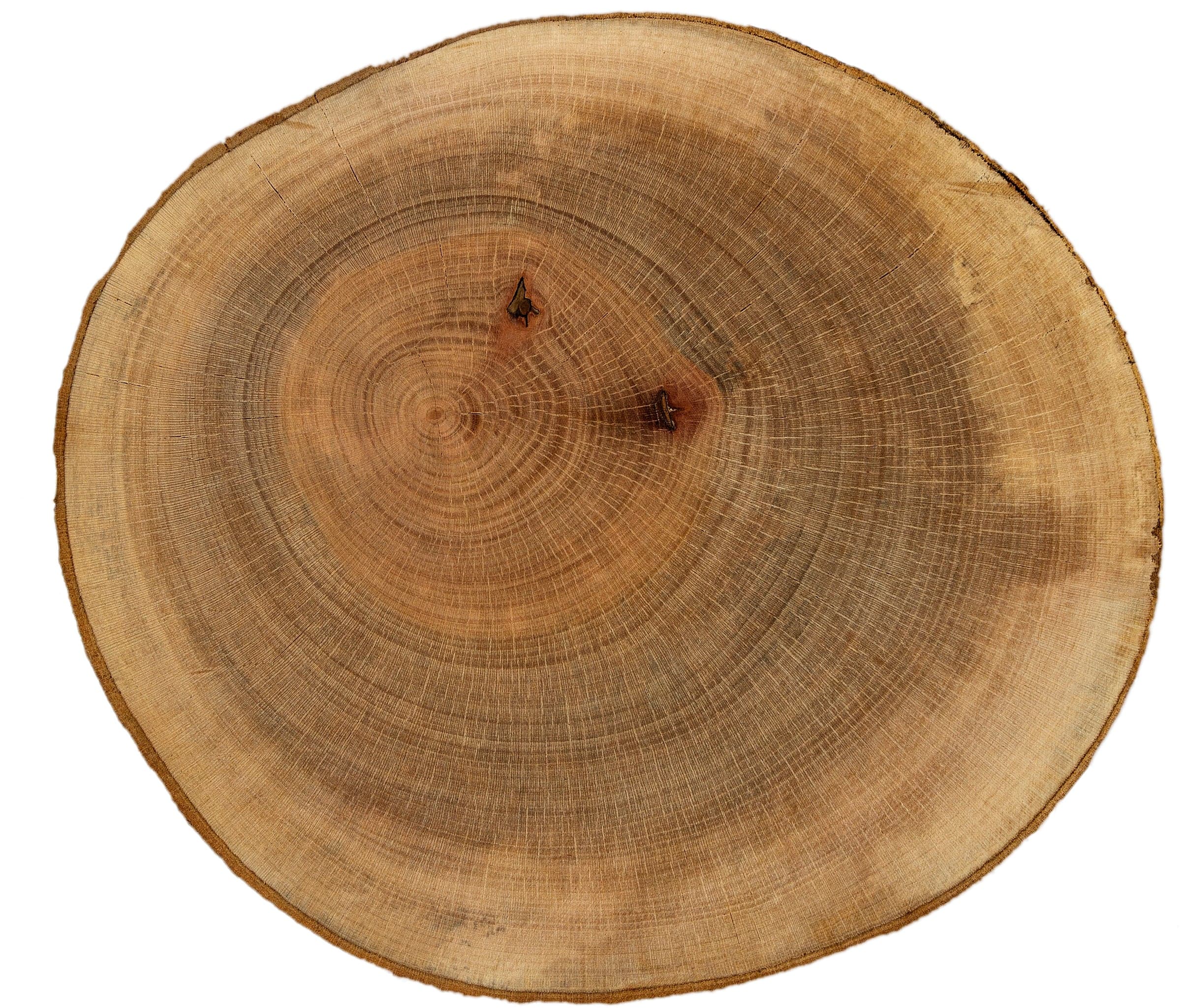
Quartersawn London Plane reveals lacewood: large medullary rays catch the light in dense, scaly flecks. The slab's signature, and its whole reason for being on this list.
- Pestované a vyťažené v Európe.
- Botanická skupina. Ihličnaté dreviny sú ihličnany, listnaté dreviny sú širokolisté stromy.
- Botanická čeľaď, do ktorej drevina patrí.
Upozorniť ma, keď pribudneReferenčná drevina. Momentálne nie je skladom žiadny kus.
Hodí sa na váš projekt?
Výborné na
- Quartersawn tabletops where the lacewood figure is the feature
- Cabinet door panels and drawer fronts
- Wall panelling and feature joinery
- Turned bowls and hollow forms
- Serving boards and kitchen pieces (interior, finished)
- Veneer-look solid furniture
Drevina London Plane nie je v aktuálnej ponuke
Podobné dreviny skladom
Drevina London Plane momentálne nie je dostupná. Tieto dreviny sa hodia na rovnaké projekty a sú z nich dostupné kusy.
Upozorniť na drevinu London Plane
Keď na KORENA pribudnú nové fošne z dreviny London Plane, pošleme vám e-mail. Každý kus je jedinečný, preto sa oplatí vedieť o ňom včas.
Vzhľad dreva
Ako vyzerá
Straight grain, fine-to-medium texture, pinkish-brown heartwood that warms with age. Flatsawn faces are quiet and clean. Quartersawn is where it earns its name in the trade, lacewood, with broad ray flecks that read almost like snakeskin under finish. Two faces of the same board can look like two different woods.
- Heartwood pinkish-brown to light reddish-tan
- Sapwood pale cream, often left in for contrast
- Quartersawn rays appear as darker flecks against the background
- Warms and deepens under oil; ambers slightly with age
- Flatsawn and quartersawn faces of one board can look like different species
- Straight; lacewood figure on quartersawn faces.
Opracovanie
Opracovanie
Saws, sands, turns, and carves well. Planing is the one to watch: the medullary rays that make quartersawn faces beautiful also tear out under dull blades. Sharp tools, light cuts, and a finish scraper or 220-grit pass to clean up. Glues and screws without drama.
Povrchová úprava
Takes oil and hardwax oil cleanly. The lacewood figure deepens dramatically under any clear finish. Test on an offcut before committing, because the contrast jumps. Stains can muddy the rays; we'd avoid them. Sand to 180–220 and stop.
Sušenie
Tangential shrinkage is high (around 10%) and roughly twice the radial figure, so cup and distortion are real risks. Dries best slowly, well-stickered, with weight on top. Once stable it holds shape indoors, but it's not a wood to rush through a kiln.
Ako veľmi bude pracovať?
Drevo sa so zmenou vlhkosti vzduchu naprieč šírkou rozťahuje a zosycha. Pred návrhom spojov odhadnite sezónny pohyb dosky z dreviny London Plane.
Očakávaný sezónny pohyb
približne 11,7 mm
Dosku upevnite príchytkami alebo drážkovanými konzolami, nie lepidlom či pevne utiahnutými skrutkami.
Model lineárneho zosychania: šírka × (zosychanie ÷ 28 % nasýtenie vlákien) × sezónna zmena vlhkosti. Pre drevinu London Plane používa 10,25 % tangenciálne zosychanie. Ide o plánovací odhad, nie záruku.
Koľko stojí
Bezpečnosť a pôvod
- Pestované a vyťažené v Európe.
- Stav v Červenom zozname IUCN: globálne posúdenie ohrozenia tejto dreviny.
Not commonly flagged as a dust irritant or sensitiser. Standard shop dust extraction is enough. Food-contact safe once finished, fine for boards and serving pieces.
Prečítať celý sprievodcaPodrobné poznámky o kresbe, zmene farby, opracovaní a stabilite.
What London Plane actually is#
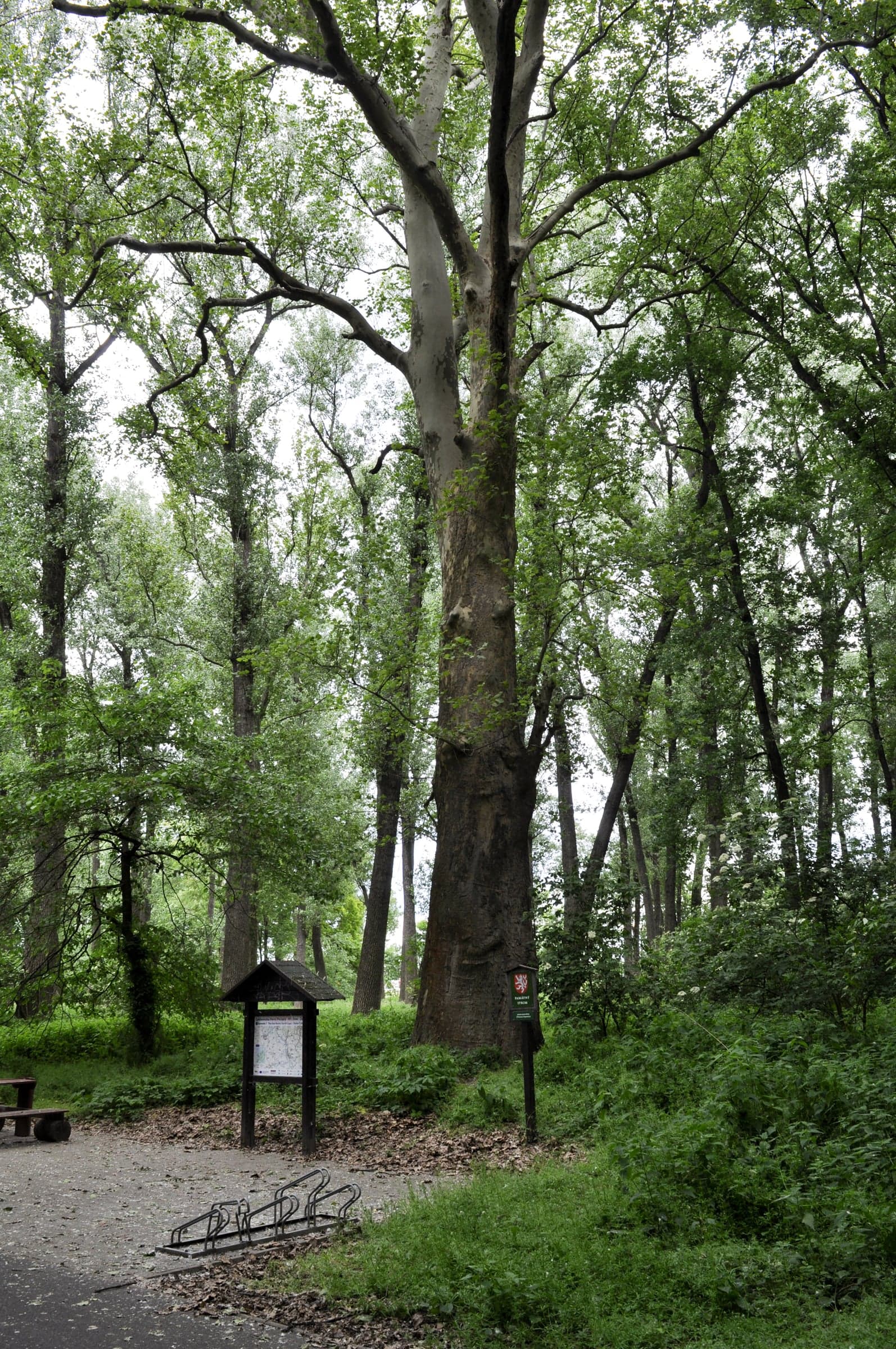
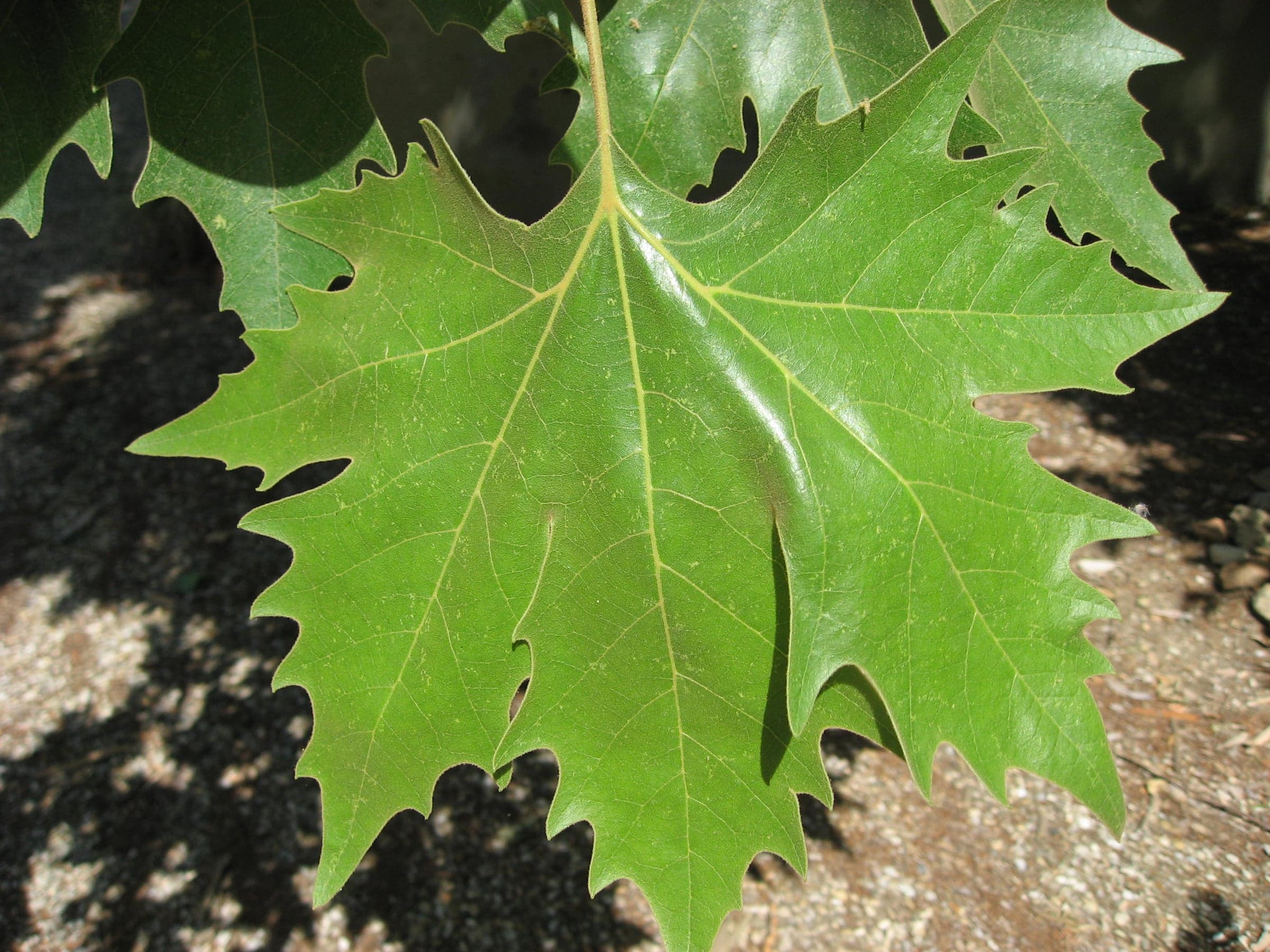
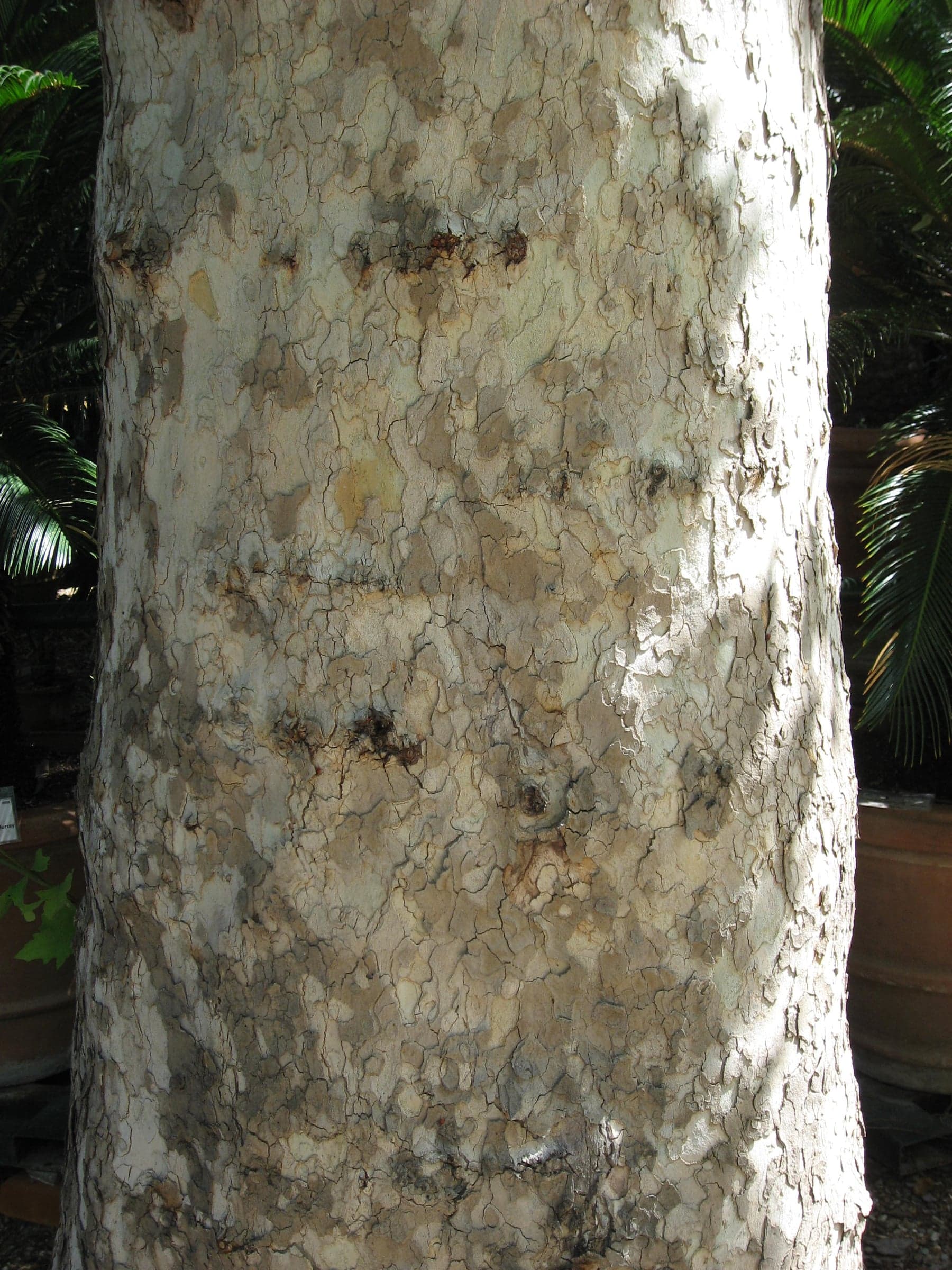
Platanus x acerifolia is bought for one thing: lacewood.
The species has exceptionally large rays, the ribbons of cells that run radially through a trunk. In most timbers the rays are small enough to be barely visible, and in oak they show as the familiar silvery fleck on quartersawn faces. In London Plane they are so large that a quartersawn face is covered in a dense, regular flecked pattern across the entire surface.
That figure is called lacewood, and it exists only on the quarter. A flatsawn London Plane board is comparatively plain, a light reddish brown with modest figure. The same log cut differently is one of the most distinctive decorative surfaces in European timber.
If you are buying this species, you are buying quartersawn stock, and if you are offered flatsawn plane at a lacewood price, the cut is the thing to check.
The naming confusion#
Three species get called sycamore in different places and they are not related.
London Plane is Platanus x acerifolia, a hybrid plane. American sycamore is Platanus occidentalis, its close relative and also a source of lacewood. European Sycamore is Acer pseudoplatanus, a maple, and has nothing to do with either.
They look different, work differently and cost differently. Buy on the botanical name.
Otázky kupujúcich
Otázky kupujúcich
What is lacewood?
Lacewood is quartersawn London Plane. The species has exceptionally large rays, and cutting on the quarter exposes them as a dense flecked pattern across the whole surface that looks like lace. It is one of the most distinctive figures available from any European species, and it exists only on the quartersawn face. Flatsawn plane is comparatively plain.
Is London Plane the same as sycamore?
No, and the naming is a mess. London Plane is Platanus x acerifolia, a plane tree. American sycamore is Platanus occidentalis, its close relative. European Sycamore is Acer pseudoplatanus, a maple, and unrelated to both. All three are sometimes called sycamore somewhere. Check the botanical name.
How stable is it?
Not very. Volumetric shrinkage of 15.0 percent is high and tangential shrinkage of 9.5 percent against radial at 5.5 percent is a wide differential, so flatsawn boards cup. Since the reason to buy this species is the quartersawn lacewood figure, and quartersawn stock is much more stable, the figure and the stability come together.
Can it be used outdoors?
No. It is rated decay class 5, perishable, with poor insect resistance. London Plane is an interior decorative timber only.
Mechanické vlastnosti
Technické údaje
Zverejnené referenčné hodnoty. Ak sa zdroje nezhodujú, uvádza sa rozsah a v stupniciach vyššie sa používa typická hodnota.
| Hustota (kg/m³)Hmotnosť kubického metra pri vlhkosti približne 12 %. Ťažšie drevo býva tvrdšie a pevnejšie. | 500–620 kg/m³typická hodnota 560 kg/m³ |
|---|---|
| Tvrdosť podľa Janku (N)Sila potrebná na zatlačenie oceľovej guľôčky do polovice jej priemeru do dreva. Štandardná miera odolnosti proti preliačeniu. | 3,800–4,600 Ntypická hodnota 4 180 N |
| MOR: modul pevnosti v ohybe (MPa)Pevnosť v ohybe: zaťaženie, pri ktorom sa nosník zlomí. | 70–80 MPa |
| MOE: modul pružnosti (GPa)Tuhosť v ohybe: ako veľmi sa polica alebo doska prehne pod zaťažením. | 8.0–10.0 GPa |
| Radiálne zosychanieZosychanie naprieč letokruhmi od čerstvého po úplne vysušené drevo. Takto pracujú radiálne rezané dosky. | 5.5–6.5 % |