Fagus sylvatica
European Beech
The workshop workhorse. Pale, dense, fine-textured hardwood with straight grain, and the wood that bends.
- Gojeno in posekano v Evropi.
- Botanična skupina. Iglavci so golosemenke, listavci pa širokolistna drevesa.
- Botanična družina, ki ji vrsta pripada.
Obvestite me ob prihoduReferenčna vrsta. Trenutno ni kosov na zalogi.
Na kratko
Stopnje uporabljajo enake razpone za vse vrste, ki jih navaja KORENA, zato jih lahko neposredno primerjate. Pod vsako je izmerjena vrednost.TrdotaOdpornost proti udrtinam in obrabiTrd
Trdota po Janki 6460 N
30 % trši od evropskega hrasta
TežaKako težko je dvigniti plohTežek
710 kg/m³
StabilnostKako malo se spreminja z letnimi časiMočno deluje
18,0 % prostorninskega krčenja
ObdelavaŽaganje, skobljanje, brušenje, lepljenjePreprosta
4,0/5, povprečje obdelave
Zunanja uporabaNaravna odpornost proti trohnenju, EN 350Samo v notranjosti
EN 350, razred 5
Je primeren za vaš projekt?
Odličen za
- Steam-bent chair frames and curved components
- Workbenches, jigs, and shop fixtures
- Chopping boards, butcher blocks, and kitchen utensils
- Interior joinery and cabinet carcasses
- Turned legs, handles, and tool components
- Children's furniture and toys
- Stair treads and interior flooring in stable rooms
Prednosti
- Varen za živilaPrimeren za deske, sklede in površine, ki se dotikajo živil.
- Dobro se kriviOcena 5 od 5 za parno krivljenje. Primeren za ostre krivine.
- Primeren za začetnikePreprost za delo na delovni mizi in ne tako trd, da bi močno obrabljal orodje.
Pozor
- Ni za neobdelano zunanjo uporaboNaravna trajnost je po EN 350 razred 5 od 5. Les uporabljajte v notranjosti ali ga zaščitite z vzdrževanim premazom.
- Deluje bolj kot večina vrstŠiroke mizne plošče potrebujejo spone ali pritrdila z utori in dovolj prostora za premikanje. Uporabite spodnji kalkulator delovanja lesa.
- Prah dražiMed brušenjem ali strojno obdelavo vključite odsesavanje in nosite masko.
Za podrobnosti se dotaknite oznake.
V trenutni ponudbi ni lesa European Beech
Podobne vrste na zalogi
Lesa European Beech trenutno ni. Te vrste so primerne za enake projekte in imajo razpoložljive kose.



Prejemajte obvestila o lesu European Beech
Pošljemo vam e-pošto, ko v KORENA prispejo novi plohi iz lesa European Beech. Vsak kos je edinstven, zato je zgodnje obvestilo pomembno.
Videz lesa
Kako je videti
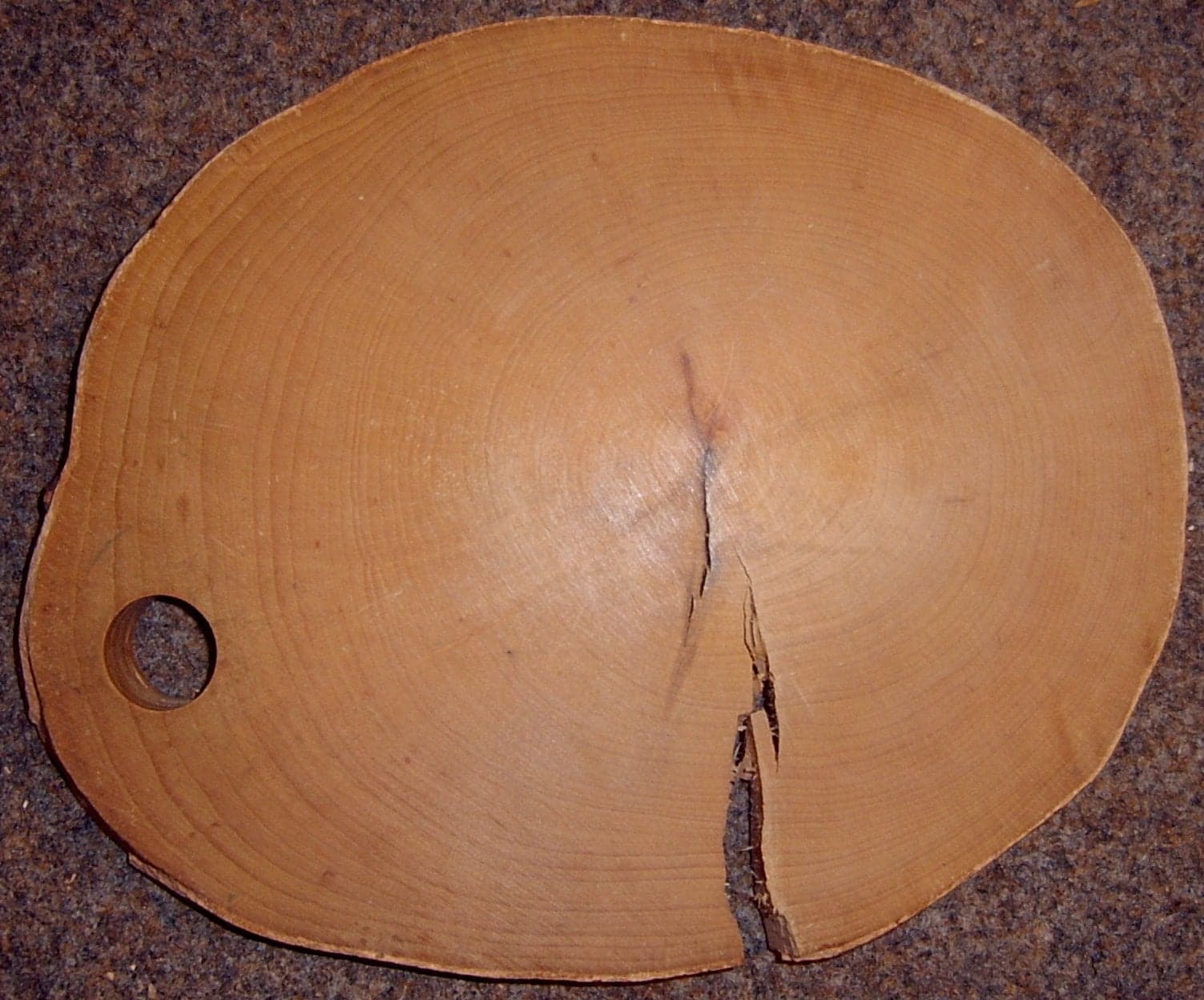
A clean, light surface in cream to pale pinkish-brown, often with a subtle salmon cast when freshly cut. Grain is straight; texture is fine and even with small, tight rays that show as faint flecks on the quarter. Steamed beech goes warmer and pinker, that familiar Thonet tone. Visually quiet rather than dramatic, which is why it pairs well with bolder species and finishes.
- Cream to pale pinkish-brown when air-dried
- Warmer salmon-pink tone after steaming
- Fine ray fleck on quarter-sawn faces
- Yellows gradually under UV exposure
- Cool, neutral surface under water-based finishes; warmer under oils
- Straight grain, fine even texture.
Obdelava
Obdelava
- Žaganje · Zelo dobroKako čist je rez in koliko les obrablja rezila.1 = težavno · 5 = odlično
- Skobljanje · Zelo dobroKako gladka ostane površina in koliko se les trga.1 = težavno · 5 = odlično
- Brušenje · Zelo dobroKako hitro se gladko obrusi, ne da bi zamašil brusni papir.1 = težavno · 5 = odlično
- Struženje · OdličnoKako se reže in končno obdela na stružnici.1 = težavno · 5 = odlično
- Rezbarjenje · Zelo dobroKako ostre podrobnosti ohrani pri delu z dletom.1 = težavno · 5 = odlično
- Lepljenje · Zelo dobroKako zanesljivo držijo lepljeni spoji.1 = težavno · 5 = odlično
- Oprijem vijakov/žebljev · DobroKako dobro drži vijake in žeblje, ne da bi razpokal.1 = težavno · 5 = odlično
- Parno krivljenje · OdličnoKako dobro po parjenju sprejme krivine.1 = težavno · 5 = odlično
Works well across the bench. Saws, planes, and sands cleanly; turns and carves crisply. Glues reliably. Screws need pilot holes, it is dense and can split near edges. Where beech really earns its keep is steam bending: it is the benchmark species for it, and the reason Thonet's bentwood chairs are still made from it more than 150 years on.
Končna obdelava
Sands to a smooth, almost glassy surface and takes finishes evenly thanks to the fine texture. Stains apply uniformly without much blotching. Oils and hardwax oils keep the pale tone; water-based finishes hold the cool cast best, while oil-based products will warm it noticeably. Beech yellows over time under UV, worth flagging to clients who want it to stay pale.
Sušenje
This is where beech demands respect. Volumetric shrinkage of 17–19% puts it among the more movement-prone European hardwoods, and the gap between radial and tangential shrinkage drives cupping and checking if it is rushed. Slow, controlled kiln schedules and proper acclimatisation in the workshop are non-negotiable. Once stable and used in interior conditions, it behaves, but it will react to swings in humidity, so avoid wide unbroken panels in rooms that are not climate-stable.
Koliko bo deloval?
Les se prečno širi in krči, ko zrak postaja bolj vlažen ali suh. Pred načrtovanjem pritrdil ocenite sezonsko delovanje mizne plošče iz lesa European Beech.
Pričakovano sezonsko delovanje
približno 13,4 mm
Veliko. Uporabite spone ali nosilce z utori, na koncih prečnih letev pustite prostor in ploh pred sestavljanjem aklimatizirajte.
Model linearnega krčenja: širina × (krčenje ÷ 28 % nasičenosti vlaken) × sezonska sprememba vlažnosti. Za les European Beech uporablja 11,75 % tangencialnega krčenja. To je ocena za načrtovanje, ne jamstvo.
Koliko stane
Trenutne prodajne cene za les European Beech po Evropi na kubični meter brez DDV. Za podrobnosti se dotaknite poljubne cene.
- Najboljši hlodi na dražbiIzbrani visokokakovostni hlodi, prodani na licitacijah zaprtega tipa, večinoma izdelovalcem furnirja in pohištva. Iz takšnih hlodov se režejo plohi.Večina cen je med 135 € in 232 €.Na podlagi 55 cen iz 2 regij.Najnovejši podatki: 24. sep. 2026
- Običajni hlodiVelike količine standardnega okroglega lesa, ki ga prodajajo lastniki gozdov in državne gozdarske službe, večinoma za gradbeništvo in industrijo.Večina cen je med 23 € in 112 €.Na podlagi 729 cen iz 9 regij.Najnovejši podatki: 24. sep. 2026
Najboljši hlodi na dražbi po državah
- Avstrija · 232 € / m³Regije: Austria30 cenNajnovejši podatki: 24. sep. 2026
- Nemčija · 135 € / m³Regije: Bavaria25 cenNajnovejši podatki: 24. sep. 2026
Običajni hlodi po državah
- Italija · 87 € / m³Regije: Veneto162 cenNajnovejši podatki: 23. jul. 2025
- Romunija · 72 € / m³Regije: Banat / Crișana, Moldavia (Romania), Transylvania in Wallachia489 cenNajnovejši podatki: 24. sep. 2026
- Francija · 67 € / m³Regije: Bourgogne-Franche-Comté in Grand Est / Alsace30 cenNajnovejši podatki: 15. sep. 2026
- Bolgarija · 59 € / m³Regije: North-West Bulgaria in South-East Bulgaria48 cenNajnovejši podatki: 24. sep. 2026
Zakaj ploh stane več?
To so cene surovega lesa. Ploh je najboljši izrez hloda, sušen najmanj eno leto ter nato pregledan in izmerjen kos za kosom. Samo majhen del posameznega hloda postane ploh.
Vir: KORENA Timber Index · Najnovejši podatki: 24. sep. 2026
Prikaži vse regionalne ceneVarnost in nabava
- Gojeno in posekano v Evropi.
- Status na Rdečem seznamu IUCN: svetovna ocena ogroženosti te vrste.
Food-contact safe and a long-standing choice for chopping boards, butcher blocks, spoons, and kitchen utensils. The flip side: beech dust is a documented respiratory sensitiser and is classified by IARC as a Group 1 hardwood dust. Use proper extraction, a fitted P3/FFP3 mask, and keep the shop clean, especially during sanding.
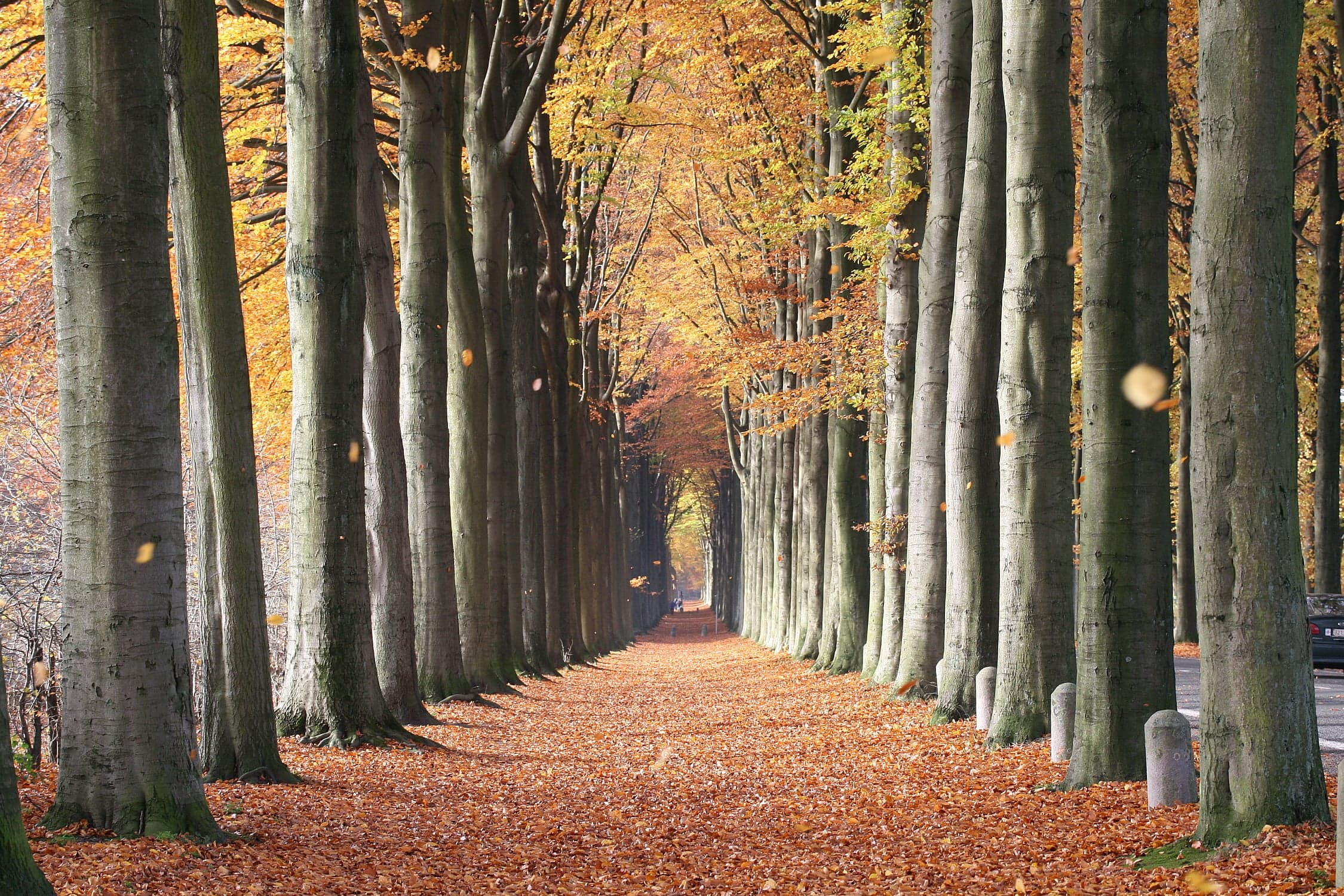
Native across most of Europe, from southern Sweden down to the Balkans, with strong supply from Germany, Romania, France, and the Carpathians. One of the most plentiful hardwoods on the continent, which keeps pricing honest and stock predictable.
IUCN Least Concern, no CITES listing, and managed under long-established European forestry regimes. Broad native range means short supply chains within the EU and lower transport footprint than imported pale hardwoods. Decay class 5, perishable, so this is an interior-only timber; do not specify it for anything that will see weather or ground contact.
Preberite celoten vodnikPodrobni zapiski o teksturi, spreminjanju barve, obdelavi in stabilnosti.
What European Beech actually is#
Fagus sylvatica is the workshop timber of Europe. It is dense at 710 kg per cubic metre, hard at 6,460 N, stiff at 13.0 GPa, fine textured, straight grained, cheap and everywhere.
It is also, by the numbers, the least dimensionally stable wood in this catalogue. Volumetric shrinkage of 17.0 percent ties it with hornbeam for the highest figure here, and its tangential to radial differential of 11.0 against 5.0 percent is the widest of any species listed.
Both facts are true at once, and understanding how they coexist is the whole of working with beech well.
The bending wood#
Fine even texture, straight grain and high stiffness are exactly the properties that make a timber bend rather than break.
Under steam, beech compresses on the inside of a curve without buckling and stretches on the outside without splitting, more reliably than oak or ash. Michael Thonet built an entire furniture industry on that single property in the nineteenth century, and the bentwood chair remains the most produced furniture design in history.
If a project involves a curve, beech is the first thing to reach for in this catalogue.
The movement problem#
The same responsiveness that lets beech bend makes it react to humidity.
At 11.0 percent tangential against 5.0 percent radial, a wide flatsawn beech board will cup hard as a room dries out. In a modern interior with underfloor heating and winter humidity dropping below 30 percent, a beech tabletop that was flat in September will not be flat in February.
This is not a defect and it is not avoidable by better drying. It is what the species does.
The practical consequences are specific. Beech is excellent where movement is either restrained or irrelevant: bent components, chair frames, workshop benches and jigs, tool handles, drawer sides, and laminated or engineered constructions. It is a poor choice for a wide solid top in an uncontrolled environment, which is precisely the application people most often want a slab for.
If you do build a wide beech top, quartersawn stock roughly halves the across width movement, and the top must float on slotted fasteners rather than being fixed.
Steamed and unsteamed#
Most European commercial beech is steamed during drying. This evens the colour to a warm pink brown and relieves some drying stress.
Unsteamed beech is paler, closer to cream, and more variable in tone. Both are the same species and the colour difference is permanent, so match your stock at the outset rather than hoping to blend later.
At the bench#
Beech is straightforward and rewarding. It machines cleanly thanks to the fine even texture, turns very well, glues reliably and takes fastenings securely.
At 6,460 N it blunts tooling at a decent rate but nothing exceptional. It sands to a fine surface and takes finish evenly, without the blotching that troubles pale softwoods, because the density is uniform.
The fine texture also means it holds a crisp edge and a clean profile, which is why it is a standard for moulding planes, tool bodies and machine parts.
Kitchen use#
Beech is rated food safe and its closed fine texture is easier to keep clean than open pored oak, which is why it has been the traditional butcher block and worktop timber.
The movement caveat applies with force in a kitchen, where wet and dry cycling is constant. Keep it oiled, never leave standing water on it, and accept more seasonal change than hard maple would give.
Where beech is the right answer#
Steam bent work above all, plus chair frames, workshop benches and fixtures, tool handles, drawer sides, turned work, kitchen worktops and butcher blocks.
It is the wrong answer for a wide solid top in a variable environment, and wrong outdoors in any form, being decay class 5 and highly attractive to furniture beetle.
Sourcing and EUDR#
Not CITES listed and assessed as Least Concern. Beech is one of the most abundant hardwoods in Europe with mature certified supply across Germany, France, Austria and eastern Europe, and it is among the cheapest and best documented hardwoods available.
Vprašanja kupcev
Vprašanja kupcev
Why does beech move so much?
Volumetric shrinkage of 17.0 percent is the joint highest in this catalogue, and tangential shrinkage of 11.0 percent against 5.0 percent radial is a differential of better than two to one. That combination makes beech notoriously unstable in changing humidity. It is why beech is superb for steam bent chair parts and workshop fixtures in a controlled environment, and a poor choice for a wide tabletop in a room with underfloor heating.
Why is beech the classic steam bending wood?
Fine even texture, straight grain and high stiffness at 13.0 GPa let it compress on the inside of a bend without buckling and stretch on the outside without splitting. Thonet built an entire furniture industry on that property. It bends more reliably than oak or ash and holds the curve once dry.
Is beech good for kitchen worktops and chopping boards?
It is rated food safe and its fine closed texture is easier to keep clean than open pored oak, which is why it is traditional for butcher blocks and worktops. The caveat is movement: beech responds strongly to the wet and dry cycling a kitchen imposes. Keep it oiled, avoid standing water, and expect more seasonal change than in maple.
What is steamed beech and how is it different?
Beech that has been steamed during drying, which evens the colour to a warm pink brown and relieves some drying stress. Unsteamed beech is paler and more variable. Steamed stock is the European commercial standard and is generally more predictable to work; the colour difference is permanent.
Can beech be used outdoors?
No. It is rated decay class 5, perishable, and it is also highly attractive to furniture beetle. Beech is strictly an interior timber and even indoors it should not stay damp. For exterior work use oak, sweet chestnut or robinia.
Mehanske lastnosti
Tehnični podatki
Objavljene referenčne vrednosti. Kjer se viri ne ujemajo, je prikazan razpon, za zgornje lestvice pa je uporabljena običajna vrednost.
| Gostota (kg/m³)Masa na kubični meter pri približno 12 % vlažnosti. Težji les je navadno trši in močnejši. | 680–780 kg/m³običajno 710 kg/m³ |
|---|---|
| Trdota po Janki (N)Sila, potrebna, da se jeklena kroglica do polovice vtisne v les. Standardno merilo odpornosti proti udrtinam. | 6,000–6,900 Nobičajno 6460 N |
| MOR: upogibna trdnost (MPa)Upogibna trdnost: obremenitev, pri kateri se nosilec zlomi. | 100–130 MPa |
| MOE: modul elastičnosti (GPa)Upogibna togost: koliko se polica ali mizna plošča povesi pod obremenitvijo. | 13.0–15.0 GPa |
| Radialno krčenjeKrčenje prečno na letnice od svežega do popolnoma suhega lesa. Tako delujejo radialno rezane deske. | 5.0–6.5 % |
| Tangencialno krčenjeKrčenje vzdolž letnic. Tako delujejo tangencialno rezane deske in večina plohov. | 11.0–12.5 % |
| Prostorninsko krčenjeSkupna sprememba prostornine od svežega do popolnoma suhega lesa. Nižja vrednost pomeni večjo stabilnost. | 17.0–19.0 % |
| Naravna trajnost (EN 350)Evropski standard naravne odpornosti proti trohnenju, od 1 (zelo trajno) do 5 (netrajno). | Class 5 — Perishable |
Viri
- The Wood Database(dostopano 2026-05-09)
- USDA FPL Wood Handbook FPL-GTR-190 (2010)(dostopano 2026-05-09)
- Meier, E. — WOOD! Identifying and Using Hundreds of Woods Worldwide (2015)(dostopano 2026-05-09)