Robinia pseudoacacia
Black Locust / Robinia
Class 1 durability from a tree that grows in Europe. One of the only EU-native options that survives outdoors untreated, and a credible domestic answer to tropical exotics like teak.
- Gojeno in posekano v Evropi.
- Botanična skupina. Iglavci so golosemenke, listavci pa širokolistna drevesa.
- Botanična družina, ki ji vrsta pripada.
Obvestite me ob prihoduReferenčna vrsta. Trenutno ni kosov na zalogi.
Na kratko
Stopnje uporabljajo enake razpone za vse vrste, ki jih navaja KORENA, zato jih lahko neposredno primerjate. Pod vsako je izmerjena vrednost.TrdotaOdpornost proti udrtinam in obrabiZelo trd
Trdota po Janki 7560 N
52 % trši od evropskega hrasta
TežaKako težko je dvigniti plohZelo težek
770 kg/m³
StabilnostKako malo se spreminja z letnimi časiStabilen
11,0 % prostorninskega krčenja
ObdelavaŽaganje, skobljanje, brušenje, lepljenjeZahtevna
3,4/5, povprečje obdelave
Zunanja uporabaNaravna odpornost proti trohnenju, EN 350Na prostem, dolga življenjska doba
EN 350, razred 1
Je primeren za vaš projekt?
Odličen za
- Outdoor benches and garden furniture that need to survive without preservative treatment
- Thresholds, sills, and entry pieces that take weather and wear
- Fence posts and landscape elements designed as visible objects, not buried hardware
- High-wear interior tops, kitchen islands, workshop benches, retail counters
- Tool handles and turned forms where toughness matters
- Steam-bent components, chair backs, hoops, curved frames
Prednosti
- Trajen na prostemEN 350, razred 1 od 5: brez obdelave je odporen proti trohnenju na prostem.
- Zelo stabilenMajhno sezonsko delovanje. Dober za široke mizne plošče in tesne spoje.
- Dobro se kriviOcena 5 od 5 za parno krivljenje. Primeren za ostre krivine.
Pozor
- Prah dražiMed brušenjem ali strojno obdelavo vključite odsesavanje in nosite masko.
- Les ni primeren za stik z živiliZa deske in servirne pripomočke izberite drugo vrsto.
- Zahteven za rezilaLes je zelo trd in gost. Orodje naj bo ostro, za vsak vijak pa izvrtajte vodilno luknjo.
Za podrobnosti se dotaknite oznake.
V trenutni ponudbi ni lesa Black Locust / Robinia
Podobne vrste na zalogi
Lesa Black Locust / Robinia trenutno ni. Te vrste so primerne za enake projekte in imajo razpoložljive kose.
Prejemajte obvestila o lesu Black Locust / Robinia
Pošljemo vam e-pošto, ko v KORENA prispejo novi plohi iz lesa Black Locust / Robinia. Vsak kos je edinstven, zato je zgodnje obvestilo pomembno.
Videz lesa
Kako je videti
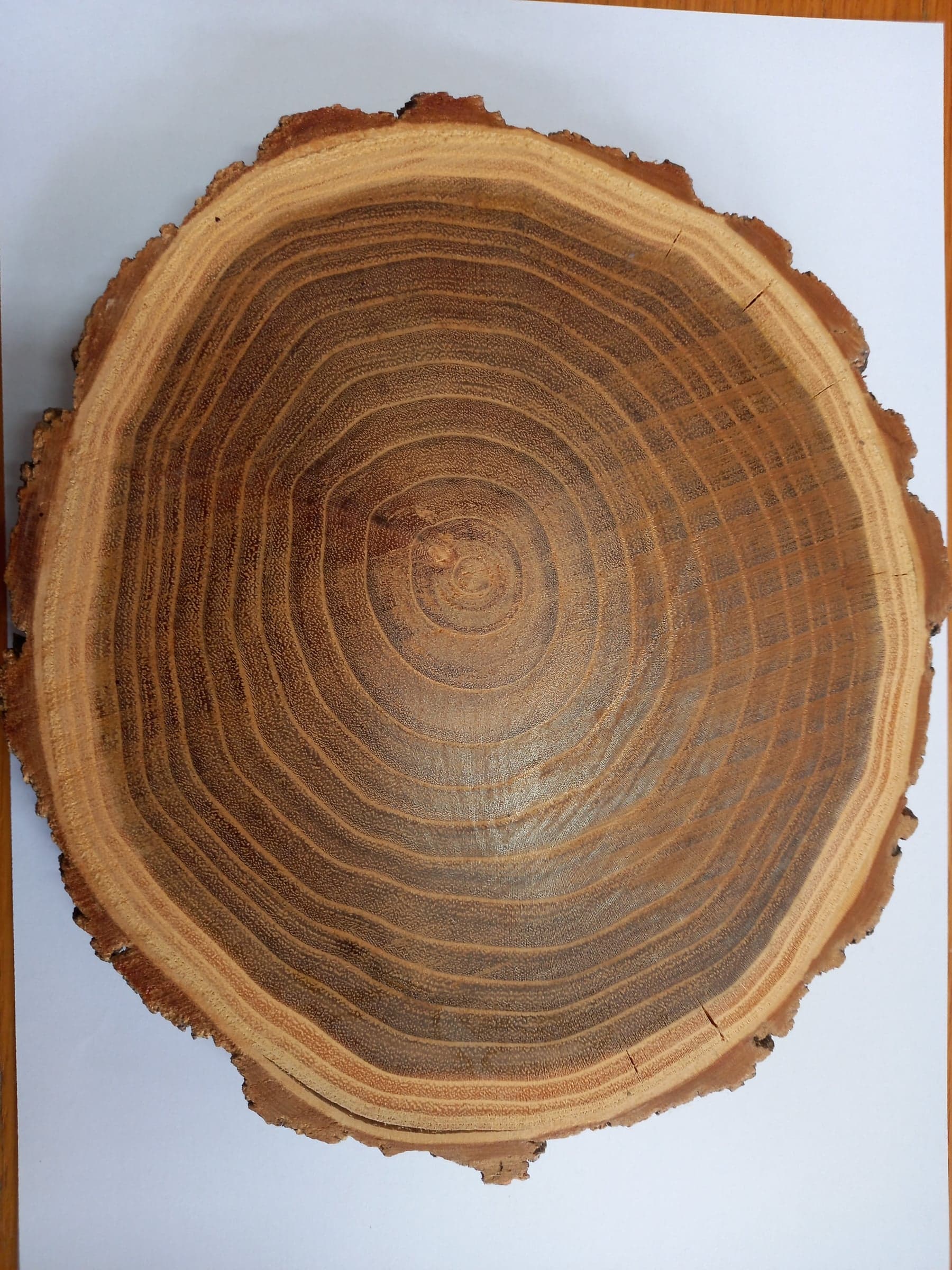
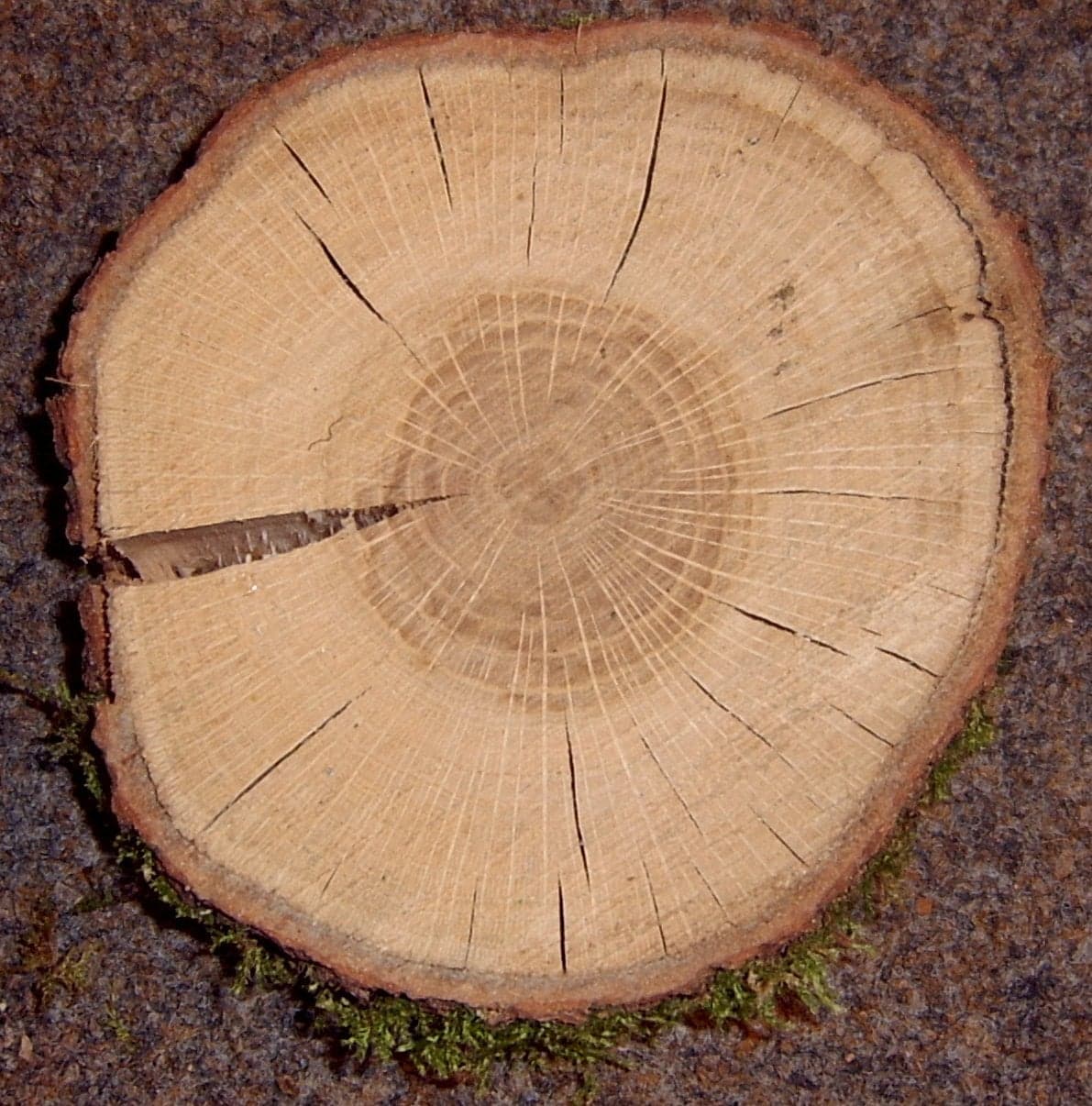
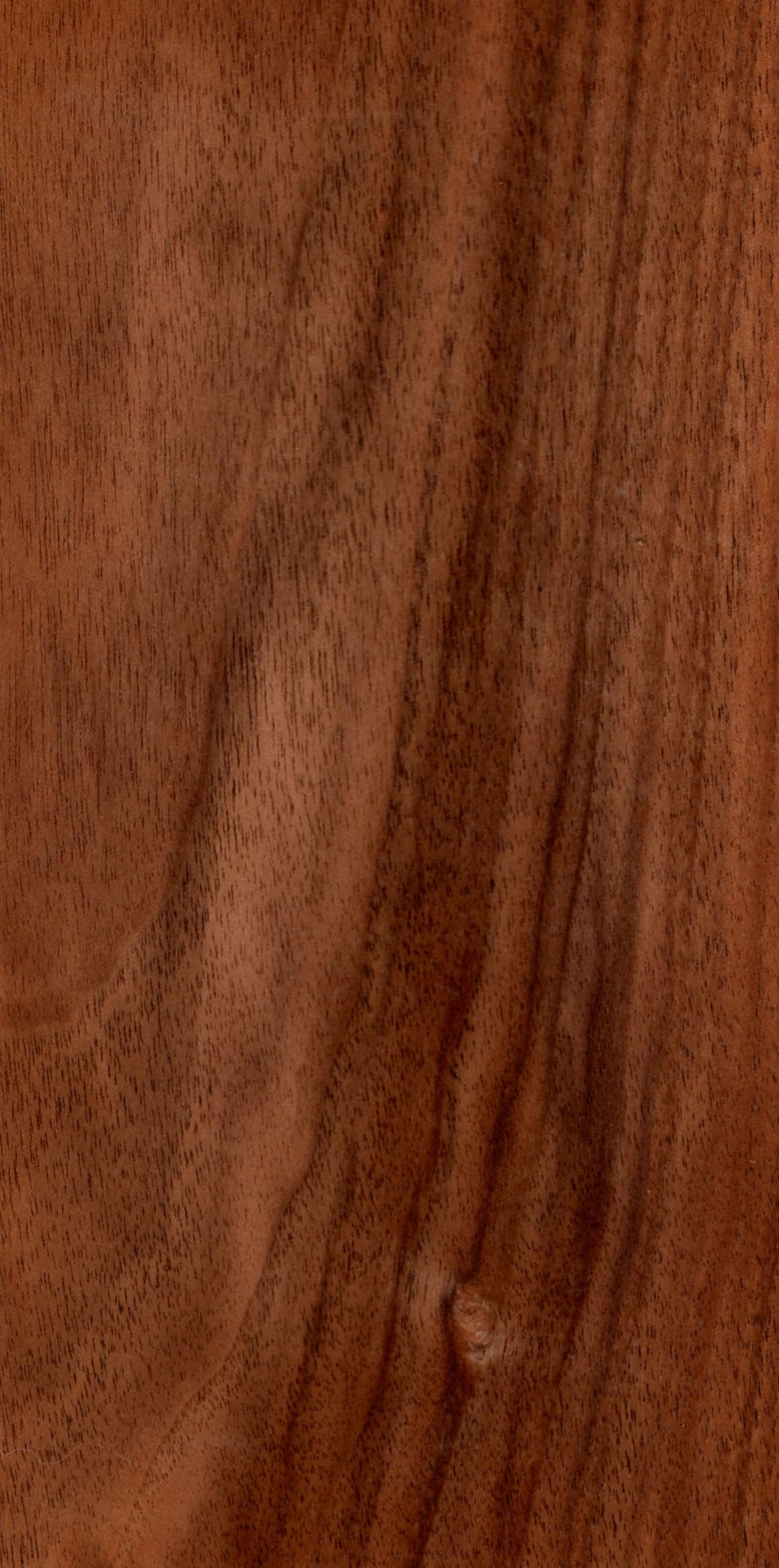
Straight grain, coarse open texture, and a heartwood that lands somewhere between olive-yellow and greenish-gold when freshly cut. UV does the work over the next few months, the green calms down and the wood warms into a deep amber. Sapwood is narrow and pale yellow. The contrast between the two reads cleanly on wide slabs.
- Olive-yellow to greenish-gold heartwood when freshly milled
- Warms to a deep amber over weeks of light exposure
- Narrow pale yellow sapwood, cleanly demarcated from the heartwood
- Coarse open pores read clearly under oil finishes
- Straight grain, coarse texture; very durable.
Obdelava
Obdelava
- Žaganje · DobroKako čist je rez in koliko les obrablja rezila.1 = težavno · 5 = odlično
- Skobljanje · DobroKako gladka ostane površina in koliko se les trga.1 = težavno · 5 = odlično
- Brušenje · DobroKako hitro se gladko obrusi, ne da bi zamašil brusni papir.1 = težavno · 5 = odlično
- Struženje · Zelo dobroKako se reže in končno obdela na stružnici.1 = težavno · 5 = odlično
- Rezbarjenje · DobroKako ostre podrobnosti ohrani pri delu z dletom.1 = težavno · 5 = odlično
- Lepljenje · Zelo dobroKako zanesljivo držijo lepljeni spoji.1 = težavno · 5 = odlično
- Oprijem vijakov/žebljev · Zelo dobroKako dobro drži vijake in žeblje, ne da bi razpokal.1 = težavno · 5 = odlično
- Parno krivljenje · OdličnoKako dobro po parjenju sprejme krivine.1 = težavno · 5 = odlično
Honest warning, this is a hard, tough wood and it will blunt edges. Carbide tooling is sensible, and HSS needs frequent sharpening. Sawing, planing, and sanding all sit around average difficulty for the effort, but tool wear is well above average. It glues and screws cleanly once you pre-drill, and it turns nicely. The standout is steam-bending. Robinia is one of the best European species for it, on a par with white oak.
Končna obdelava
Takes oils and hardwax oils well; the open pores welcome them. The early colour shift is dramatic, so finish a test piece and leave it in daylight for a fortnight before committing, what you see on the bench is not what the client will see in a month. UV-blocking finishes slow the amber drift if a greener tone is wanted. Sanding to 180 is usually enough; finer grits can burnish the surface and fight oil uptake.
Sušenje
Dries slowly and benefits from patience. Surprisingly stable for its hardness once acclimatised, radial movement around 4–5% and tangential 6.5–8% are modest for a 770 kg/m³ wood. Stack with care, weight the top, and expect some end-checking if rushed. Kiln schedules should be conservative.
Koliko bo deloval?
Les se prečno širi in krči, ko zrak postaja bolj vlažen ali suh. Pred načrtovanjem pritrdil ocenite sezonsko delovanje mizne plošče iz lesa Black Locust / Robinia.
Pričakovano sezonsko delovanje
približno 8,3 mm
Mizno ploščo pritrdite s sponami ali nosilci z utori, ne z lepilom ali trdno privitimi vijaki.
Model linearnega krčenja: širina × (krčenje ÷ 28 % nasičenosti vlaken) × sezonska sprememba vlažnosti. Za les Black Locust / Robinia uporablja 7,25 % tangencialnega krčenja. To je ocena za načrtovanje, ne jamstvo.
Koliko stane
Trenutne prodajne cene za les Black Locust / Robinia po Evropi na kubični meter brez DDV. Za podrobnosti se dotaknite poljubne cene.
- Najboljši hlodi na dražbiIzbrani visokokakovostni hlodi, prodani na licitacijah zaprtega tipa, večinoma izdelovalcem furnirja in pohištva. Iz takšnih hlodov se režejo plohi.Večina cen je med 143 € in 143 €.Na podlagi 25 cen iz 1 regije.Najnovejši podatki: 24. sep. 2026
- Običajni hlodiVelike količine standardnega okroglega lesa, ki ga prodajajo lastniki gozdov in državne gozdarske službe, večinoma za gradbeništvo in industrijo.Večina cen je med 11 € in 61 €.Na podlagi 17 cen iz 1 regije.Najnovejši podatki: 24. sep. 2026
Zakaj ploh stane več?
To so cene surovega lesa. Ploh je najboljši izrez hloda, sušen najmanj eno leto ter nato pregledan in izmerjen kos za kosom. Samo majhen del posameznega hloda postane ploh.
Vir: KORENA Timber Index · Najnovejši podatki: 24. sep. 2026
Prikaži vse regionalne ceneVarnost in nabava
- Gojeno in posekano v Evropi.
- Status na Rdečem seznamu IUCN: svetovna ocena ogroženosti te vrste.
Not recommended for direct food contact. The bark, leaves, and seeds carry toxic compounds, and while the heartwood is considered the safer part of the tree, we would not specify it for cutting boards or utensils. The dust is a known irritant and sensitiser, some woodworkers report nausea from prolonged exposure. Run dust extraction and a fitted respirator, not just a paper mask.
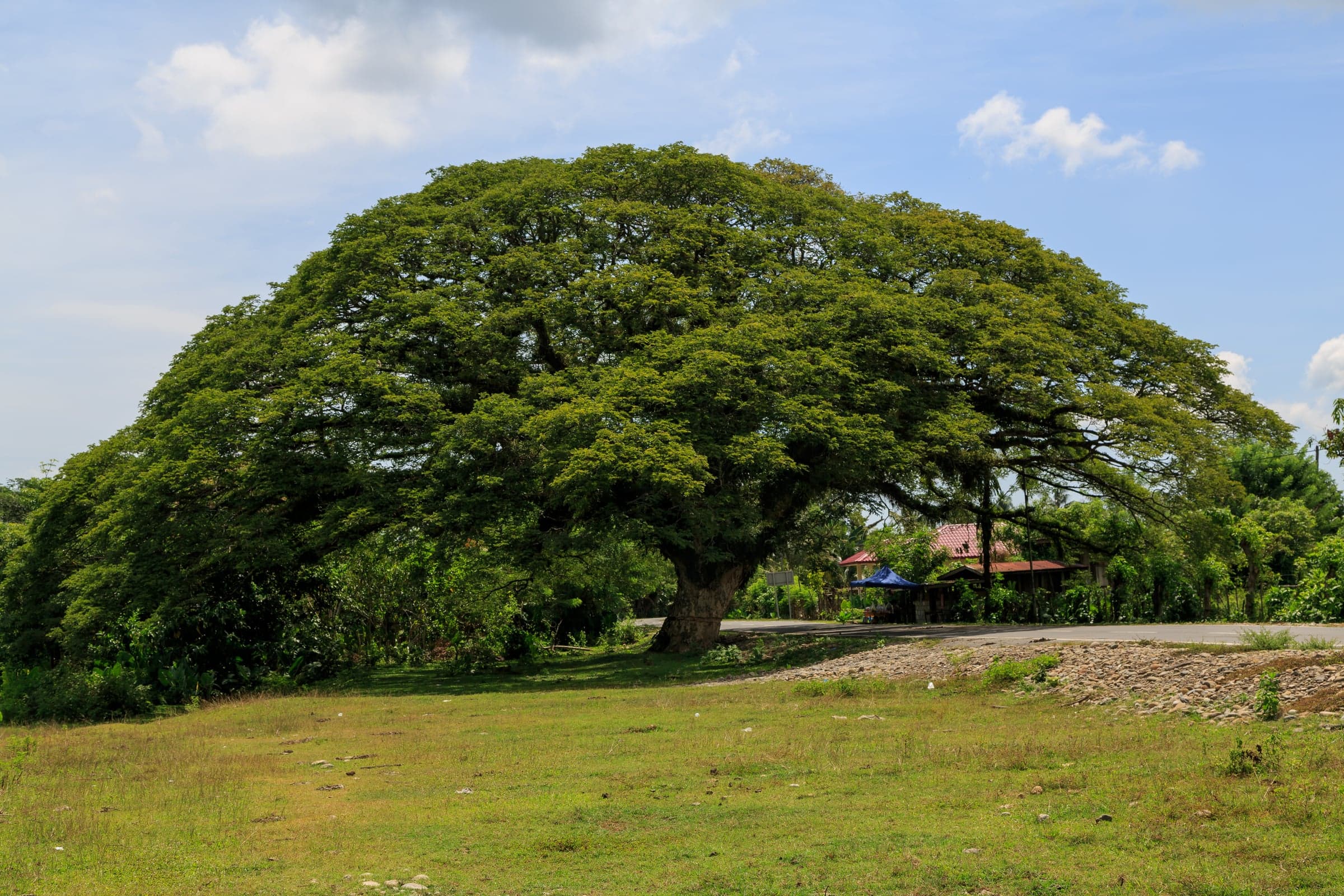
Originally North American, but naturalised and commercially grown across central and eastern Europe for over two centuries. Hungary, Romania, Bulgaria, and Slovakia all have working forestry programmes around it. For sourcing and EUDR purposes we treat it as European stock, the supply chain sits inside the EU and the paperwork follows.
IUCN Least Concern, no CITES listing. Grown commercially across central and eastern EU, often on marginal land where slower-growing natives struggle. Class 1 durability means outdoor pieces last decades without preservative chemistry, which is its own sustainability argument. EUDR-wise, the supply chain is short and EU-internal, provenance is straightforward to document.
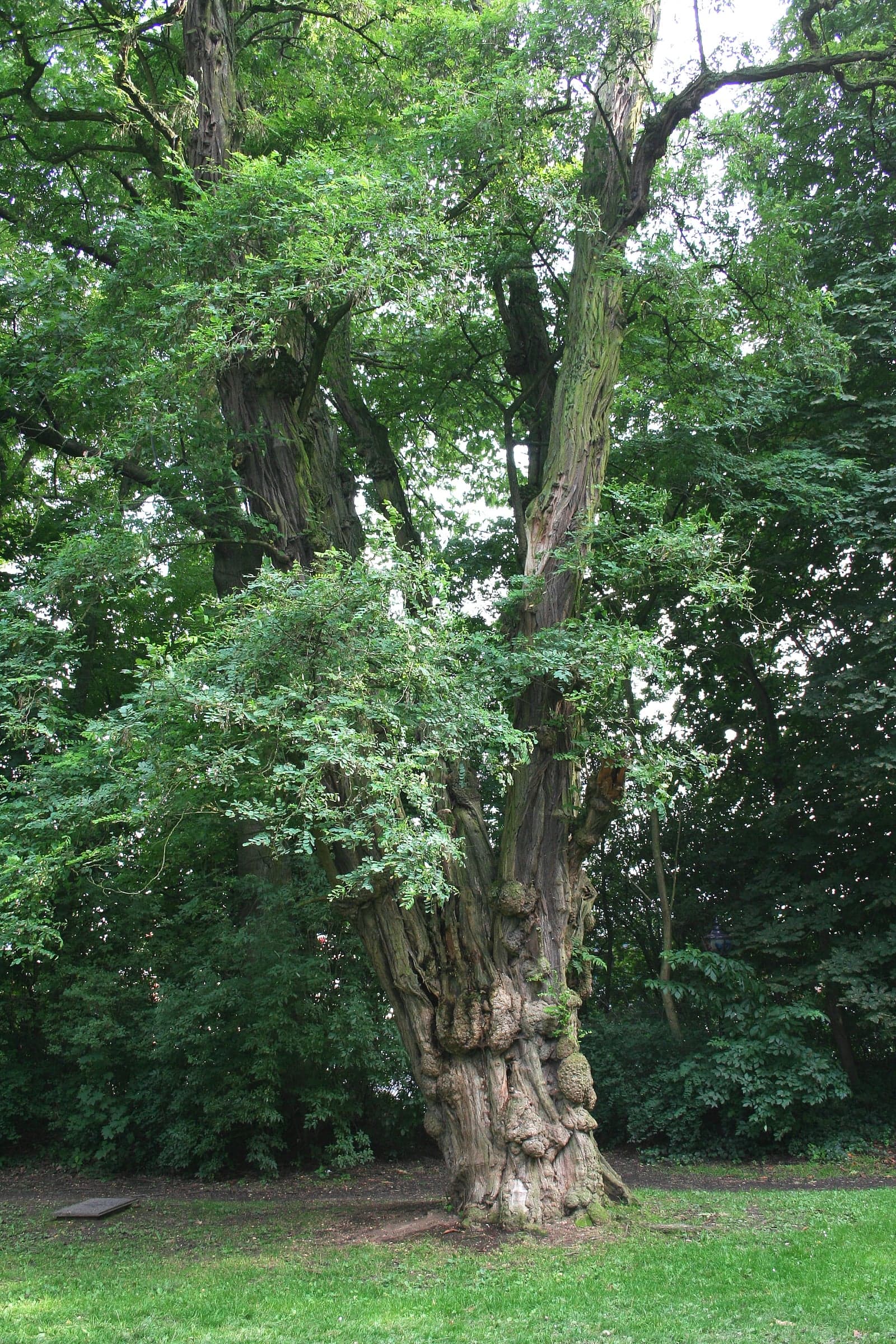
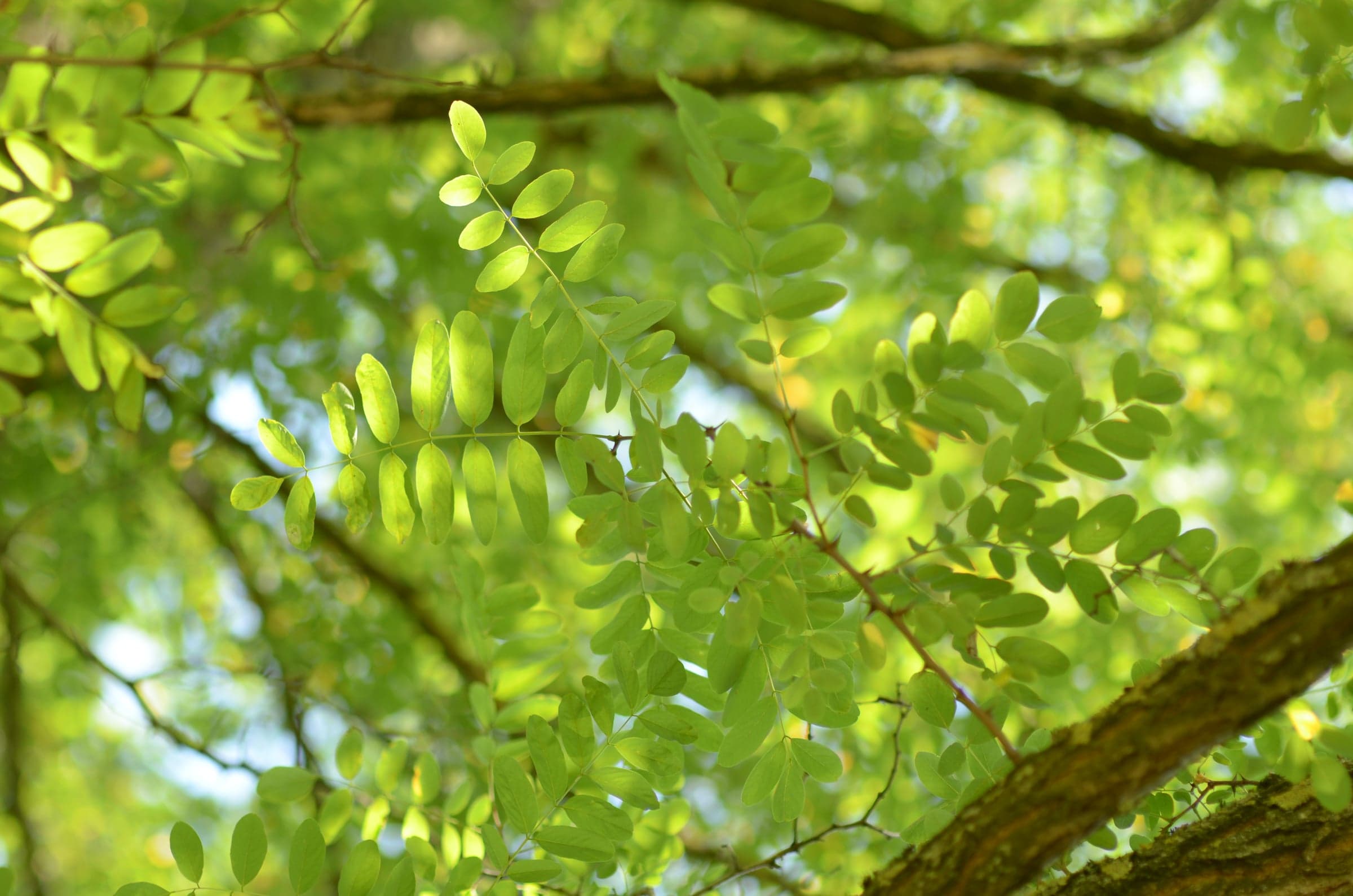
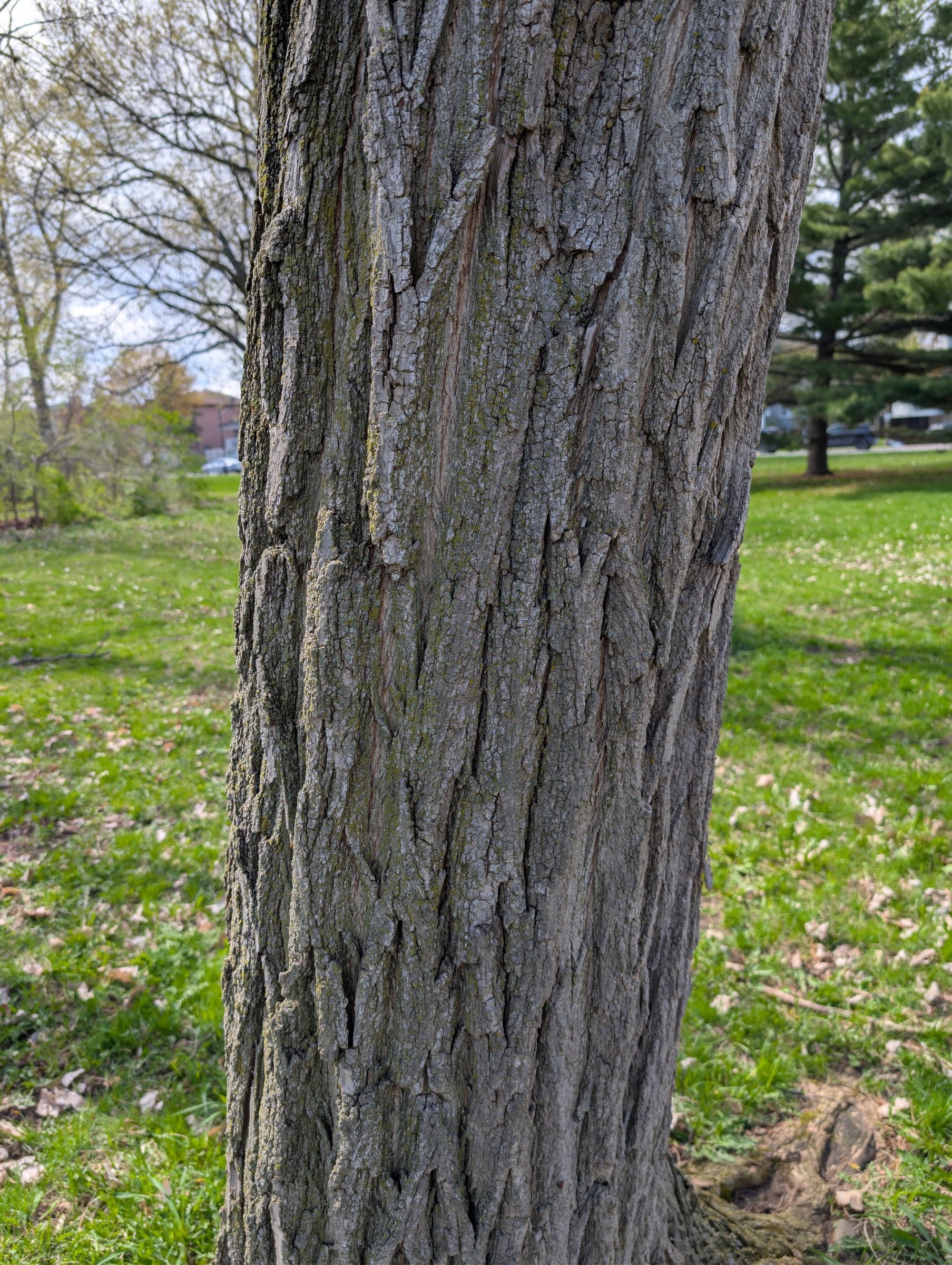
Preberite celoten vodnikPodrobni zapiski o teksturi, spreminjanju barve, obdelavi in stabilnosti.
What Robinia actually is#
Robinia pseudoacacia, black locust, is the strongest and most durable timber in this catalogue, and it grows across Europe like a weed.
The numbers are not close. At 7,560 N Janka it is the hardest measured species here. Its modulus of rupture of 130 MPa and elastic modulus of 14.0 GPa are the highest measured figures in the catalogue. And it is rated decay class 1, very durable, matched only by yew.
That combination, tropical grade durability from a fast growing European species, is unusual enough to be worth stating plainly: robinia does what teak and ipe do, without a tropical supply chain.
Why it is not more widely used#
Three reasons, none of them about performance.
It is hard to convert. At this density and hardness it blunts tooling fast and asks a great deal of machines, and small sawmills often decline it.
It grows badly for timber. Robinia is prone to twisting, forking and spiral grain, so long straight clean lengths are scarce even where the tree is abundant. Most of what is cut ends up as fence posts and stakes, applications where its durability is used and its form does not matter.
It has an image problem. In much of Europe it is regarded as an invasive nuisance rather than a timber species, which keeps demand and therefore processing infrastructure low.
For slab work, the form problem is the main constraint. Wide clean robinia is genuinely uncommon.
Reading a robinia slab#
Heartwood runs greenish yellow when fresh, darkening to a warm golden brown and eventually a russet with light exposure. Sapwood is narrow and pale. The wood has a natural lustre and fluoresces under UV, which is a quick identification test.
Grain is often wavy or interlocked, and the ring porous structure gives a bold figure not unlike ash or oak.
Check carefully for spiral grain and twist along the length. It is the characteristic fault of the species and it will show itself after machining if it was not visible before.
At the bench#
Expect to work for it. At 7,560 N with frequently interlocked grain, robinia blunts cutters faster than anything else here and tears out where the grain reverses.
Sharp tooling is not advice, it is the requirement. Light cuts, a high angle plane or a scraper for the final surface, and carbide rather than steel where you have the choice. A helical cutterhead makes a substantial difference.
It turns nicely and it steam bends excellently, one of the best European species for it. Combined with its durability, that makes it a strong candidate for exterior curved work where oak is the conventional choice but does not last as long.
It glues and screws well, though pilot holes are essential at this density.
Toxicity#
The bark, leaves and seeds are toxic, containing robin and robinin. The wood is recorded in this catalogue as not food safe and the dust is irritant.
Do not use robinia for chopping boards, food contact surfaces, or anything a child might mouth. Run extraction when machining.
Stability#
Volumetric shrinkage of 10.0 percent is among the lowest in this catalogue, with tangential at 6.5 percent against radial at 4.0 percent. That is both a low total and a narrow differential, which means robinia is dimensionally well behaved once dry, unusual for a wood this dense.
Drying it is another matter: the density and frequent spiral grain make it slow and prone to distortion.
The invasive question#
Robinia is native to North America and was introduced to Europe in the seventeenth century. It spreads readily by root suckers and fixes nitrogen, altering soil chemistry, and several European countries list it as invasive.
That is an ecological concern about planting, not a restriction on timber. Harvesting established stands is generally viewed favourably, and using the wood is not in tension with the conservation position.
Where Robinia is the right answer#
Outdoor furniture, decking, garden structures, boat components, fence posts, and any exterior application where a European species with tropical grade durability is wanted. Also steam bent exterior work.
It is the wrong answer for food contact, for large matched volumes, and where your tooling is not up to it.
Sourcing and EUDR#
Not CITES listed and assessed as Least Concern. Abundant across central and southeastern Europe, particularly Hungary, which has the largest managed robinia resource in the world. Supply is straightforward and documentation is simple.
Vprašanja kupcev
Vprašanja kupcev
Is Robinia really as durable as tropical hardwood?
Yes, and that is its main argument. It is rated decay class 1, very durable, the highest rating in this catalogue alongside yew, and it performs comparably to teak or ipe in ground contact. Because it grows fast across Europe it offers tropical grade durability without a tropical supply chain, which is a rare combination under EUDR.
How hard is it?
At 7,560 N Janka it is the hardest measured wood in this catalogue, above hornbeam at 7,260 N and half again as hard as European oak. Its modulus of rupture of 130 MPa and stiffness of 14.0 GPa are also the highest measured figures here. It is a genuinely formidable timber.
Is it toxic?
The bark, leaves and seeds are toxic, containing robin and robinin, and the wood is recorded here as not food safe. Dust is irritant. Do not use it for chopping boards, food contact surfaces or anything a child might chew, and run extraction when machining.
Why is it treated as invasive in some countries?
Robinia is native to North America and was introduced to Europe in the seventeenth century. It spreads readily by root suckers and fixes nitrogen, altering soil chemistry, and several European countries list it as invasive. That is an ecological concern about planting rather than a restriction on timber, and harvesting established stands is generally viewed favourably.
Can it be steam bent?
It is one of the best European species for it. Combined with its durability that makes it a strong choice for exterior curved work such as boat parts and garden structures, where oak would be the conventional answer but robinia lasts longer.
Mehanske lastnosti
Tehnični podatki
Objavljene referenčne vrednosti. Kjer se viri ne ujemajo, je prikazan razpon, za zgornje lestvice pa je uporabljena običajna vrednost.
| Gostota (kg/m³)Masa na kubični meter pri približno 12 % vlažnosti. Težji les je navadno trši in močnejši. | 700–830 kg/m³običajno 770 kg/m³ |
|---|---|
| Trdota po Janki (N)Sila, potrebna, da se jeklena kroglica do polovice vtisne v les. Standardno merilo odpornosti proti udrtinam. | 7,000–8,200 Nobičajno 7560 N |
| MOR: upogibna trdnost (MPa)Upogibna trdnost: obremenitev, pri kateri se nosilec zlomi. | 130–150 MPa |
| MOE: modul elastičnosti (GPa)Upogibna togost: koliko se polica ali mizna plošča povesi pod obremenitvijo. | 14.0–16.0 GPa |
| Radialno krčenjeKrčenje prečno na letnice od svežega do popolnoma suhega lesa. Tako delujejo radialno rezane deske. | 4.0–5.0 % |
| Tangencialno krčenjeKrčenje vzdolž letnic. Tako delujejo tangencialno rezane deske in večina plohov. | 6.5–8.0 % |
| Prostorninsko krčenjeSkupna sprememba prostornine od svežega do popolnoma suhega lesa. Nižja vrednost pomeni večjo stabilnost. | 10.0–12.0 % |
| Naravna trajnost (EN 350)Evropski standard naravne odpornosti proti trohnenju, od 1 (zelo trajno) do 5 (netrajno). | Class 1 — Very durable |
Viri
- The Wood Database(dostopano 2026-05-09)
- USDA FPL Wood Handbook FPL-GTR-190 (2010)(dostopano 2026-05-09)
- Meier, E. — WOOD! Identifying and Using Hundreds of Woods Worldwide (2015)(dostopano 2026-05-09)