KORENA
AdhmadFinished piecesSoláthairtíClóis adhmaidIris

Faigh fógra

Tá gach leac adhmaid uathúil. Nuair a dhíoltar í, tá sí imithe. Seolaimid ríomhphost chugat nuair a liostaítear píosaí nua: earraí úra, speicis nua agus cláir a mheaitseálann le hachoimre tionscadail.

Cúpla ríomhphost sa mhí. Gan turscar, díliostáil am ar bith.

KORENA, crua-adhmad den scoth

Píosa amháin ag an am.

Crua-adhmad den scoth atá fíoraithe, á dhíol píosa ar phíosa. Tógtar grianghraif agus tomhais de gach leac adhmaid agus seoltar í ón gclós adhmaid comhpháirtíochta le pas adhmaid.

Siopa

  • Brabhsáil táirgí
  • Cartlann na n-earraí díolta
  • Rianaigh ordú

Foghlaim

  • Iris
  • Treoracha speiceas
  • Gluais
  • Déan comparáid
  • Údair

Cabhair

  • Maidir linn
  • Conas a oibríonn sé
  • Bí i do chlós adhmaid comhpháirtíochta
  • Faigh leac adhmaid
  • Tacaíocht
  • Teimpléid doiciméad
  • Preas

Ceannach

  • Téarmaí díola
  • An ceart chun tarraingt siar
  • Tuairisceáin agus ráthaíocht dhlíthiúil
  • Seoladh agus seachadadh

Muinín

  • Beartas príobháideachais
  • Beartas fianán
  • Bunáitíocht adhmaid agus EUDR
  • Inrochtaineacht

Fógra dlíthiúil

  • Fógra dlíthiúil
  • Úsáid inghlactha
  • Maoin intleachtúil agus ábhar

© 2026 KORENA. Gach ceart ar cosaint.

Á oibriú ag Martial Labs Ltd. (BG, EIK 207453941). Is ainm trádála de chuid Martial Labs Ltd. é KORENA.

Tá meas againn ar do phríobháideachas

Úsáidimid fianáin riachtanacha chun go n-oibreoidh an suíomh. Le do chead d'úsáidfimis fianáin freisin le haghaidh anailísíochta, ábhar pearsantaithe agus fógraí. Is féidir leat d'intinn a athrú am ar bith ar an leathanach sainroghanna toilithe. Féach ar ár mbeartas fianán agus ár mbeartas príobháideachais.

  1. Baile
  2. /
  3. Speicis
  4. /
  5. Aleppo Pine

Pinus halepensis

Aleppo Pine

The pine of dry Mediterranean coasts. Irregular, resinous and awkward to machine, with the lowest measured shrinkage of anything KORENA lists.

  • Fásta agus lománaithe san Eoraip.
  • Grúpa luibheolaíoch. Is buaircínigh iad bogadhmaid; is crainn leathanduilleacha iad crua-adhmaid.
  • Fine luibheolaíoch an speicis.
Faigh fógra nuair a thagann séSpeiceas tagartha. Níl píosaí i stoc faoi láthair.
  • Oiriúnacht tionscadail
  • I stoc
  • Cuma
  • Oibriú
  • Gluaiseacht
  • Praghas
  • Sábháilteacht agus foinsiú
  • Ceisteanna
  • Sonraí teicniúla

An oireann sé do do thionscadal?

Iontach do

  • Rustic furniture
  • Panelling
  • Carcass work
  • Shelving
  • Decorative slabs

Láidreachtaí

  • An-chobhsaíGluaiseacht shéasúrach íseal. Maith do bharraí leathana agus ailt theanna.

Bí cúramach

  • Greannaíonn an deannachÚsáid eastóscadh agus caith masc agus tú ag greanáil nó ag meaisíniú.

Tapáil lipéad chun na sonraí a fháil.

Níl Aleppo Pine san eisiúint reatha

Speicis chomhchosúla i stoc

Níl Aleppo Pine againn anois. Oireann na speicis seo do na tionscadail chéanna agus tá píosaí ar fáil.

  • Snáithe European Oak

    European Oak

    Quercus robur

    6 phíosa

  • Snáithe European Walnut

    European Walnut

    Juglans regia

    9 bpíosa

  • Snáithe Saman

    Saman

    Samanea saman

    4 phíosa

Faigh fógra faoi Aleppo Pine

Seolaimid ríomhphost chugat nuair a thagann leaca úra Aleppo Pine chuig KORENA. Tá gach píosa uathúil, mar sin is fiú fógra luath.

Cúpla ríomhphost sa mhí. Gan turscar, díliostáil am ar bith.

Cuma an adhmaid

An chuma atá air

Pale yellow to light brown, often with an orange tint in the heartwood, against wide pale sapwood. Growth is fast and irregular where conditions are dry, so ring width varies noticeably within a single board and the grain is frequently wavy rather than straight. Knots are common. It reads as a rougher, more variable wood than the northern pines.

  • Pale yellow to light brown with an orange tint
  • Wide and irregular growth rings reflecting drought driven growth
  • Frequently wavy grain rather than straight
  • Straight grain with irregular ring width from drought-driven growth; frequently wavy. Coarse texture, pale yellow to light brown with an orange tint against wide pale sapwood.

Ag obair leis

Ag obair leis

  • Sábhadh · MaithCé chomh glan a ghearrann sé agus cé chomh crua is atá sé ar lanna.1 = deacair · 5 = ar fheabhas

Resinous and variable. The wavy and irregular grain typical of drought grown stock causes tear-out where the grain direction reverses, which it does often. Light cuts, sharp tooling and a scraper for the final surface are the practical answer. Resin loads blades and abrasives as it does in the other Mediterranean pines. It glues acceptably once surfaces are clean of resin.

Bailchríoch

Wipe with denatured alcohol or acetone before finishing to lift surface resin. Pigment stains blotch, as in all the pines, so a dye or a clear finish is safer. Seal knots with shellac before painting. The orange tint in the heartwood deepens with light exposure.

Stálú

Prone to distortion because the grain is irregular and ring width uneven, so expect more spring and bow on ripping than in a northern pine. Measured shrinkage from the cited study is comparatively low at around 8.3 percent volumetric, with radial at 3.8 and tangential at 4.8 percent, and the unusually narrow gap between those two figures suggests good dimensional behaviour once dry. Those values come from Algerian material and regional variation in this species is wide.

Cé mhéad a bhogfaidh sé?

Atann agus crapann adhmad trasna a leithid de réir mar a éiríonn an t-aer níos taise nó níos tirime. Meas gluaiseacht shéasúrach barr Aleppo Pine sula ndearann tú na feistis.

Gearradh
An áit ina mbeidh sé

Gluaiseacht shéasúrach mheasta

thart ar 5.4 mm

Ceangail an barr le cnaipí nó lúibíní sliotánacha, ní le gliú ná scriúnna teanna.

Samhail líneach craptha: leithead × (crapadh ÷ 28 % sáithiú snáithíní) × luascadh séasúrach cion taise. Úsáidtear crapadh tadhlaíoch 4.76 % do Aleppo Pine. Meastachán pleanála, ní ráthaíocht.

An costas

Níl tagairt mhargaidh do Aleppo Pine fós. Cuireann a chlós adhmaid comhpháirtíochta praghas ar gach píosa KORENA ar leith.

Sábháilteacht agus foinsiú

  • Fásta agus lománaithe san Eoraip.
  • Working with pine has been reported to cause allergic skin reactions and asthma-like symptoms in some people. This species is resinous, so skin contact sensitisation over repeated exposure is a realistic risk. Gloves and good extraction are appropriate.

  • Pinus halepensis is the characteristic pine of the Mediterranean basin, growing from Spain and southern France across Italy, Greece and the Balkans to North Africa and the Levant. It tolerates drought and poor limestone soils better than any other pine here, which is why it dominates dry coastal landscapes and is planted heavily for erosion control.

  • Not listed in the CITES Appendices. Aleppo Pine is abundant across the Mediterranean and widely planted for erosion control on degraded land, so supply is not constrained. Fire is the dominant pressure on these forests, and large burn events regularly push salvage material into regional markets. The species is fire adapted and regenerates readily, but salvage stock should be identified as such.

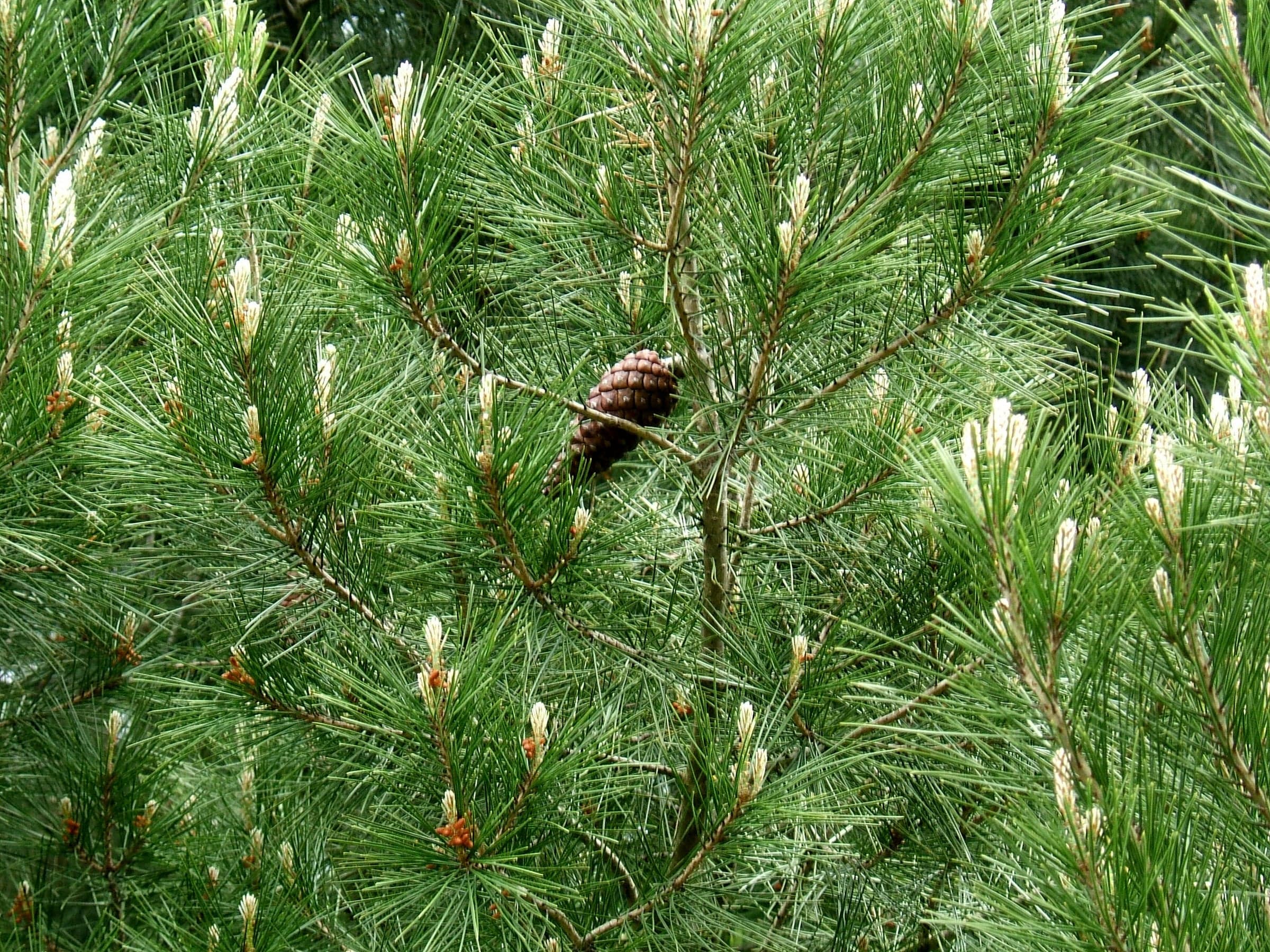
Aleppo Pine: Duilleog
Duilleog
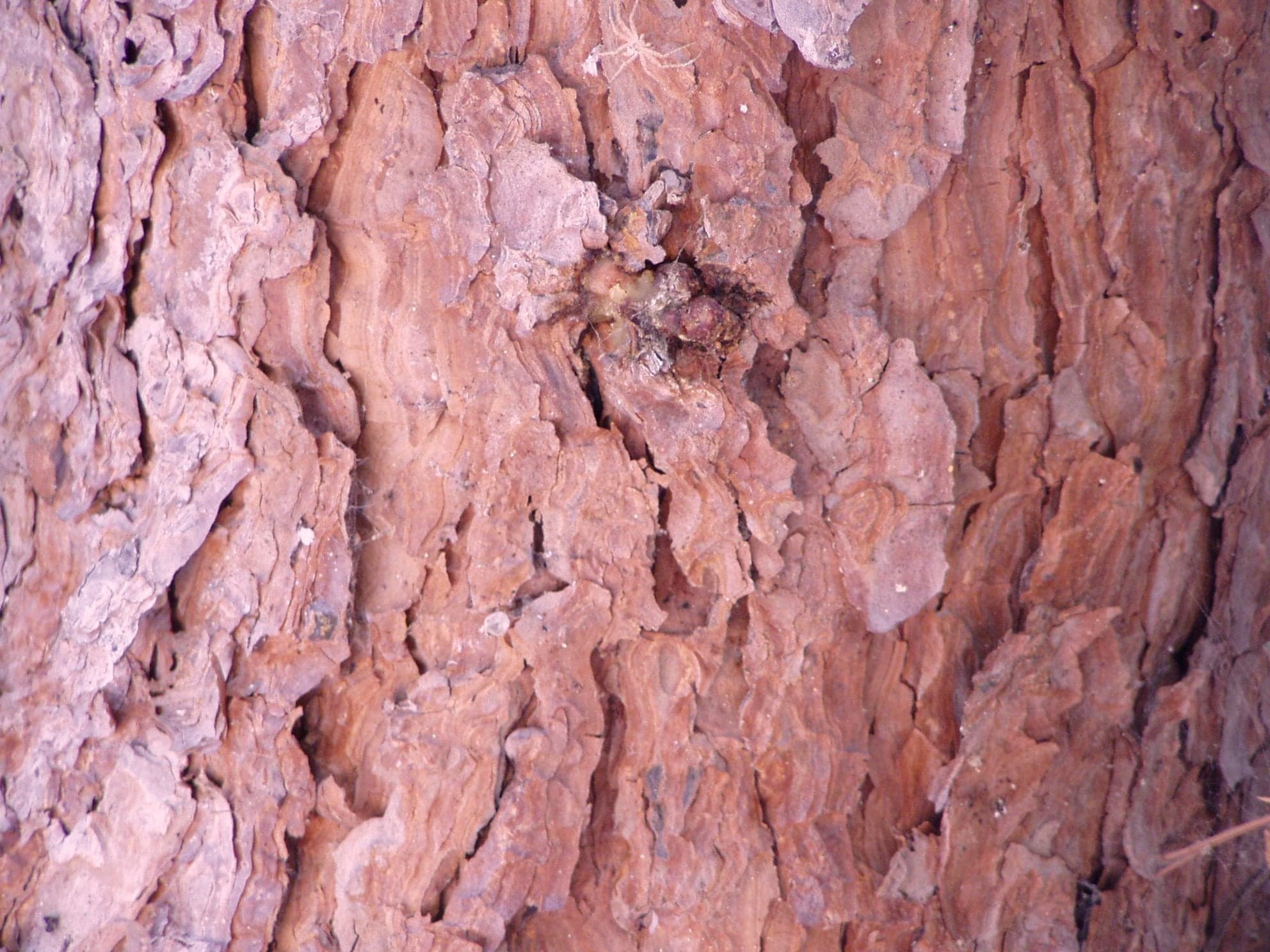
Aleppo Pine: Coirt
Coirt
Léigh an treoir iomlánNótaí mionsonraithe ar phatrún, athrú datha, oibriú agus cobhsaíocht.+

What Aleppo Pine actually is#

Pinus halepensis is the pine you have seen on every dry Mediterranean hillside, from Spain and southern France across Italy, Greece and the Balkans to North Africa and the Levant. It tolerates drought and thin limestone soils better than any other pine in this catalogue, which is why it dominates degraded coastal landscapes and is planted heavily for erosion control.

That toughness in the field translates into an awkward timber. Growing under water stress produces irregular ring width, frequently wavy grain, and a lot of knots. It is a rougher and more variable wood than the northern pines, and it should be chosen for what it looks like rather than in spite of it.

What the numbers do and do not cover#

This species has partial data, and the gaps are worth explaining.

Density is listed at 540 kg per cubic metre, which sits between Maritime Pine at 500 and Scots Pine at 550. Modulus of rupture and shrinkage are also listed. All of these come from a single peer-reviewed study of Algerian material, cited on the species record.

There is no Janka hardness value and no elastic modulus. The general reference works do not publish a Janka figure for this species, and the study that measured stiffness did so under EN 310, a panel testing standard whose results are not comparable to the clear-wood values published for the other species here. Presenting 17.5 GPa next to Scots Pine at 10.08 GPa would imply a stiffness ranking that the test basis does not support, so the field is left empty rather than filled misleadingly.

There is also no durability rating, which matters practically: it means there is no sourced basis for recommending this wood outdoors.

The shrinkage figure is the interesting one#

The cited study measured volumetric shrinkage at around 8.3 percent, radial at 3.8 percent and tangential at 4.8 percent. That volumetric figure is the lowest in the entire KORENA catalogue, well below Maritime Pine at 14.4 percent.

More important than the headline number is the gap between radial and tangential. Cupping in a flatsawn board is driven by the difference between those two, and most species here run a ratio close to two to one. Aleppo Pine at 3.8 against 4.8 is far closer to one to one, which predicts unusually good behaviour across a wide flatsawn face.

Two caveats. The values come from Algerian material and this species varies widely across a very large range. And low shrinkage does not compensate for irregular grain, which causes its own distortion on drying regardless of how little the wood shrinks overall.

At the bench#

Expect tear-out. The wavy and irregular grain reverses direction within a single pass more often than in a northern pine, and a heavy cut will lift fibres wherever it does.

The working method that suits this wood is light cuts, sharp tooling, and a final surface produced with a card scraper or a high angle plane rather than by machining flat in one go. A helical cutterhead earns its cost here.

Resin loads blades and abrasives at roughly the level of Maritime Pine, which is to say constantly. Clean blades between operations and treat sandpaper as consumable. Wipe joint faces with acetone before glue-up, because resin on a jointed surface will compromise the bond.

Finishing#

Solvent wipe first, as with the other resinous Mediterranean pines: denatured alcohol or acetone, allowed to flash off, before any oil goes on. Skipping it produces patchy curing that only becomes visible after the work is finished.

Pigment stains blotch, so use a dye or leave it clear. Seal every knot with shellac before a painted finish. The orange tint in the heartwood deepens with light exposure.

Where Aleppo Pine is the right answer#

Rustic furniture, panelling, carcass work, shelving and decorative slabs where the irregular figure and knot pattern are wanted, and where the excellent flatsawn stability is useful.

It is the wrong answer for fine work, for anything requiring a calculated load path given the missing stiffness data, and for exterior use, where no durability rating exists to support the decision.

Sourcing and EUDR#

Not listed in the CITES Appendices. Supply is not constrained: the species is abundant across the Mediterranean and planted extensively on degraded land. Fire is the dominant pressure on these forests, and large burn events regularly push salvage volumes into regional markets. Aleppo Pine is fire adapted and regenerates readily, so salvage material is legitimate, but it should be identified rather than discovered. KORENA listings record the originating yard and region.

Ceisteanna ceannaitheoirí

Ceisteanna ceannaitheoirí

Why is there no Janka hardness listed for Aleppo Pine?

+

KORENA publishes a figure only where a cited source supports it. The general reference works do not carry a Janka value for Pinus halepensis, and the one peer-reviewed dataset available covers density, bending strength and shrinkage but not hardness. Rather than borrow a number from another Mediterranean pine, the field is left empty. Density is listed at 540 kg per cubic metre, which places it between Maritime Pine and Scots Pine.

How stable is it?

+

Better than its rough appearance suggests. The cited study measured volumetric shrinkage at around 8.3 percent, the lowest figure in this catalogue, with radial at 3.8 and tangential at 4.8 percent. That narrow gap between radial and tangential is what governs cupping, and it is unusually favourable. The caveat is that these values come from Algerian material and this species varies widely across its range.

Why does it tear out so much when I plane it?

+

Drought driven growth produces irregular ring width and frequently wavy grain, so the grain direction reverses within a single pass more often than in a northern pine. Take light cuts, keep tooling sharp, and produce the final surface with a scraper or a high angle plane rather than trying to machine it flat in one go.

Is the bending strength figure really that high?

+

The cited study reports 116.4 MPa modulus of rupture for clear wood specimens under DIN 52186, which is higher than Scots Pine at 83.3 MPa and worth treating with appropriate care. It was measured on defect free samples of Algerian material, and the same paper notes that defects reduce mechanical properties by roughly 11 to 15 percent. Real boards have knots.

Can it be used outdoors?

+

No durability rating is established for this species in the sources KORENA cites, so there is no honest basis for recommending it outdoors. Mediterranean pines generally are not durable untreated. European Larch is the species in this catalogue with a sourced durability rating suitable for exterior use.

Airíonna meicniúla

Sonraí teicniúla

Luachanna tagartha foilsithe. Nuair nach n-aontaíonn foinsí, taispeántar an raon agus úsáidtear an luach tipiciúil do na scálaí thuas.

Dlús (kg/m³)Mais in aghaidh an mhéadair chiúbaigh ag cion taise thart ar 12 %. Bíonn adhmad níos troime níos crua agus níos láidre de ghnáth.500–580 kg/m³tipiciúil 540 kg/m³
MOR: modal réabtha (MPa)Neart lúbtha: an t-ualach ag a mbriseann bíoma.116 MPa
Crapadh gathachCrapadh trasna na bhfáinní fáis, ó úr go stálaithe in áith. Bogann cláir ghearrtha ina gceathrúna mar seo.3.8 %
Crapadh tadhlaíochCrapadh feadh na bhfáinní fáis. Bogann cláir réghearrtha agus formhór na leac mar seo.4.8 %
Crapadh toirtmhéadrachAthrú iomlán toirte ó úr go stálaithe in áith. Ciallaíonn níos ísle níos cobhsaí.8.3 %

Foinsí

  • Bourahla et al. — The physicomechanical and thermal properties of Algerian Aleppo pine (Pinus halepensis) wood, iForest 15: 106-111 (2022). Clear-wood specimens; density per NF B51-005, bending per DIN-52186, shrinkage per NF B51-006.(rochtain 2026-08-12)

Sracfhéachaint

Úsáideann na leibhéil bandaí seasta do gach speiceas a liostaíonn KORENA, mar sin is féidir iad a chur i gcomparáid go díreach. Tá an luach tomhaiste faoi gach ceann.
MeáchanCé chomh trom is atá leac adhmaid le hardúÉadrom

540 kg/m³

CobhsaíochtA laghad a bhogann sé leis na séasúirAn-chobhsaí

Crapadh toirtmhéadrach 8.3 %

OibriúSábhadh, plánáil, greanáil, gliúáilDúshlánach

Meán binse 3.1 / 5

Plánáil · Maith
Cé chomh mín a fhágann sé an dromchla agus a mhéid a stróiceann sé.
1 = deacair · 5 = ar fheabhas
  • Greanáil · MeasarthaCé chomh tapa a ghreanáiltear mín é gan an páipéar a thachtadh.1 = deacair · 5 = ar fheabhas
  • Deileadóireacht · MaithConas a ghearrann agus a chríochnaíonn sé ar an deil.1 = deacair · 5 = ar fheabhas
  • Snoíodóireacht · MaithCé chomh géar a choinníonn sé mionsonraí faoin ngúiste.1 = deacair · 5 = ar fheabhas
  • Gliúáil · An-mhaithCé chomh hiontaofa a choinníonn ailt ghliúáilte.1 = deacair · 5 = ar fheabhas
  • Greim scriú / tairne · An-mhaithCé chomh maith a choinníonn sé scriúnna agus tairní gan scoilteadh.1 = deacair · 5 = ar fheabhas
  • Lúbadh gaile · MaithCé chomh maith a ghlacann sé cuair tar éis galaithe.1 = deacair · 5 = ar fheabhas