KORENA
AdhmadFinished piecesSoláthairtíClóis adhmaidIris

Faigh fógra

Tá gach leac adhmaid uathúil. Nuair a dhíoltar í, tá sí imithe. Seolaimid ríomhphost chugat nuair a liostaítear píosaí nua: earraí úra, speicis nua agus cláir a mheaitseálann le hachoimre tionscadail.

Cúpla ríomhphost sa mhí. Gan turscar, díliostáil am ar bith.

KORENA, crua-adhmad den scoth

Píosa amháin ag an am.

Crua-adhmad den scoth atá fíoraithe, á dhíol píosa ar phíosa. Tógtar grianghraif agus tomhais de gach leac adhmaid agus seoltar í ón gclós adhmaid comhpháirtíochta le pas adhmaid.

Siopa

  • Brabhsáil táirgí
  • Cartlann na n-earraí díolta
  • Rianaigh ordú

Foghlaim

  • Iris
  • Treoracha speiceas
  • Gluais
  • Déan comparáid
  • Údair

Cabhair

  • Maidir linn
  • Conas a oibríonn sé
  • Bí i do chlós adhmaid comhpháirtíochta
  • Faigh leac adhmaid
  • Tacaíocht
  • Teimpléid doiciméad
  • Preas

Ceannach

  • Téarmaí díola
  • An ceart chun tarraingt siar
  • Tuairisceáin agus ráthaíocht dhlíthiúil
  • Seoladh agus seachadadh

Muinín

  • Beartas príobháideachais
  • Beartas fianán
  • Bunáitíocht adhmaid agus EUDR
  • Inrochtaineacht

Fógra dlíthiúil

  • Fógra dlíthiúil
  • Úsáid inghlactha
  • Maoin intleachtúil agus ábhar

© 2026 KORENA. Gach ceart ar cosaint.

Á oibriú ag Martial Labs Ltd. (BG, EIK 207453941). Is ainm trádála de chuid Martial Labs Ltd. é KORENA.

Tá meas againn ar do phríobháideachas

Úsáidimid fianáin riachtanacha chun go n-oibreoidh an suíomh. Le do chead d'úsáidfimis fianáin freisin le haghaidh anailísíochta, ábhar pearsantaithe agus fógraí. Is féidir leat d'intinn a athrú am ar bith ar an leathanach sainroghanna toilithe. Féach ar ár mbeartas fianán agus ár mbeartas príobháideachais.

  1. Baile
  2. /
  3. Speicis
  4. /
  5. Hard Maple

Acer saccharum

Hard Maple

The canonical butcher-block and kitchen-island wood. Pale, dense, food-safe, and hard-wearing. North American import, long established as a furniture-grade species through European channels.

  • Fásta lasmuigh den Eoraip agus allmhairithe trí chlóis adhmaid Eorpacha.
  • Grúpa luibheolaíoch. Is buaircínigh iad bogadhmaid; is crainn leathanduilleacha iad crua-adhmaid.
  • Fine luibheolaíoch an speicis.
Faigh fógra nuair a thagann séSpeiceas tagartha. Níl píosaí i stoc faoi láthair.
  • Oiriúnacht tionscadail
  • I stoc
  • Cuma
  • Oibriú
  • Gluaiseacht
  • Praghas
  • Sábháilteacht agus foinsiú
  • Ceisteanna
  • Sonraí teicniúla

An oireann sé do do thionscadal?

Iontach do

  • Butcher blocks, chopping boards, and kitchen islands
  • Worktops and heavy-use table tops
  • Stair treads and flooring in high-traffic rooms
  • Cabinet interiors, drawer sides, and shaker-style fronts
  • Turned bowls, handles, and tool components
  • Instrument backs, necks, and sides, especially curly or bird's-eye stock

Níl Hard Maple san eisiúint reatha

Speicis chomhchosúla i stoc

Níl Hard Maple againn anois. Oireann na speicis seo do na tionscadail chéanna agus tá píosaí ar fáil.
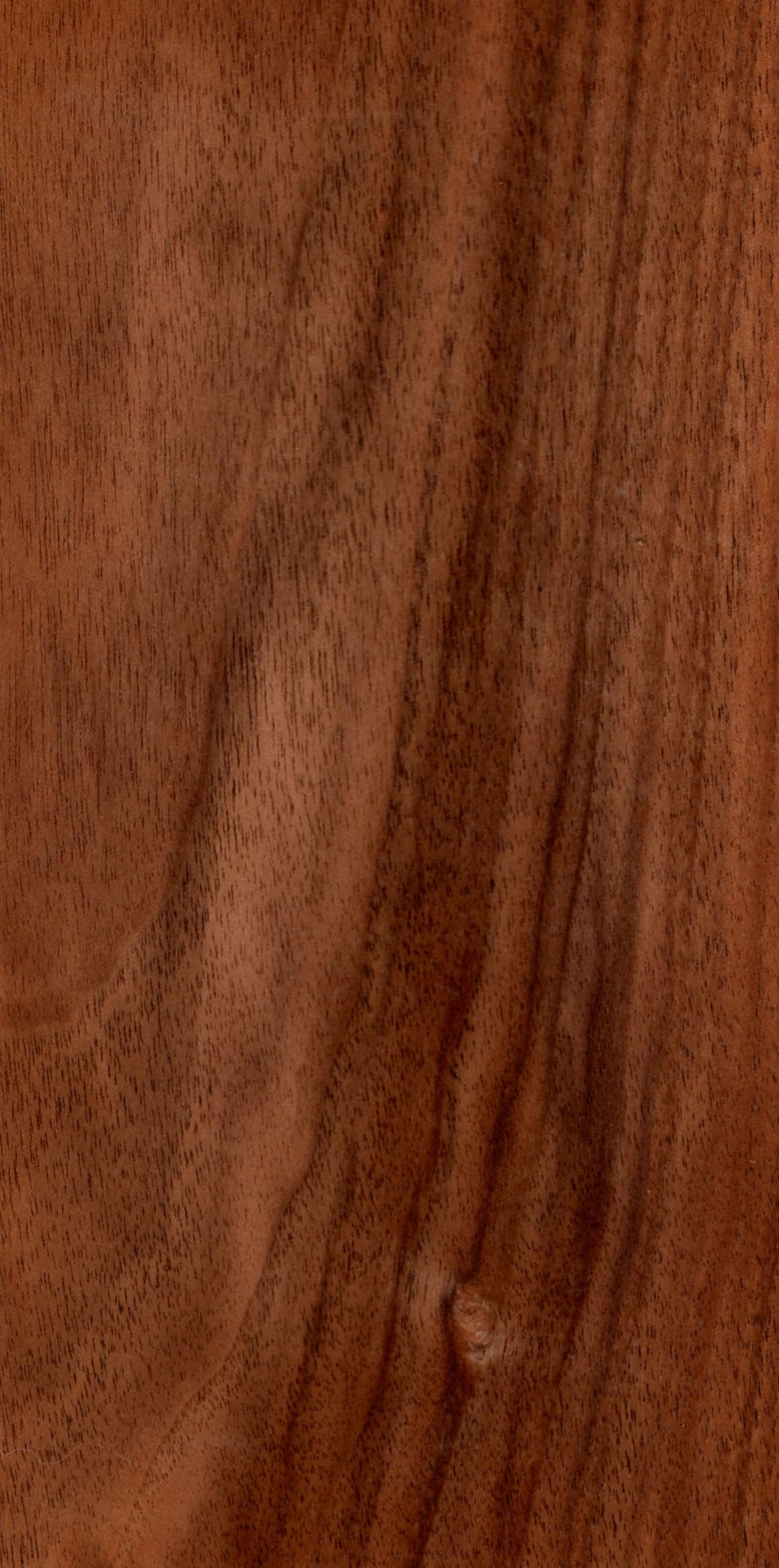

  • Snáithe European Walnut

    European Walnut

    Juglans regia

    9 bpíosa

  • Snáithe European Oak

    European Oak

    Quercus robur

    6 phíosa

  • Snáithe Saman

    Saman

    Samanea saman

    4 phíosa

Faigh fógra faoi Hard Maple

Seolaimid ríomhphost chugat nuair a thagann leaca úra Hard Maple chuig KORENA. Tá gach píosa uathúil, mar sin is fiú fógra luath.

Cúpla ríomhphost sa mhí. Gan turscar, díliostáil am ar bith.

Cuma an adhmaid

An chuma atá air

Creamy white sapwood, often with a slight reddish-brown heart. Grain is usually straight and fine, with an even texture that takes detail crisply. A small share of logs throw figure: tight curl (fiddleback) or scattered bird's-eye dots, both highly sought for furniture fronts and instrument backs, including the classic Stradivari violin back. The pale surface yellows gently under UV over time.

  • Creamy white to pale off-white sapwood, the commercial face of the species
  • Light reddish or golden-brown heartwood, usually trimmed out for uniform pale stock
  • Yellows slightly and warmly under UV over months and years
  • Bird's-eye figure: scattered dark dots across a pale field
  • Curly figure: tight chatoyant ripples that shift under raking light
  • Generally straight; sometimes curly or birds-eye figure.

Ag obair leis

Ag obair leis

Hard and dense, so plan tooling accordingly. Saws and planes cleanly with sharp carbide; dull edges burn quickly, especially on router cuts and end-grain work. Turns superbly, one of the finest turning hardwoods available. Sands well once flat. Curly and bird's-eye stock is prone to tear-out under straight knives; use a high cutting angle or finish with a scraper or sander. Glues and screws reliably; pre-drill near edges. Steam-bends adequately, not as freely as Ash or Beech.

Bailchríoch

Sands to a glassy surface and finishes beautifully under clear oil, hardwax oil, or lacquer, which lets the figure read. Be honest about stain: Hard Maple is famously blotchy. The dense, tight grain absorbs pigment unevenly, so dye stains and oil stains often land patchy. If you must stain, use a pre-stain conditioner or gel stain and test on offcuts. Most makers leave it clear or lightly toned. A water-pop before finishing helps consistency on figured stock.

Stálú

Tangential shrinkage is high (roughly 9.5–10.5%) against modest radial movement, so the wood is dimensionally lively and prone to cup if rushed. Dry slowly, sticker carefully, and weigh the top of the stack. Once at EMC it stays put well in conditioned interiors. Acclimatise boards for at least a week in the shop before machining.

Cé mhéad a bhogfaidh sé?

Atann agus crapann adhmad trasna a leithid de réir mar a éiríonn an t-aer níos taise nó níos tirime. Meas gluaiseacht shéasúrach barr Hard Maple sula ndearann tú na feistis.

Gearradh
An áit ina mbeidh sé

Gluaiseacht shéasúrach mheasta

thart ar 11.4 mm

Ceangail an barr le cnaipí nó lúibíní sliotánacha, ní le gliú ná scriúnna teanna.

Samhail líneach craptha: leithead × (crapadh ÷ 28 % sáithiú snáithíní) × luascadh séasúrach cion taise. Úsáidtear crapadh tadhlaíoch 10 % do Hard Maple. Meastachán pleanála, ní ráthaíocht.

An costas

Sábháilteacht agus foinsiú

  • Fásta lasmuigh den Eoraip agus allmhairithe trí chlóis adhmaid Eorpacha.
  • Stádas Liosta Dearg IUCN: measúnú domhanda caomhnaithe an speicis seo.
  • Food-contact safe, this is the wood butcher blocks and chopping boards are built from, and it has no known toxicity in service. Dust is the real concern: maple dust is a documented respiratory sensitiser, and all hardwood dust is IARC Group 1. Run extraction at the source, wear a fitted P3 mask when sanding or routing, and keep the shop clean.

Léigh an treoir iomlánNótaí mionsonraithe ar phatrún, athrú datha, oibriú agus cobhsaíocht.+

What Hard Maple actually is#

Acer saccharum is the sugar maple, and it is the wood most kitchen and workshop surfaces should be made from.

The reasoning is specific. It is dense at 705 kg per cubic metre and hard at 6,450 N. It is closed grained, meaning no open pores for moisture and residue to lodge in. It is rated food safe. And it is essentially odourless and tasteless, so it does not transfer flavour.

No other species in this catalogue combines all four. Oak is food safe but open pored. Beech is food safe and closed grained but moves far more. Maple is the reason butchers blocks look the way they do.

Hard maple and soft maple#

This is the most common confusion in maple buying and it matters.

Hard maple is Acer saccharum specifically. Soft maple is a trade term covering several other Acer species, typically around 4,000 N Janka against hard maple's 6,450 N. They look broadly similar and are regularly conflated in listings.

For a decorative panel the difference is minor. For a chopping board, a workbench top or a floor, buying soft maple when you specified hard is a real downgrade. Check the botanical name rather than the trade name.

European Sycamore, Acer pseudoplatanus, is a third relative also sold as maple in some markets, and at 4,680 N it sits between the two.

Ceisteanna ceannaitheoirí

Ceisteanna ceannaitheoirí

Why is Hard Maple the standard for chopping boards?

+

It is dense at 705 kg per cubic metre, hard at 6,450 N, closed grained with no open pores for residue to lodge in, food safe, and almost odourless and tasteless. That combination is why it is the industry standard for butchers blocks and cutting boards, and why it is preferred over oak, which is open pored.

What is the difference between hard and soft maple?

+

Hard maple is Acer saccharum, the sugar maple. Soft maple covers several other Acer species that are lighter and softer, typically around 4,000 N Janka against 6,450 N. They look similar and are frequently confused in sale listings. For a work surface the difference matters a great deal.

What causes curly and birdseye figure?

+

Curly or flame figure is a wave in the grain that produces a rippling chatoyance across the board. Birdseye is a pattern of small swirled eyes whose cause is still not fully explained. Neither is predictable from the standing tree, both occur in a small proportion of trees, and both command large premiums over plain maple.

Does maple stain well?

+

Airíonna meicniúla

Sonraí teicniúla

Luachanna tagartha foilsithe. Nuair nach n-aontaíonn foinsí, taispeántar an raon agus úsáidtear an luach tipiciúil do na scálaí thuas.

Dlús (kg/m³)Mais in aghaidh an mhéadair chiúbaigh ag cion taise thart ar 12 %. Bíonn adhmad níos troime níos crua agus níos láidre de ghnáth.640–755 kg/m³tipiciúil 705 kg/m³
Cruas Janka (N)An fórsa chun liathróid chruach a bhrú leath bealaigh isteach san adhmad. Gnáththomhas ar fhriotaíocht in aghaidh eangaithe.6,000–7,000 Ntipiciúil 6,450 N
MOR: modal réabtha (MPa)Neart lúbtha: an t-ualach ag a mbriseann bíoma.100–115 MPa
MOE: modal leaisteachais (GPa)Righneas lúbtha: a mhéid a lúbann seilf nó barr faoi ualach.11.5–13.0 GPa
Crapadh gathachCrapadh trasna na bhfáinní fáis, ó úr go stálaithe in áith. Bogann cláir ghearrtha ina gceathrúna mar seo.4.5–5.5 %
Crapadh tadhlaíoch
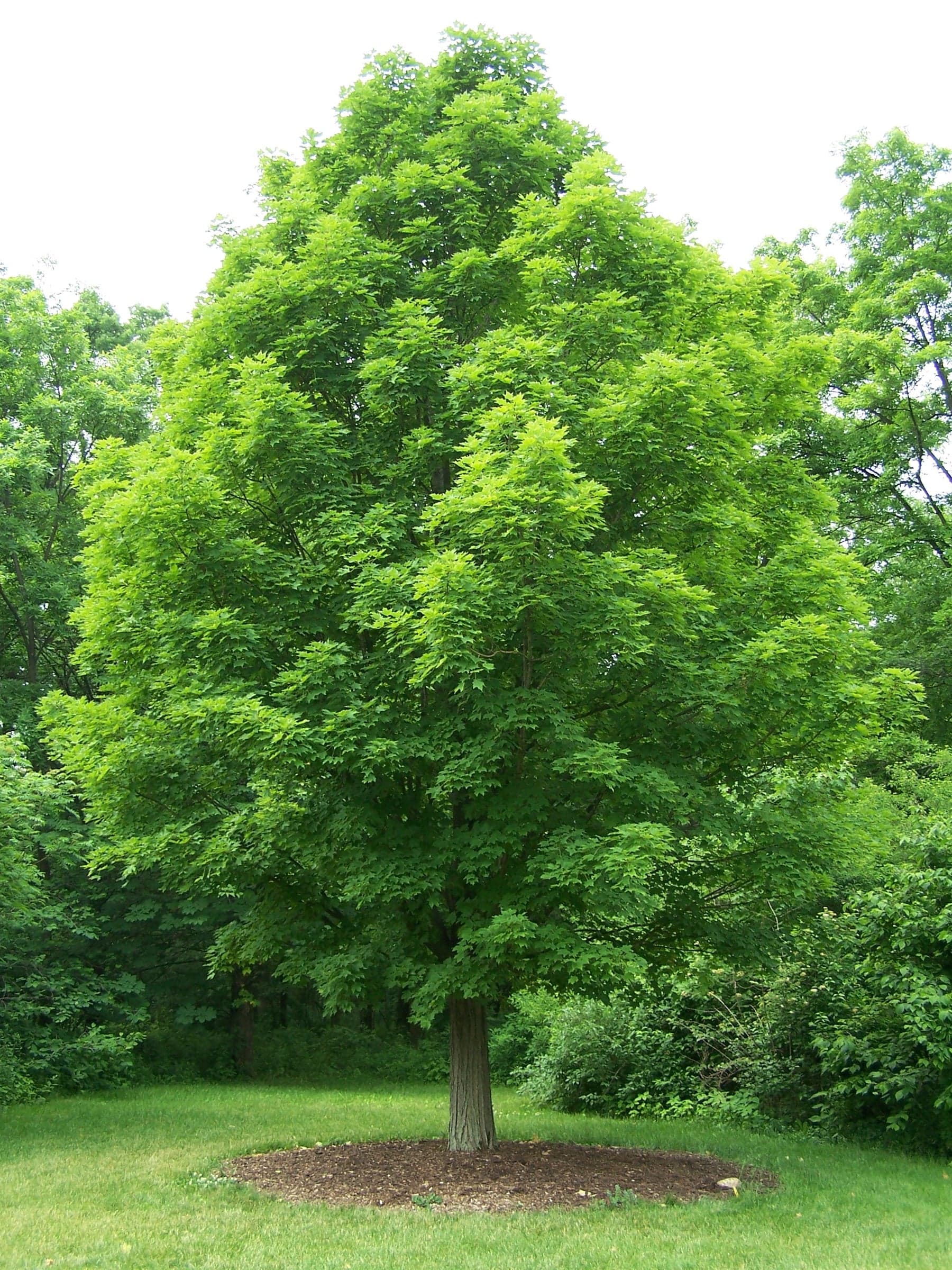
Crann Hard Maple

Bruce Marlin, via Wikimedia Commons

  • Sports goods: bowling pins, baseball bats, gym floors
  • Láidreachtaí

    • Sábháilte do bhiaOiriúnach do chláir, babhlaí agus dromchlaí a theagmhaíonn le bia.
    • Lúbann go maithRátáil 4 as 5 do lúbadh gaile. Glacann sé cuair theanna.

    Bí cúramach

    Native to eastern North America, Canada and the northern United States, not to Europe. Imported as a furniture-grade hardwood with a long, well-established trade route into the EU. Sometimes sold as Sugar Maple or Rock Maple; all are Acer saccharum.

  • IUCN Least Concern, no CITES listing. Managed commercially across Canada and the northeastern US under long-standing forestry regimes. As a non-EU import it carries longer transport miles than European species and a fuller EUDR due-diligence trail through the supply chain. FSC and PEFC certified stock is widely available. Ask for it.

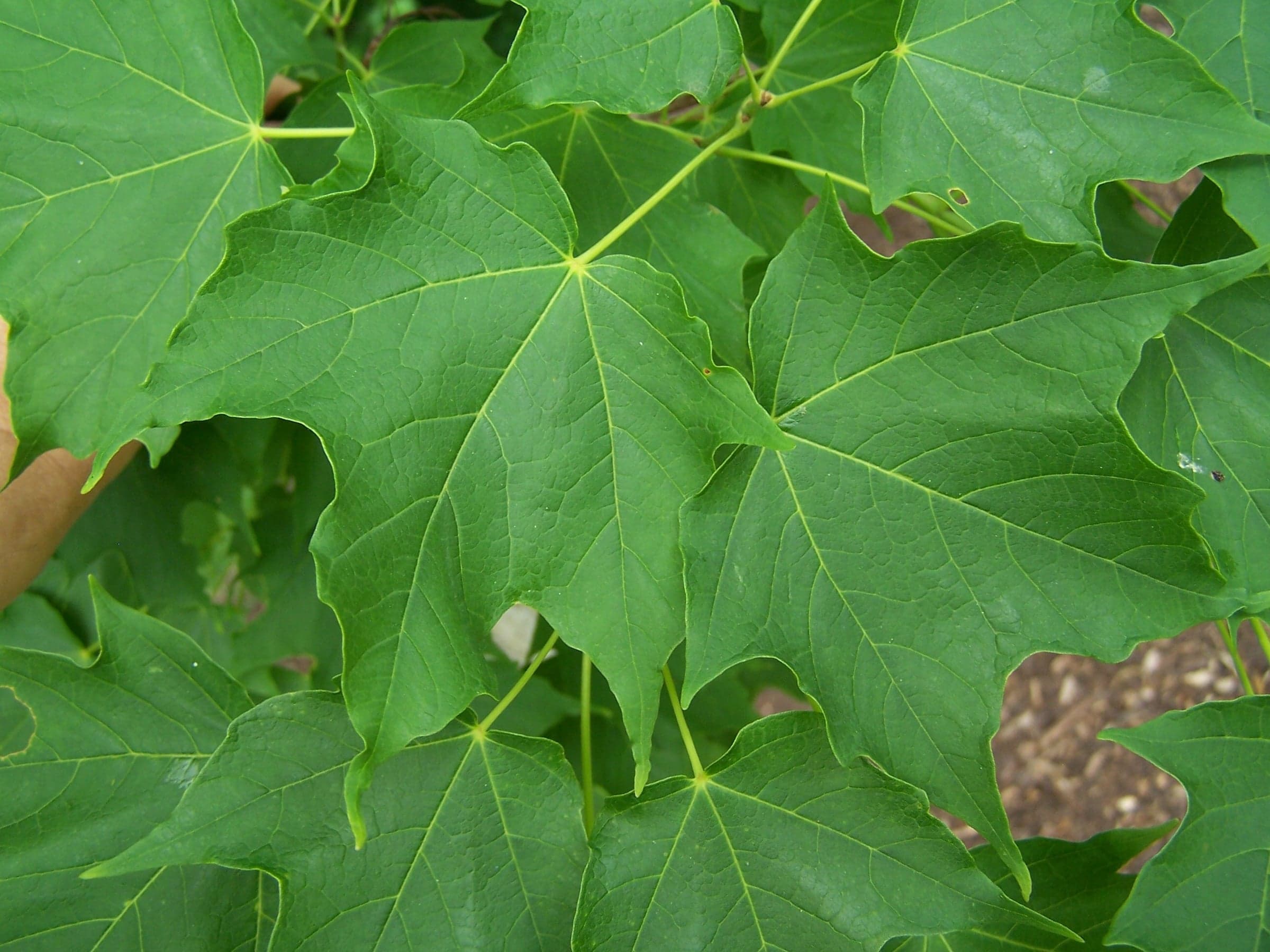
  • Hard Maple: Duilleog
    Duilleog
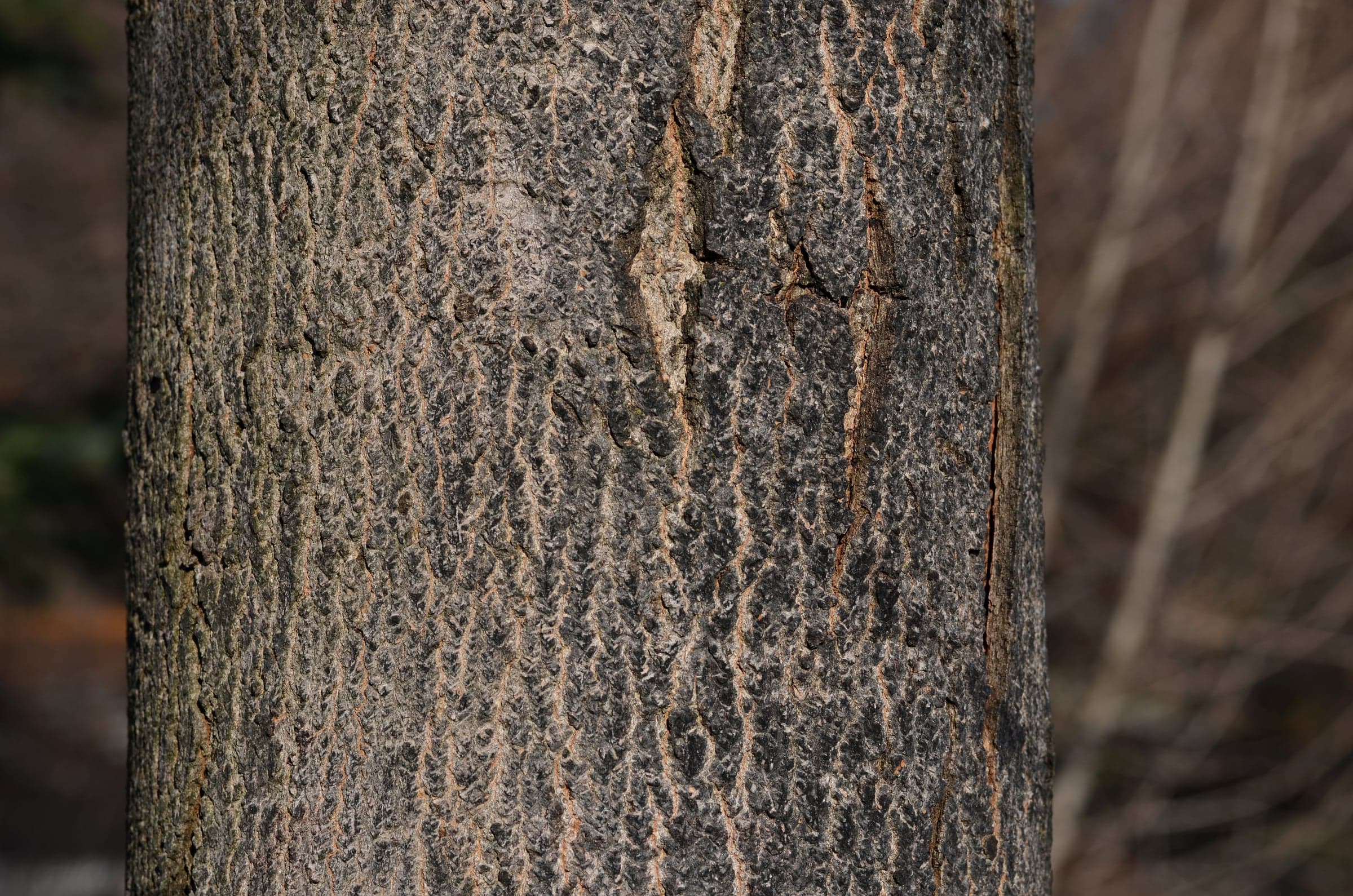
    Hard Maple: Coirt
    Coirt

    The figure premium#

    Plain hard maple is a quiet, pale, almost featureless wood. A small proportion of trees produce figure, and it is priced very differently.

    Curly or flame maple carries a wave in the grain that produces rippling chatoyance shifting with viewing angle. Birdseye maple shows a pattern of small swirled eyes across the surface, and its cause is still not fully explained.

    Neither is predictable from the standing tree, which is why figured maple is expensive: it is found rather than grown.

    The staining problem#

    Maple's main weakness is finishing. The dense closed grain that makes it hygienic makes it absorb stain unevenly, and it blotches badly, particularly on flatsawn faces and in figured stock where the grain wave changes absorption from millimetre to millimetre.

    Pigment stain on curly maple will produce a muddy, patchy result that obscures the very figure you paid for.

    Use a dye rather than a pigment stain, or a gel stain that sits on the surface, or seal first with a thin washcoat. Test on an offcut from the same board every time, because behaviour varies between boards of the same species.

    Most figured maple is best finished clear, with an oil or a water based finish, letting the chatoyance carry the surface.

    At the bench#

    It works cleanly with sharp tools and blunts them at a fair rate. It turns very well, holds crisp detail, glues reliably and takes fastenings securely with pilot holes.

    Figured stock tears out and wants light cuts, a high angle plane or a scraper.

    It sands to a very fine surface, which suits its usual clear finish.

    Movement#

    Volumetric shrinkage of 14.5 percent is on the high side, with tangential at 9.5 percent against radial at 4.5 percent, a wide differential. Flatsawn maple cups.

    For a chopping block this matters less than it sounds, because blocks are usually built as laminated end grain or edge grain constructions where movement is distributed and restrained. For a wide solid top, quartersawn is worth the cost.

    Where Hard Maple is the right answer#

    Chopping boards and butchers blocks, kitchen worktops, workbench tops, flooring, and any decorative work where curly or birdseye figure is the design.

    It is the wrong answer outdoors, being decay class 5, and wrong wherever a rich stained colour is the goal.

    Sourcing and EUDR#

    Not CITES listed and assessed as Least Concern. Native to eastern North America, so European buyers are usually importing, with the longer documentation chain that implies. Where a pale dense European alternative is acceptable, European Sycamore or beech cover similar ground with a shorter chain, though neither matches hard maple for a food surface.

    Spalted maple#

    Because maple is pale and perishable, it spalts readily, and spalted maple is a category in its own right.

    Spalting is the early stage of fungal decay. Different fungi competing within a log lay down black zone lines where their territories meet, producing fine dark tracery across a pale background. The effect is unlike any grain figure and cannot be imitated.

    The difficulty is that spalting is decay, and it does not stop by itself. Timber left too long goes soft, punky and structurally useless. Usable spalted maple is caught at a specific moment and then dried to kill the fungus.

    Buying spalted stock means checking soundness rather than just admiring the pattern. Press a fingernail into the palest zones: if it sinks easily the wood has gone too far. Punky areas can be stabilised with resin for turning but are not suitable for a work surface.

    Spalted dust also carries a higher fungal spore load than sound timber, so extraction and a mask matter more than usual.

    End grain against edge grain blocks#

    For a chopping block, the construction matters as much as the species.

    End grain blocks present the cut fibre ends upward, so a knife edge parts the fibres rather than severing them and the surface closes behind the cut. They are kinder to knives and self healing, but they absorb more moisture and need more maintenance.

    Edge grain blocks are simpler to build, more dimensionally stable and easier to keep dry, at the cost of showing knife marks sooner.

    Both work in hard maple. End grain is the traditional butchers block and the better performing surface if you will look after it.

    Poorly, and this is its main finishing weakness. The dense closed grain absorbs pigment unevenly and blotches badly, particularly on flatsawn faces and in figured stock. Use a dye, a gel stain, or a conditioner first, and always test on an offcut from the same board.

    Can it be used outdoors?

    +

    No. It is rated decay class 5, perishable, and offers no meaningful resistance to rot or insect attack. Maple is strictly interior. For exterior work choose robinia, oak or sweet chestnut.

    Crapadh feadh na bhfáinní fáis. Bogann cláir réghearrtha agus formhór na leac mar seo.
    9.5–10.5 %
    Crapadh toirtmhéadrachAthrú iomlán toirte ó úr go stálaithe in áith. Ciallaíonn níos ísle níos cobhsaí.14.5–16.0 %
    Marthanacht nádúrtha (EN 350)Caighdeán Eorpach ar fhriotaíocht nádúrtha in aghaidh lobhaidh, ó 1 (an-mharthanach) go 5 (somheata).Class 5 — Perishable

    Foinsí

    • The Wood Database(rochtain 2026-05-09)
    • USDA FPL Wood Handbook FPL-GTR-190 (2010)(rochtain 2026-05-09)
    • Meier, E. — WOOD! Identifying and Using Hundreds of Woods Worldwide (2015)(rochtain 2026-05-09)

    Sracfhéachaint

    Úsáideann na leibhéil bandaí seasta do gach speiceas a liostaíonn KORENA, mar sin is féidir iad a chur i gcomparáid go díreach. Tá an luach tomhaiste faoi gach ceann.
    CruasFriotaíocht in aghaidh eangaithe agus caithimhCrua

    Cruas Janka: 6,450 N

    30 % níos crua ná dair

    MeáchanCé chomh trom is atá leac adhmaid le hardúTrom

    705 kg/m³

    CobhsaíochtA laghad a bhogann sé leis na séasúirBogann go mór

    Crapadh toirtmhéadrach 15.3 %

    OibriúSábhadh, plánáil, greanáil, gliúáilMeasartha

    Meán binse 3.7 / 5

    Úsáid lasmuighFriotaíocht nádúrtha in aghaidh lobhaidh, EN 350Laistigh amháin

    Aicme EN 350 5

    • Sábhadh · MaithCé chomh glan a ghearrann sé agus cé chomh crua is atá sé ar lanna.1 = deacair · 5 = ar fheabhas
    • Plánáil · MaithCé chomh mín a fhágann sé an dromchla agus a mhéid a stróiceann sé.1 = deacair · 5 = ar fheabhas
    • Greanáil · An-mhaithCé chomh tapa a ghreanáiltear mín é gan an páipéar a thachtadh.1 = deacair · 5 = ar fheabhas
    • Deileadóireacht · Ar fheabhasConas a ghearrann agus a chríochnaíonn sé ar an deil.1 = deacair · 5 = ar fheabhas
    • Snoíodóireacht · MaithCé chomh géar a choinníonn sé mionsonraí faoin ngúiste.1 = deacair · 5 = ar fheabhas
    • Gliúáil · An-mhaithCé chomh hiontaofa a choinníonn ailt ghliúáilte.1 = deacair · 5 = ar fheabhas
    • Greim scriú / tairne · An-mhaithCé chomh maith a choinníonn sé scriúnna agus tairní gan scoilteadh.1 = deacair · 5 = ar fheabhas
    • Lúbadh gaile · An-mhaithCé chomh maith a ghlacann sé cuair tar éis galaithe.1 = deacair · 5 = ar fheabhas

    Níl tagairt mhargaidh do Hard Maple fós. Cuireann a chlós adhmaid comhpháirtíochta praghas ar gach píosa KORENA ar leith.

    Ní le húsáid amuigh gan chóireáil
    Is é a mharthanacht nádúrtha aicme EN 350 5 as 5. Coinnigh laistigh nó faoi bhailchríoch chothabháilte é.
  • Bogann sé níos mó ná formhórTeastaíonn cnaipí nó feistis sliotánacha agus spás gluaiseachta ó bharraí leathana. Úsáid an t-áireamhán gluaiseachta thíos.
  • Greannaíonn an deannachÚsáid eastóscadh agus caith masc agus tú ag greanáil nó ag meaisíniú.
  • Tapáil lipéad chun na sonraí a fháil.