KORENA
AdhmadFinished piecesSoláthairtíClóis adhmaidIris

Faigh fógra

Tá gach leac adhmaid uathúil. Nuair a dhíoltar í, tá sí imithe. Seolaimid ríomhphost chugat nuair a liostaítear píosaí nua: earraí úra, speicis nua agus cláir a mheaitseálann le hachoimre tionscadail.

Cúpla ríomhphost sa mhí. Gan turscar, díliostáil am ar bith.

KORENA, crua-adhmad den scoth

Píosa amháin ag an am.

Crua-adhmad den scoth atá fíoraithe, á dhíol píosa ar phíosa. Tógtar grianghraif agus tomhais de gach leac adhmaid agus seoltar í ón gclós adhmaid comhpháirtíochta le pas adhmaid.

Siopa

  • Brabhsáil táirgí
  • Cartlann na n-earraí díolta
  • Rianaigh ordú

Foghlaim

  • Iris
  • Treoracha speiceas
  • Gluais
  • Déan comparáid
  • Údair

Cabhair

  • Maidir linn
  • Conas a oibríonn sé
  • Bí i do chlós adhmaid comhpháirtíochta
  • Faigh leac adhmaid
  • Tacaíocht
  • Teimpléid doiciméad
  • Preas

Ceannach

  • Téarmaí díola
  • An ceart chun tarraingt siar
  • Tuairisceáin agus ráthaíocht dhlíthiúil
  • Seoladh agus seachadadh

Muinín

  • Beartas príobháideachais
  • Beartas fianán
  • Bunáitíocht adhmaid agus EUDR
  • Inrochtaineacht

Fógra dlíthiúil

  • Fógra dlíthiúil
  • Úsáid inghlactha
  • Maoin intleachtúil agus ábhar

© 2026 KORENA. Gach ceart ar cosaint.

Á oibriú ag Martial Labs Ltd. (BG, EIK 207453941). Is ainm trádála de chuid Martial Labs Ltd. é KORENA.

Tá meas againn ar do phríobháideachas

Úsáidimid fianáin riachtanacha chun go n-oibreoidh an suíomh. Le do chead d'úsáidfimis fianáin freisin le haghaidh anailísíochta, ábhar pearsantaithe agus fógraí. Is féidir leat d'intinn a athrú am ar bith ar an leathanach sainroghanna toilithe. Féach ar ár mbeartas fianán agus ár mbeartas príobháideachais.

  1. Baile
  2. /
  3. Speicis
  4. /
  5. London Plane

Platanus × acerifolia

London Plane

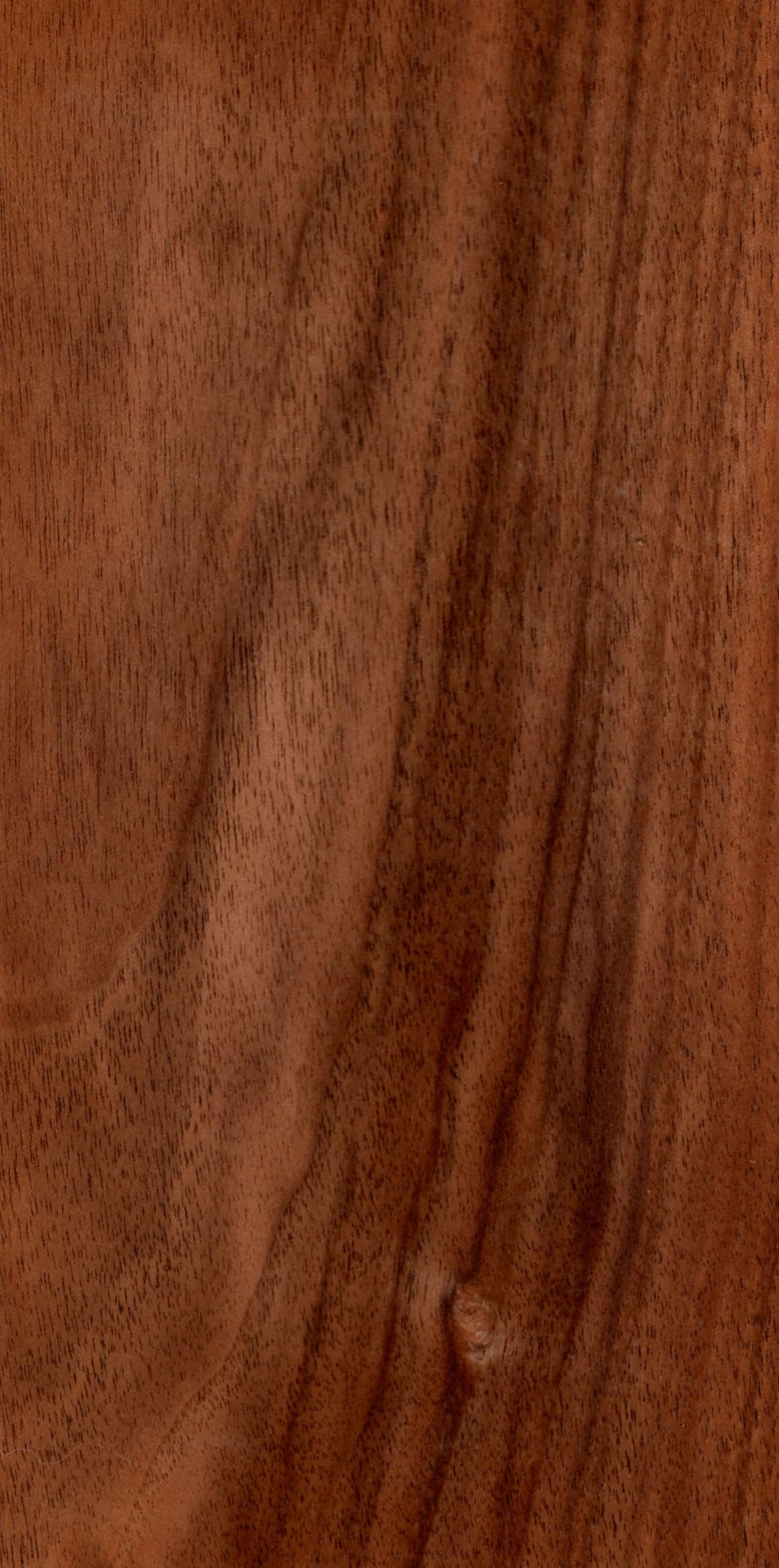
Quartersawn London Plane reveals lacewood: large medullary rays catch the light in dense, scaly flecks. The slab's signature, and its whole reason for being on this list.

  • Fásta agus lománaithe san Eoraip.
  • Grúpa luibheolaíoch. Is buaircínigh iad bogadhmaid; is crainn leathanduilleacha iad crua-adhmaid.
  • Fine luibheolaíoch an speicis.
Faigh fógra nuair a thagann séSpeiceas tagartha. Níl píosaí i stoc faoi láthair.
  • Oiriúnacht tionscadail
  • I stoc
  • Cuma
  • Oibriú
  • Gluaiseacht
  • Praghas
  • Sábháilteacht agus foinsiú
  • Ceisteanna
  • Sonraí teicniúla

An oireann sé do do thionscadal?

Iontach do

  • Quartersawn tabletops where the lacewood figure is the feature
  • Cabinet door panels and drawer fronts
  • Wall panelling and feature joinery
  • Turned bowls and hollow forms
  • Serving boards and kitchen pieces (interior, finished)
  • Veneer-look solid furniture

Níl London Plane san eisiúint reatha

Speicis chomhchosúla i stoc

Níl London Plane againn anois. Oireann na speicis seo do na tionscadail chéanna agus tá píosaí ar fáil.
  • Snáithe Saman

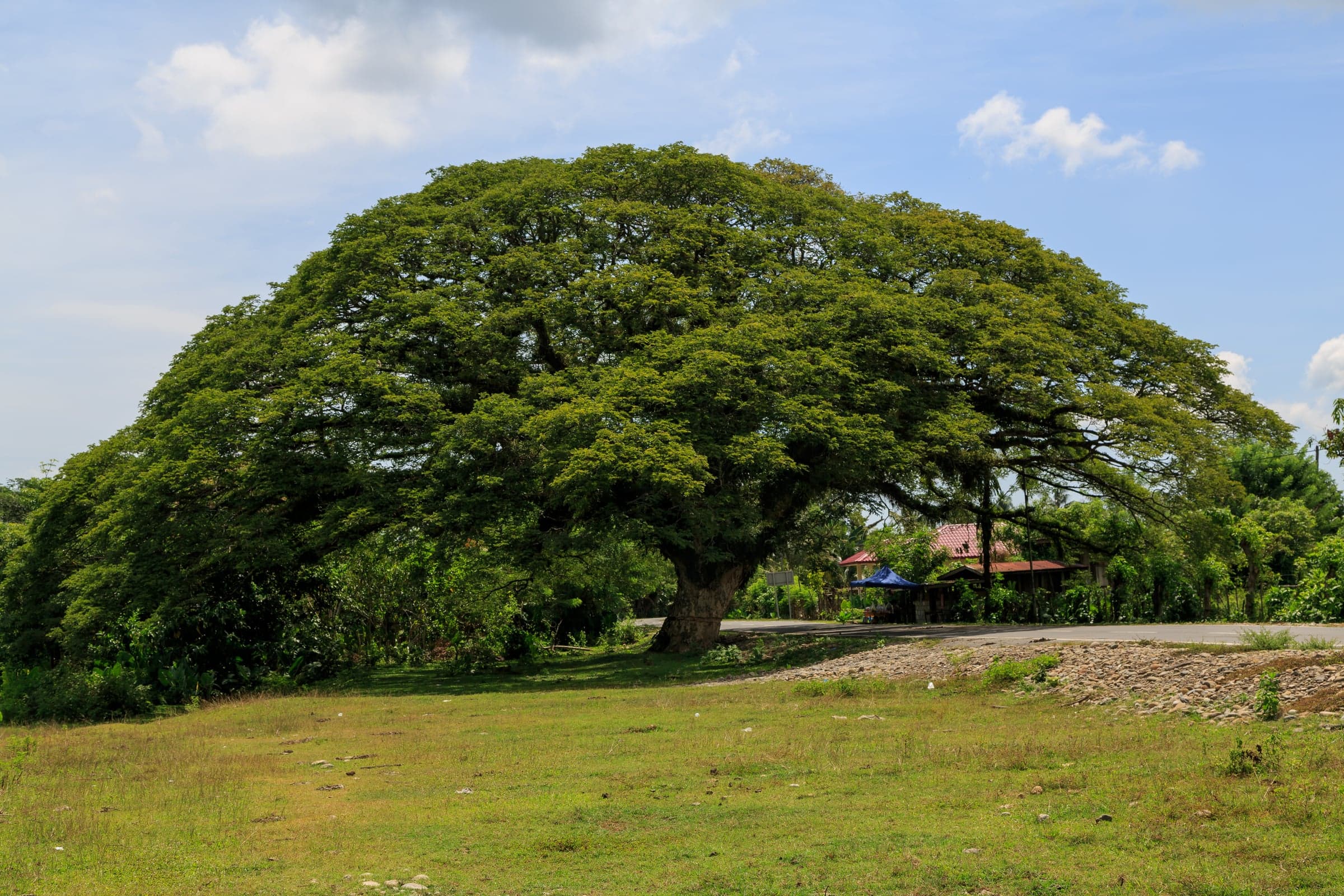
    Saman

    Samanea saman

    4 phíosa

  • Snáithe European Oak

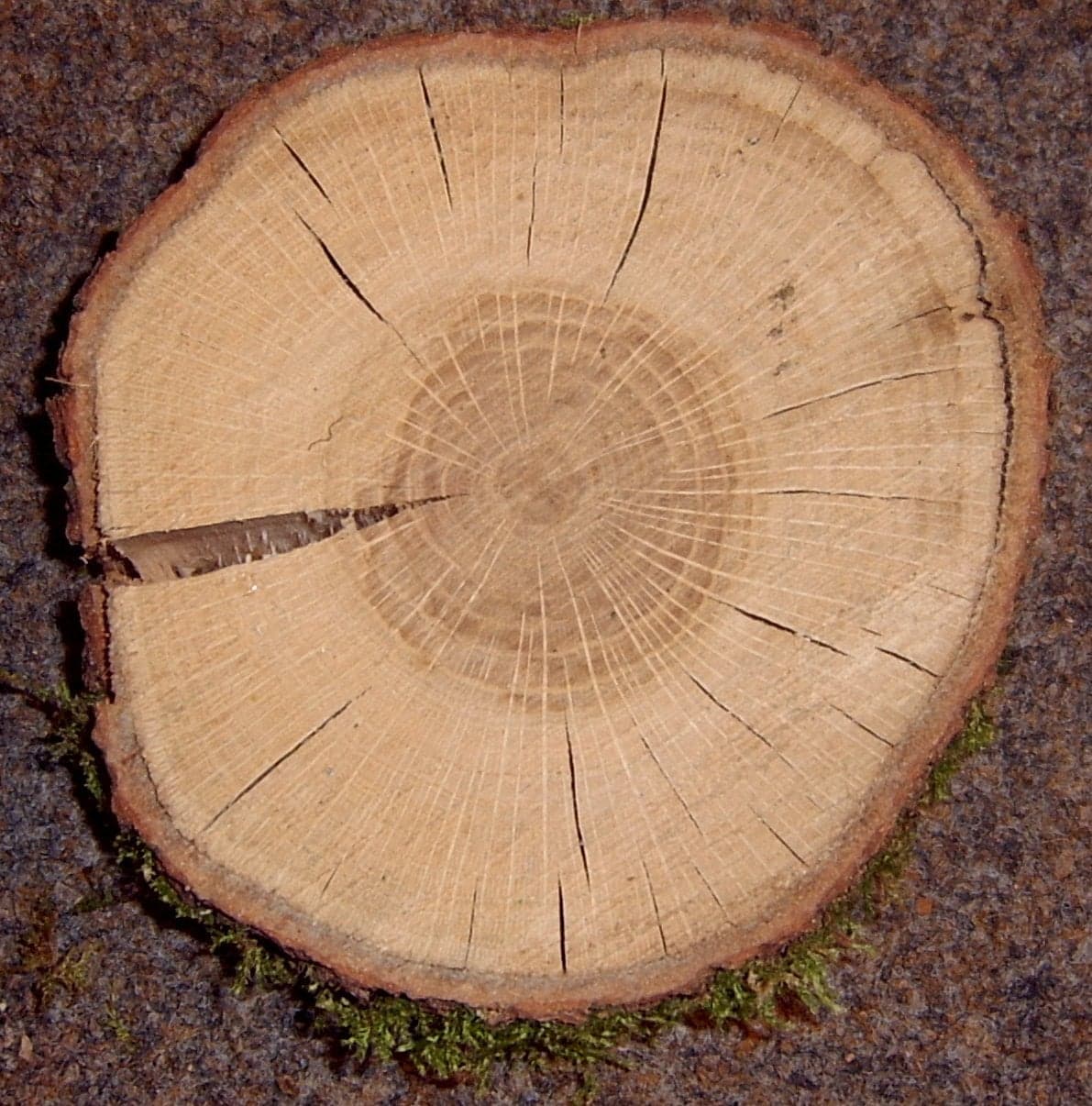
    European Oak

    Quercus robur

    6 phíosa

  • Snáithe European Walnut

    European Walnut

    Juglans regia

    9 bpíosa

Faigh fógra faoi London Plane

Seolaimid ríomhphost chugat nuair a thagann leaca úra London Plane chuig KORENA. Tá gach píosa uathúil, mar sin is fiú fógra luath.

Cúpla ríomhphost sa mhí. Gan turscar, díliostáil am ar bith.

Cuma an adhmaid

An chuma atá air

Straight grain, fine-to-medium texture, pinkish-brown heartwood that warms with age. Flatsawn faces are quiet and clean. Quartersawn is where it earns its name in the trade, lacewood, with broad ray flecks that read almost like snakeskin under finish. Two faces of the same board can look like two different woods.

  • Heartwood pinkish-brown to light reddish-tan
  • Sapwood pale cream, often left in for contrast
  • Quartersawn rays appear as darker flecks against the background
  • Warms and deepens under oil; ambers slightly with age
  • Flatsawn and quartersawn faces of one board can look like different species
  • Straight; lacewood figure on quartersawn faces.

Ag obair leis

Ag obair leis

Saws, sands, turns, and carves well. Planing is the one to watch: the medullary rays that make quartersawn faces beautiful also tear out under dull blades. Sharp tools, light cuts, and a finish scraper or 220-grit pass to clean up. Glues and screws without drama.

Bailchríoch

Takes oil and hardwax oil cleanly. The lacewood figure deepens dramatically under any clear finish. Test on an offcut before committing, because the contrast jumps. Stains can muddy the rays; we'd avoid them. Sand to 180–220 and stop.

Stálú

Tangential shrinkage is high (around 10%) and roughly twice the radial figure, so cup and distortion are real risks. Dries best slowly, well-stickered, with weight on top. Once stable it holds shape indoors, but it's not a wood to rush through a kiln.

Cé mhéad a bhogfaidh sé?

Atann agus crapann adhmad trasna a leithid de réir mar a éiríonn an t-aer níos taise nó níos tirime. Meas gluaiseacht shéasúrach barr London Plane sula ndearann tú na feistis.

Gearradh
An áit ina mbeidh sé

Gluaiseacht shéasúrach mheasta

thart ar 11.7 mm

Ceangail an barr le cnaipí nó lúibíní sliotánacha, ní le gliú ná scriúnna teanna.

Samhail líneach craptha: leithead × (crapadh ÷ 28 % sáithiú snáithíní) × luascadh séasúrach cion taise. Úsáidtear crapadh tadhlaíoch 10.25 % do London Plane. Meastachán pleanála, ní ráthaíocht.

An costas

Sábháilteacht agus foinsiú

  • Fásta agus lománaithe san Eoraip.
  • Stádas Liosta Dearg IUCN: measúnú domhanda caomhnaithe an speicis seo.
  • Not commonly flagged as a dust irritant or sensitiser. Standard shop dust extraction is enough. Food-contact safe once finished, fine for boards and serving pieces.

Léigh an treoir iomlánNótaí mionsonraithe ar phatrún, athrú datha, oibriú agus cobhsaíocht.+

What London Plane actually is#

Platanus x acerifolia is bought for one thing: lacewood.

The species has exceptionally large rays, the ribbons of cells that run radially through a trunk. In most timbers the rays are small enough to be barely visible, and in oak they show as the familiar silvery fleck on quartersawn faces. In London Plane they are so large that a quartersawn face is covered in a dense, regular flecked pattern across the entire surface.

That figure is called lacewood, and it exists only on the quarter. A flatsawn London Plane board is comparatively plain, a light reddish brown with modest figure. The same log cut differently is one of the most distinctive decorative surfaces in European timber.

If you are buying this species, you are buying quartersawn stock, and if you are offered flatsawn plane at a lacewood price, the cut is the thing to check.

The naming confusion#

Three species get called sycamore in different places and they are not related.

London Plane is Platanus x acerifolia, a hybrid plane. American sycamore is Platanus occidentalis, its close relative and also a source of lacewood. European Sycamore is Acer pseudoplatanus, a maple, and has nothing to do with either.

They look different, work differently and cost differently. Buy on the botanical name.

Ceisteanna ceannaitheoirí

Ceisteanna ceannaitheoirí

What is lacewood?

+

Lacewood is quartersawn London Plane. The species has exceptionally large rays, and cutting on the quarter exposes them as a dense flecked pattern across the whole surface that looks like lace. It is one of the most distinctive figures available from any European species, and it exists only on the quartersawn face. Flatsawn plane is comparatively plain.

Is London Plane the same as sycamore?

+

No, and the naming is a mess. London Plane is Platanus x acerifolia, a plane tree. American sycamore is Platanus occidentalis, its close relative. European Sycamore is Acer pseudoplatanus, a maple, and unrelated to both. All three are sometimes called sycamore somewhere. Check the botanical name.

How stable is it?

+

Not very. Volumetric shrinkage of 15.0 percent is high and tangential shrinkage of 9.5 percent against radial at 5.5 percent is a wide differential, so flatsawn boards cup. Since the reason to buy this species is the quartersawn lacewood figure, and quartersawn stock is much more stable, the figure and the stability come together.

Can it be used outdoors?

+

Airíonna meicniúla

Sonraí teicniúla

Luachanna tagartha foilsithe. Nuair nach n-aontaíonn foinsí, taispeántar an raon agus úsáidtear an luach tipiciúil do na scálaí thuas.

Dlús (kg/m³)Mais in aghaidh an mhéadair chiúbaigh ag cion taise thart ar 12 %. Bíonn adhmad níos troime níos crua agus níos láidre de ghnáth.500–620 kg/m³tipiciúil 560 kg/m³
Cruas Janka (N)An fórsa chun liathróid chruach a bhrú leath bealaigh isteach san adhmad. Gnáththomhas ar fhriotaíocht in aghaidh eangaithe.3,800–4,600 Ntipiciúil 4,180 N
MOR: modal réabtha (MPa)Neart lúbtha: an t-ualach ag a mbriseann bíoma.70–80 MPa
MOE: modal leaisteachais (GPa)Righneas lúbtha: a mhéid a lúbann seilf nó barr faoi ualach.8.0–10.0 GPa
Crapadh gathachCrapadh trasna na bhfáinní fáis, ó úr go stálaithe in áith. Bogann cláir ghearrtha ina gceathrúna mar seo.5.5–6.5 %
Crapadh tadhlaíoch
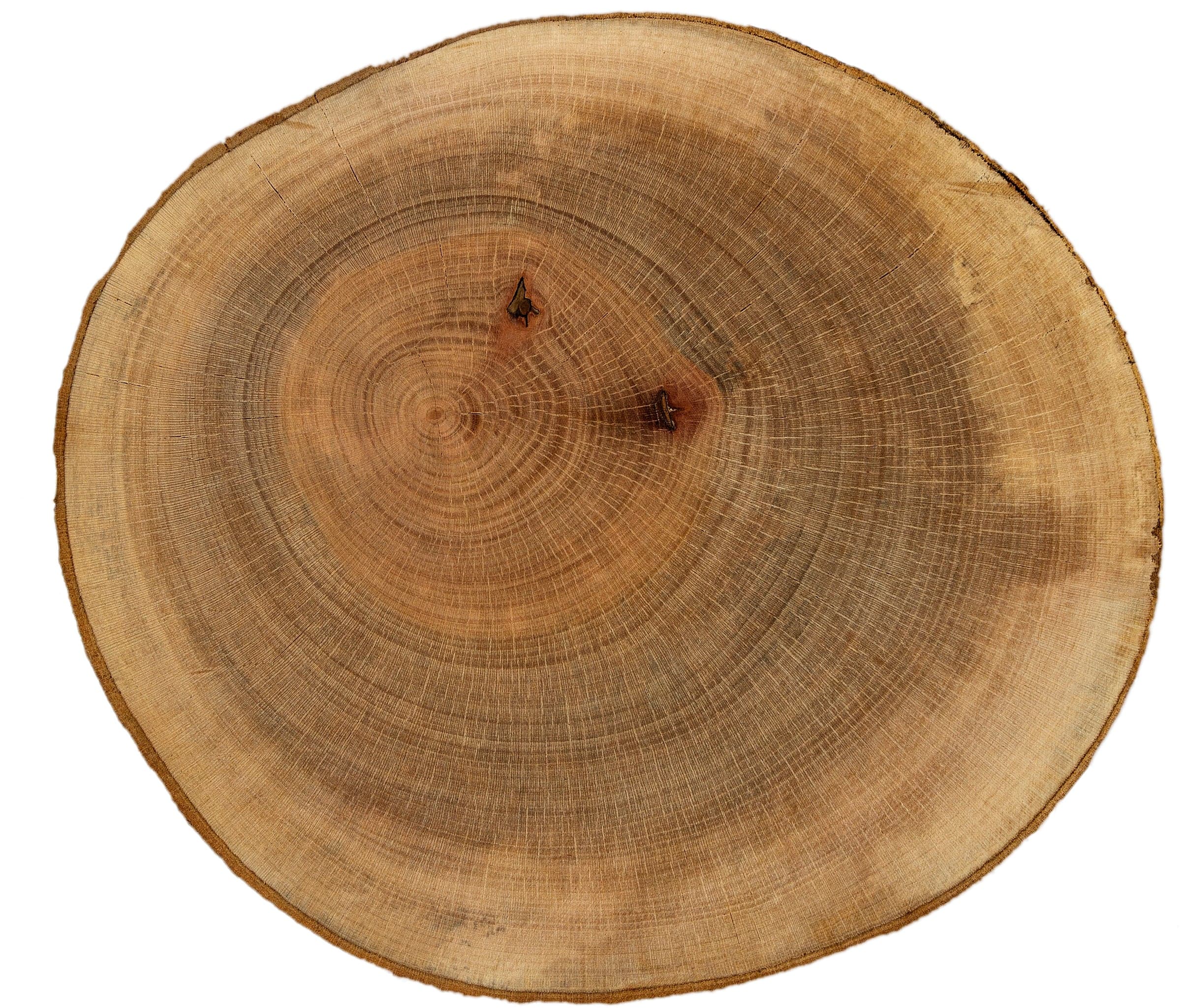
Snáithe London Plane

Roger Culos, via Wikimedia Commons

Láidreachtaí

  • Sábháilte do bhiaOiriúnach do chláir, babhlaí agus dromchlaí a theagmhaíonn le bia.
  • Lúbann go maithRátáil 4 as 5 do lúbadh gaile. Glacann sé cuair theanna.

Bí cúramach

Platanus × acerifolia is the hybrid planted along avenues and squares across Europe, Paris, Milan, Sofia, every London street. KORENA sources it from urban forestry: trees removed for safety, age, or development, then milled rather than chipped. The provenance is local, traceable, and tells a story buyers respond to.

  • Decay class 5 (perishable), interior use only; it won't last outdoors. The hybrid is not IUCN-evaluated and carries no CITES listing. Sourcing is the strong story here: urban trees that would otherwise be chipped, given a second life as furniture. EUDR due diligence is in preparation and becomes mandatory for large operators from 30 December 2026, and the passport behind each slab QR is built to carry its provenance.

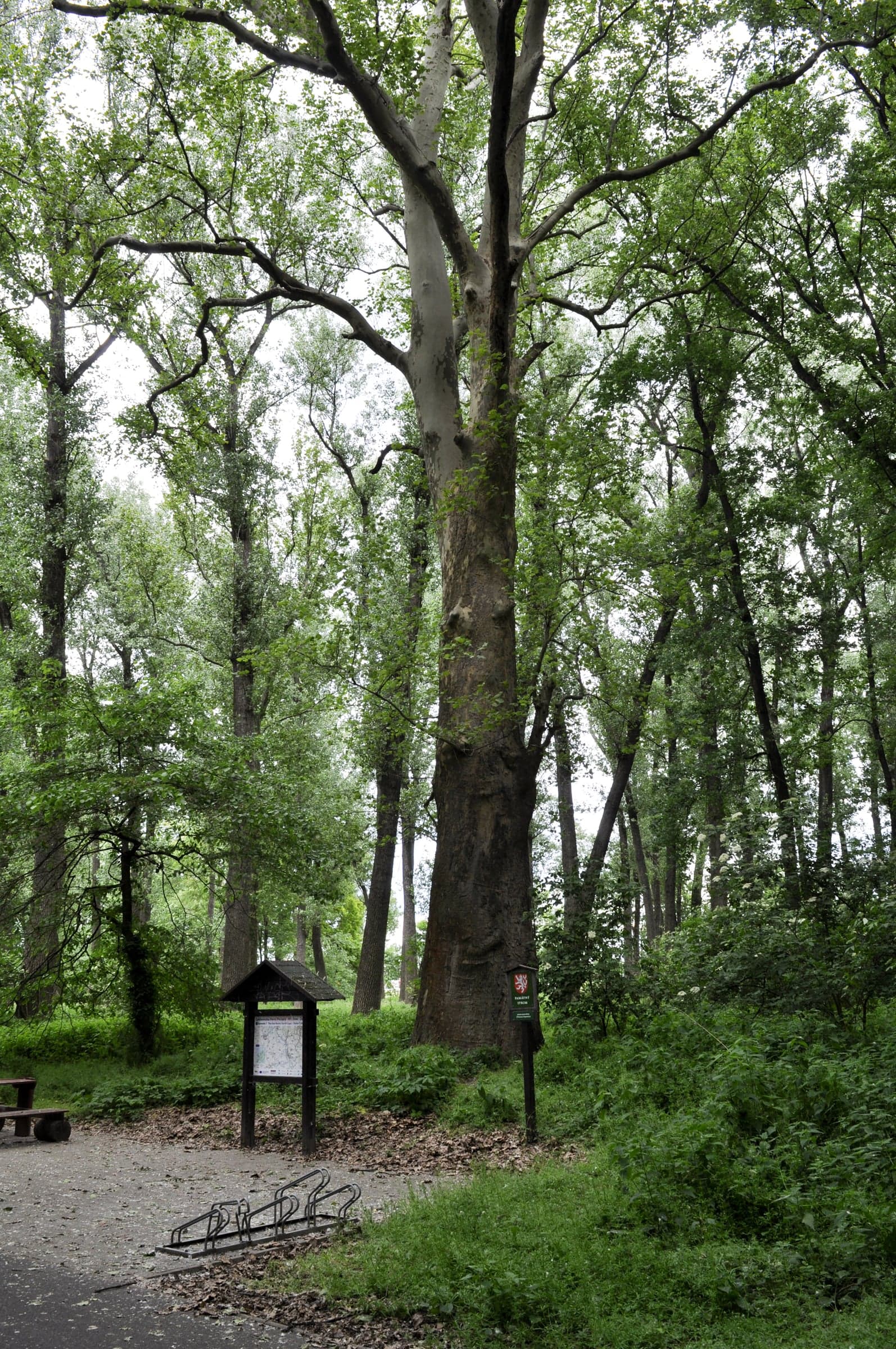
  • Crann London Plane

    Jirka Dl, via Wikimedia Commons

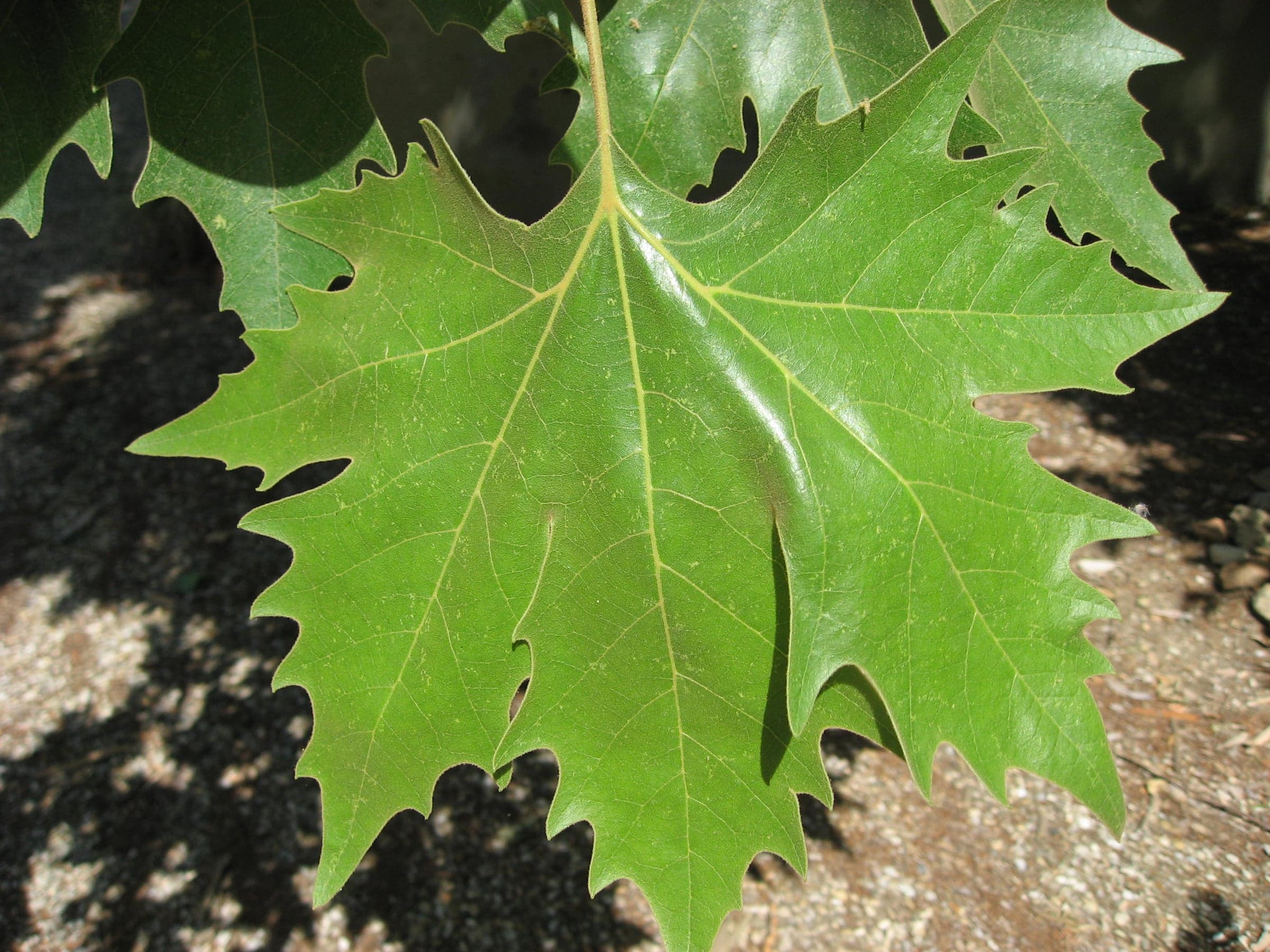
    London Plane: Duilleog
    Duilleog
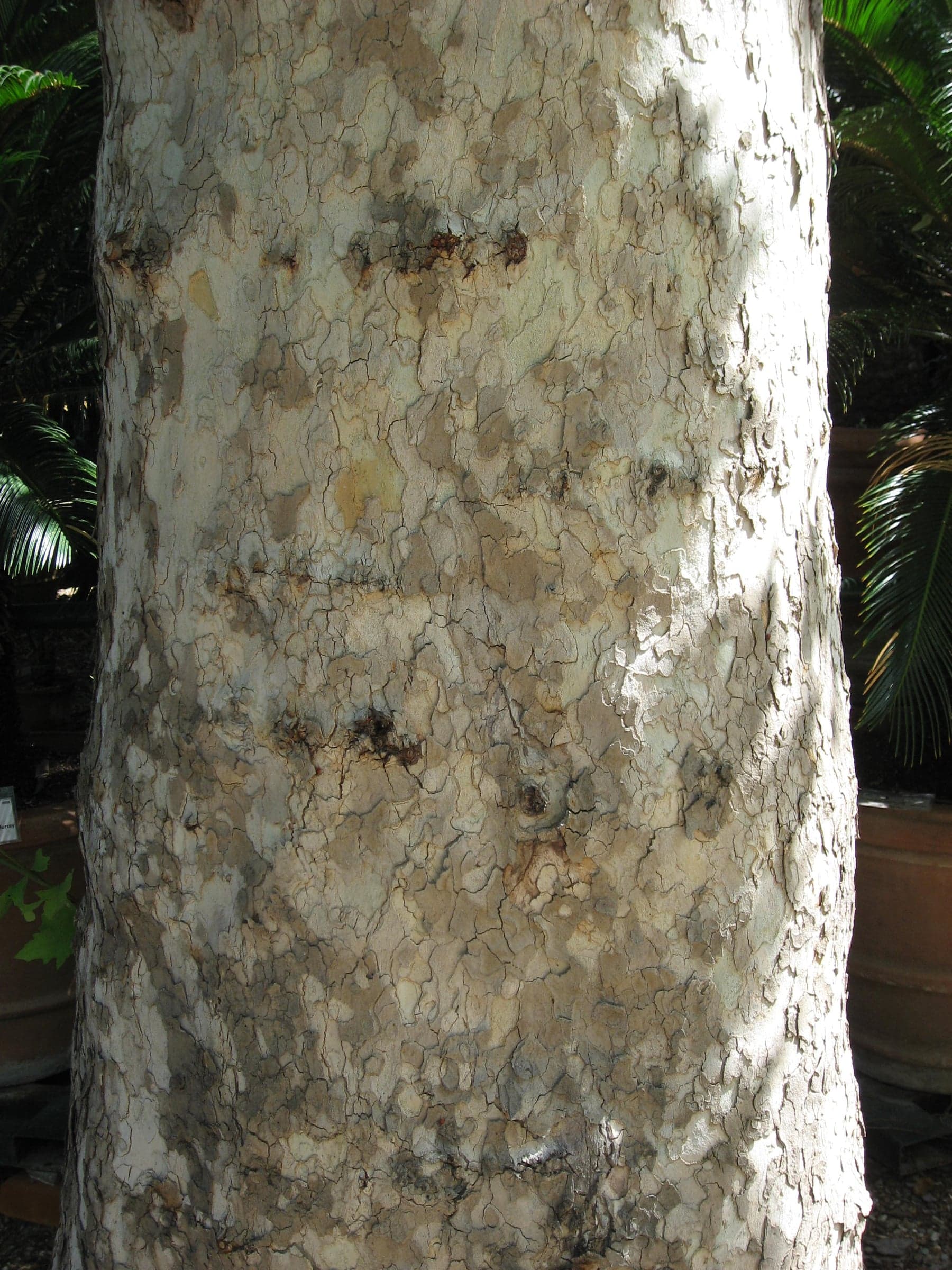
    London Plane: Coirt
    Coirt

    Urban timber#

    London Plane is the classic European street tree, planted through the nineteenth and twentieth centuries for its tolerance of air pollution and its willingness to be pruned hard.

    Almost all timber reaching the market comes from municipal felling rather than forestry, which shapes what is available. Sizes can be generous, because street trees grow large. But the wood frequently carries inclusions, bark pockets and irregular grain from decades of pruning wounds, and metal is a genuine risk in urban timber.

    That last point matters practically: a nail or a cable fragment embedded in an urban log will destroy a bandsaw blade. Reputable yards scan for metal, and it is worth asking.

    The stability problem, which resolves itself#

    Volumetric shrinkage of 15.0 percent is high, and the tangential to radial differential of 9.5 against 5.5 percent is wide. Flatsawn London Plane cups noticeably.

    This turns out to matter less than it might, because the reason to buy the species is the quartersawn figure, and quartersawn stock is substantially more stable across its width. The figure and the stability arrive together.

    It also dries with a tendency to distort and is susceptible to fungal staining if not dried promptly, so stock that sat before conversion may carry grey discolouration.

    At the bench#

    At 4,180 N it is moderately soft and easy on tooling.

    The large rays are the machining consideration. On a quartersawn face they can lift or flake under a heavy cut, taking chunks out of the very figure you are working to expose. Light cuts, sharp tooling and a scraper for the final surface.

    It glues and finishes well and turns reasonably. It sands to a good surface, though care is needed not to round over the ray flecks.

    Finishing#

    Lacewood looks best under a clear finish that lets the ray contrast do the work. An oil finish deepens the reddish brown background and increases the contrast with the pale flecks.

    Stain tends to muddy the figure, since the rays and the background absorb differently and the effect is to reduce rather than enhance the pattern.

    Where London Plane is the right answer#

    Decorative panels, veneer, cabinet fronts, box work, turned pieces and any application where quartersawn lacewood figure is the design. It is a feature timber rather than a structural one.

    It is the wrong answer outdoors at decay class 5, for anything structural, and for a wide flatsawn surface that must stay flat.

    Sourcing and EUDR#

    Not CITES listed and reported as Not Evaluated by the IUCN. Because supply comes largely from urban municipal felling rather than forestry, chains are short and local but non-standardised. KORENA records the yard and region on every listing.

    No. It is rated decay class 5, perishable, with poor insect resistance. London Plane is an interior decorative timber only.

    Where does the timber come from?

    +

    Largely from urban felling. London Plane is the classic city street tree across Europe, planted for its tolerance of pollution and hard pruning, and most timber reaching the market comes from municipal removals rather than forestry. Sizes can be large but the wood often contains inclusions and irregularities from pruning wounds.

    Crapadh feadh na bhfáinní fáis. Bogann cláir réghearrtha agus formhór na leac mar seo.
    9.5–11.0 %
    Crapadh toirtmhéadrachAthrú iomlán toirte ó úr go stálaithe in áith. Ciallaíonn níos ísle níos cobhsaí.15.0–17.0 %
    Marthanacht nádúrtha (EN 350)Caighdeán Eorpach ar fhriotaíocht nádúrtha in aghaidh lobhaidh, ó 1 (an-mharthanach) go 5 (somheata).Class 5 — Perishable

    Foinsí

    • The Wood Database(rochtain 2026-05-09)
    • USDA FPL Wood Handbook FPL-GTR-190 (2010)(rochtain 2026-05-09)
    • Meier, E. — WOOD! Identifying and Using Hundreds of Woods Worldwide (2015)(rochtain 2026-05-09)

    Sracfhéachaint

    Úsáideann na leibhéil bandaí seasta do gach speiceas a liostaíonn KORENA, mar sin is féidir iad a chur i gcomparáid go díreach. Tá an luach tomhaiste faoi gach ceann.
    CruasFriotaíocht in aghaidh eangaithe agus caithimhMeánchrua

    Cruas Janka: 4,180 N

    16 % níos boige ná dair

    MeáchanCé chomh trom is atá leac adhmaid le hardúMeánach

    560 kg/m³

    CobhsaíochtA laghad a bhogann sé leis na séasúirBogann go mór

    Crapadh toirtmhéadrach 16.0 %

    OibriúSábhadh, plánáil, greanáil, gliúáilMeasartha

    Meán binse 3.9 / 5

    Úsáid lasmuighFriotaíocht nádúrtha in aghaidh lobhaidh, EN 350Laistigh amháin

    Aicme EN 350 5

    • Sábhadh · An-mhaithCé chomh glan a ghearrann sé agus cé chomh crua is atá sé ar lanna.1 = deacair · 5 = ar fheabhas
    • Plánáil · MaithCé chomh mín a fhágann sé an dromchla agus a mhéid a stróiceann sé.1 = deacair · 5 = ar fheabhas
    • Greanáil · An-mhaithCé chomh tapa a ghreanáiltear mín é gan an páipéar a thachtadh.1 = deacair · 5 = ar fheabhas
    • Deileadóireacht · An-mhaithConas a ghearrann agus a chríochnaíonn sé ar an deil.1 = deacair · 5 = ar fheabhas
    • Snoíodóireacht · An-mhaithCé chomh géar a choinníonn sé mionsonraí faoin ngúiste.1 = deacair · 5 = ar fheabhas
    • Gliúáil · An-mhaithCé chomh hiontaofa a choinníonn ailt ghliúáilte.1 = deacair · 5 = ar fheabhas
    • Greim scriú / tairne · An-mhaithCé chomh maith a choinníonn sé scriúnna agus tairní gan scoilteadh.1 = deacair · 5 = ar fheabhas
    • Lúbadh gaile · An-mhaithCé chomh maith a ghlacann sé cuair tar éis galaithe.1 = deacair · 5 = ar fheabhas

    Níl tagairt mhargaidh do London Plane fós. Cuireann a chlós adhmaid comhpháirtíochta praghas ar gach píosa KORENA ar leith.

    Ní le húsáid amuigh gan chóireáil
    Is é a mharthanacht nádúrtha aicme EN 350 5 as 5. Coinnigh laistigh nó faoi bhailchríoch chothabháilte é.
  • Bogann sé níos mó ná formhórTeastaíonn cnaipí nó feistis sliotánacha agus spás gluaiseachta ó bharraí leathana. Úsáid an t-áireamhán gluaiseachta thíos.
  • Tapáil lipéad chun na sonraí a fháil.