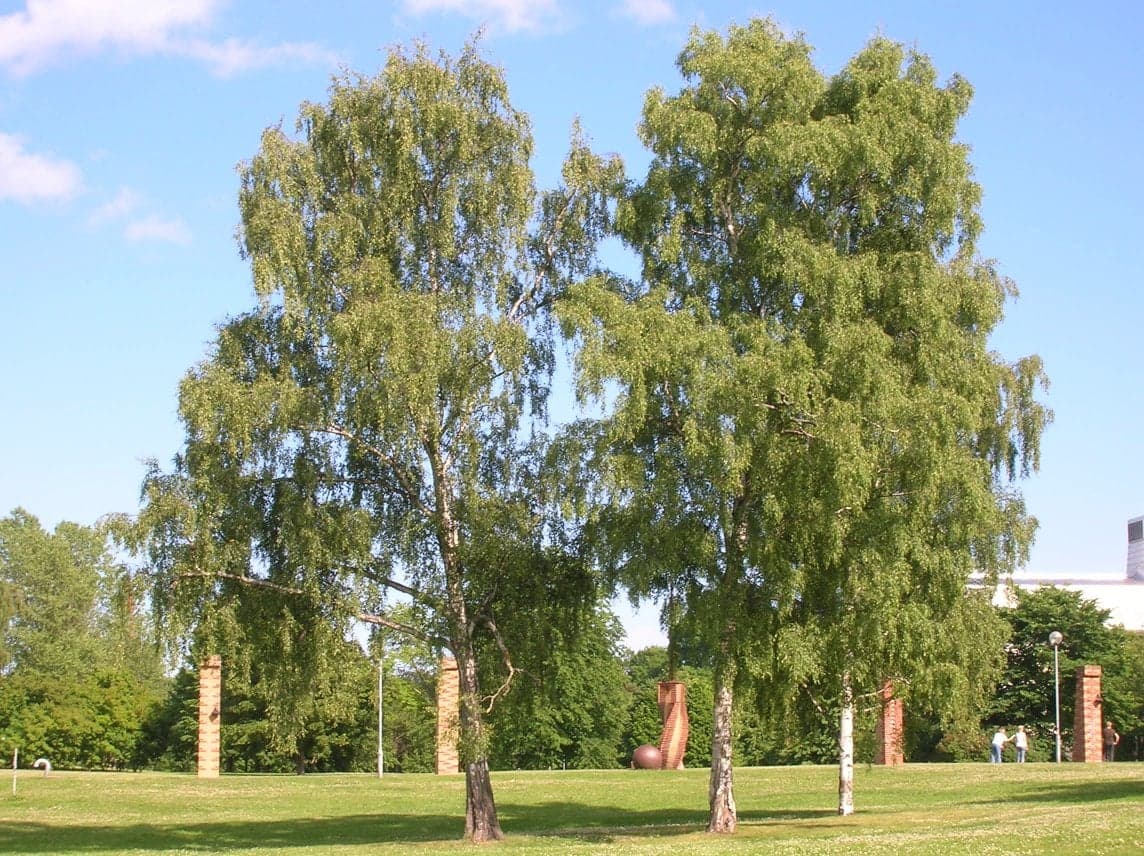
Betula pendula
Silver Birch
Harder than oak and stiffer than anything else KORENA lists, hiding behind a plain pale face. The best turning wood here.
- Fásta agus lománaithe san Eoraip.
- Grúpa luibheolaíoch. Is buaircínigh iad bogadhmaid; is crainn leathanduilleacha iad crua-adhmaid.
- Fine luibheolaíoch an speicis.
Faigh fógra nuair a thagann séSpeiceas tagartha. Níl píosaí i stoc faoi láthair.
An oireann sé do do thionscadal?
Iontach do
- Turned work
- Painted furniture
- Cabinetry and carcass work
- Veneer and plywood
- Interior joinery
Níl Silver Birch san eisiúint reatha
Speicis chomhchosúla i stoc
Níl Silver Birch againn anois. Oireann na speicis seo do na tionscadail chéanna agus tá píosaí ar fáil.


Faigh fógra faoi Silver Birch
Seolaimid ríomhphost chugat nuair a thagann leaca úra Silver Birch chuig KORENA. Tá gach píosa uathúil, mar sin is fiú fógra luath.
Cuma an adhmaid
An chuma atá air
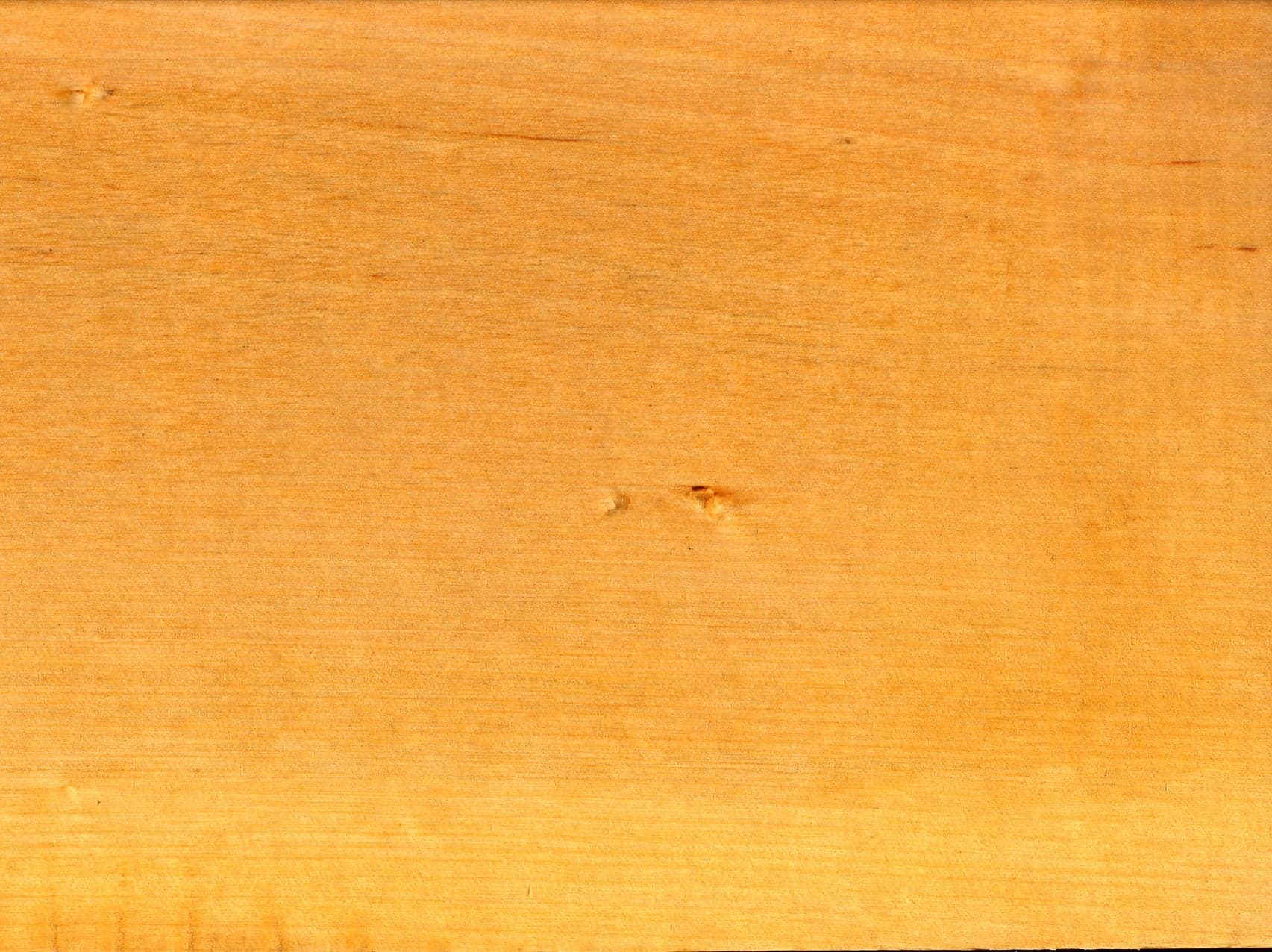
Pale, almost white to light cream, with very little colour separation between heartwood and sapwood and a fine even texture. Plain birch is quiet to the point of being featureless, which is exactly why it is prized for painted work and for veneer. The exceptions are the figured forms, curly and flame birch and the burred masur birch, which are among the most decorative surfaces available from any European species.
- Near white to pale cream with almost no heartwood contrast
- Fine even texture, plain in most boards
- Curly, flame and masur figured forms occur and are highly prized
- Straight to wavy grain, fine even texture. Near white to pale cream with almost no heartwood contrast. Curly, flame and masur figured forms occur and are highly prized.
Ag obair leis
Ag obair leis
Generally easy with hand and machine tools, and it turns, glues and finishes well. It is one of the best turning woods in this catalogue because the fine even texture holds crisp detail. Boards with wild or figured grain tear out during machining, so figured stock wants light cuts, sharp tooling and a scraper for the final surface. Density of 640 kg per cubic metre gives it more substance than its pale appearance suggests.
Bailchríoch
Takes finish well and takes paint exceptionally, which is its traditional role. Like other pale fine textured woods it blotches under pigment stain, so use a conditioner or a dye. The pale colour is the point for most applications, and a clear water based finish preserves it better than an oil, which will pull it toward yellow.
Stálú
The source KORENA cites reports no shrinkage data for this species, so no radial, tangential or volumetric figures are shown rather than values being borrowed from another birch. Practically, birch is known to dry with a marked tendency to warp and requires weighting and careful stickering. It is also highly susceptible to fungal attack and staining while drying, so it must be dried promptly after conversion rather than left in log or board.
An costas
Sábháilteacht agus foinsiú
- Fásta agus lománaithe san Eoraip.
Birch in the Betula genus is reported as a sensitiser, with reactions typically including skin and respiratory irritation. Extraction and a P2 mask during extended sanding are appropriate, particularly given how fine birch dust is.
Betula pendula ranges across the whole of northern Europe and into Siberia, and it is the pioneer tree that colonises cleared and burnt ground before slower species establish. Finland, the Baltic states, Sweden and Russia are the main commercial sources, and Baltic birch plywood built on this species is one of the best known engineered timbers in the world.
Léigh an treoir iomlánNótaí mionsonraithe ar phatrún, athrú datha, oibriú agus cobhsaíocht.
What Silver Birch actually is#
Betula pendula is the pioneer. It colonises cleared, burnt and abandoned ground across the whole of northern Europe and into Siberia, growing fast and establishing where slower species cannot. Finland, the Baltic states, Sweden and Russia are the main commercial sources, and Baltic birch plywood, built from this species, is among the best known engineered timbers in the world.
Its plainness works against it. A typical birch board is near white, almost featureless, with barely any distinction between heartwood and sapwood. It looks like a wood you would choose because you could not afford another one.
The numbers say otherwise.
The numbers are the surprise#
At 5,360 N on the Janka scale, Silver Birch is harder than European oak at 4,980 N.
Its elastic modulus of 13.96 GPa is the highest of any species in this catalogue, hardwood or softwood, above red oak at 12.14 and Douglas Fir at 12.17. Stiffness is what resists sag, so for a long shelf or an unsupported span, birch outperforms every other option here.
Modulus of rupture at 114.3 MPa matches Turkey Oak and beats sessile oak.
This is a genuinely strong, stiff, hard timber that happens to be pale and quiet. Choosing it is not a compromise.
Ceisteanna ceannaitheoirí
Ceisteanna ceannaitheoirí
Why are no shrinkage figures shown for Silver Birch?
The reference KORENA cites reports no shrinkage data for this species, and rather than borrow numbers from a different birch and label them Betula pendula, the fields are left empty. What is known practically is that birch warps readily in drying and needs weighting and careful stickering. Each KORENA slab carries its own measured moisture value, which is the reliable figure for the board in front of you.
Is birch hard enough for furniture?
Yes. At 5,360 N Janka it is harder than European oak at 4,980 N, and its elastic modulus of 13.96 GPa is the highest of any species in this catalogue. It is considerably more substantial than its pale, plain appearance suggests, and it is a genuinely good furniture timber.
What is masur birch?
A figured form of Betula pendula in which the grain is disrupted into dark flecked, swirling patterns, historically attributed to insect damage or genetic factors. It is among the most decorative surfaces available from any European species and is priced accordingly. Curly and flame birch are separate figured forms of the same species.
Can birch be used outdoors?
Airíonna meicniúla
Sonraí teicniúla
Luachanna tagartha foilsithe. Nuair nach n-aontaíonn foinsí, taispeántar an raon agus úsáidtear an luach tipiciúil do na scálaí thuas.
| Dlús (kg/m³)Mais in aghaidh an mhéadair chiúbaigh ag cion taise thart ar 12 %. Bíonn adhmad níos troime níos crua agus níos láidre de ghnáth. | 640 kg/m³ |
|---|---|
| Cruas Janka (N)An fórsa chun liathróid chruach a bhrú leath bealaigh isteach san adhmad. Gnáththomhas ar fhriotaíocht in aghaidh eangaithe. | 5,360 N |
| MOR: modal réabtha (MPa)Neart lúbtha: an t-ualach ag a mbriseann bíoma. | 114 MPa |
| MOE: modal leaisteachais (GPa)Righneas lúbtha: a mhéid a lúbann seilf nó barr faoi ualach. | 14.0 GPa |
| Marthanacht nádúrtha (EN 350)Caighdeán Eorpach ar fhriotaíocht nádúrtha in aghaidh lobhaidh, ó 1 (an-mharthanach) go 5 (somheata). | Class 5 — Perishable |