KORENA
InjamFinished piecesProvvistiImħażenĠurnal

Irċievi avviż

Kull fallakka hija unika. Meta tinbiegħ, tkun marret. Nibagħtulek email meta jittellgħu biċċiet ġodda: wasliet friski, speċijiet ġodda u tavli li jaqblu ma’ deskrizzjoni ta’ proġett.

Ftit emails fix-xahar. Ebda spam, tista’ tneħħi l-abbonament meta trid.

KORENA, injam iebes ta’ kwalità għolja

Biċċa waħda kull darba.

Injam iebes ivverifikat ta’ kwalità għolja, mibjugħ biċċa biċċa. Kull fallakka tiġi ritrattata, imkejla u mibgħuta mill-maħżen sieħeb b’passaport tal-injam.

Ħanut

  • Ara l-prodotti
  • Arkivju tal-mibjugħ
  • Segwi l-ordni

Tgħallem

  • Ġurnal
  • Gwidi tal-ispeċi
  • Glossarju
  • Qabbel
  • Awturi

Għajnuna

  • Dwarna
  • Kif jaħdem
  • Sir maħżen sieħeb
  • Sib fallakka
  • Appoġġ
  • Mudelli ta’ dokumenti
  • Stampa

Ixtri

  • Kundizzjonijiet tal-bejgħ
  • Dritt ta’ rtirar
  • Ritorn u garanzija legali
  • Trasport u kunsinna

Fiduċja

  • Politika tal-privatezza
  • Politika dwar il-cookies
  • Provenjenza tal-injam u EUDR
  • Aċċessibbiltà

Avviż legali

  • Avviż legali / Informazzjoni legali
  • Użu aċċettabbli
  • Proprjetà intellettwali u kontenut

© 2026 KORENA. Id-drittijiet kollha riżervati.

Imħaddma minn Martial Labs Ltd. (BG, EIK 207453941). KORENA huwa isem kummerċjali ta’ Martial Labs Ltd.

Nirrispettaw il-privatezza tiegħek

Nużaw cookies essenzjali biex is-sit jaħdem. Bil-permess tiegħek nużaw ukoll cookies għall-analiżi, kontenut personalizzat u reklami. Tista’ tibdel fehmtek fi kwalunkwe ħin fil-paġna tal-preferenzi tal-kunsens. Ara l-politika dwar il-cookies u l-politika tal-privatezza tagħna.

  1. Paġna ewlenija
  2. /
  3. Speċijiet
  4. /
  5. Black Pine

Pinus nigra

Black Pine

A pale timber from a dark tree. Works like Scots Pine, stays lighter with age, and moves less than any pine here.

  • Imkabbar u maħsud fl-Ewropa.
  • Grupp botaniku. L-injam artab ġej mill-koniferi; l-injam iebes minn siġar bil-weraq wiesa’.
  • Il-familja botanika li tappartjeni għaliha l-ispeċi.
Irċievi avviż meta tasalSpeċi ta’ referenza. Bħalissa ebda biċċa fl-istokk.
Siġra ta’ Black Pine
  • Adattament għall-proġett
  • Fl-istokk
  • Dehra
  • Kif taħdimha
  • Moviment
  • Prezz
  • Sigurtà u provvista
  • Mistoqsijiet
  • Data teknika

Huwa tajjeb għall-proġett tiegħek?

Tajjeb ħafna għal

  • Painted furniture
  • Panelling
  • Carcass work
  • Shelving
  • Interior joinery

Ebda Black Pine fil-ħarġa attwali

Speċijiet simili fl-istokk

Bħalissa m’hemmx Black Pine. Dawn l-ispeċijiet jgħoddu għall-istess proġetti u għandhom biċċiet disponibbli.
  • Vina ta’ Saman

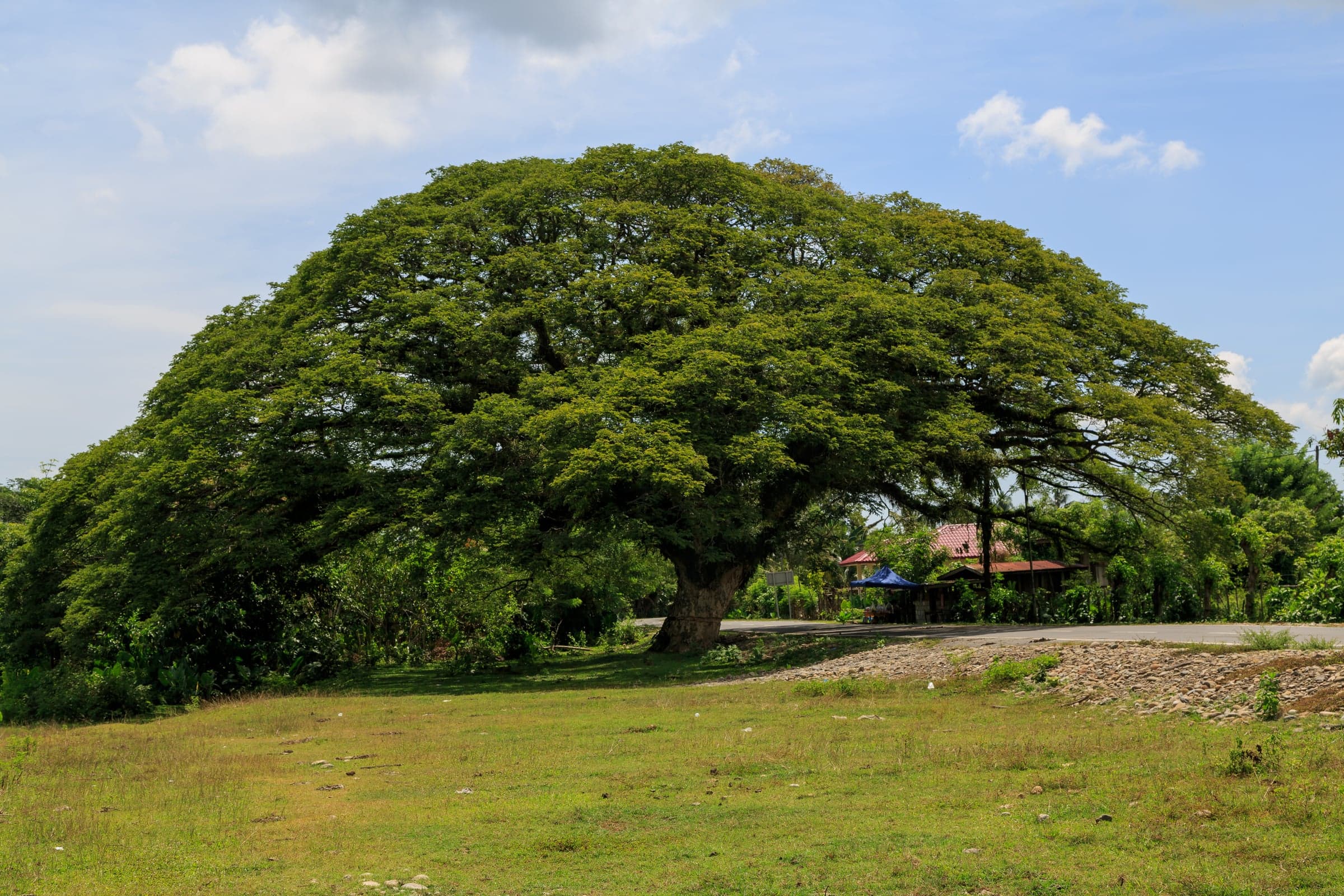
    Saman

    Samanea saman

    4 biċċiet

  • Vina ta’ European Oak

    European Oak

    Quercus robur

    6 biċċiet

  • Vina ta’ European Walnut

    European Walnut

    Juglans regia

    9 biċċiet

Irċievi avviż dwar Black Pine

Nibagħtulek email meta jaslu fallakki friski ta’ Black Pine għand KORENA. Kull biċċa hija unika, għalhekk avviż bikri jgħin.

Ftit emails fix-xahar. Ebda spam, tista’ tneħħi l-abbonament meta trid.

Dehra tal-injam

Kif jidher

Pale yellow to light brown heartwood against wide pale sapwood, closely resembling Scots Pine but generally a shade paler and with tighter, more regular growth rings. Knots tend to be smaller and more evenly distributed than in Scots Pine, which gives a calmer overall surface. The name refers to the dark bark and foliage of the tree, not to the timber, which regularly surprises buyers.

  • Pale yellow to light brown, slightly paler than Scots Pine
  • Wide pale sapwood with modest heartwood contrast
  • Ambers with age, though less dramatically than Scots Pine
  • Straight, regular grain with tighter and more even rings than Scots Pine. Pale yellow to light brown, with smaller and more evenly distributed knots.

Kif taħdem bih

Kif taħdmu

Easy with both hand and machine tools, and it glues and finishes well. It behaves almost identically to Scots Pine at the bench, which makes it an easy substitution. Resin is present and blades will need periodic cleaning. Its slightly lower density than Scots Pine means edges bruise a little more readily, so sharp tools and light finishing cuts matter.

Finitura

Takes finish well and takes wax as well as Scots Pine does. The same blotching caution applies to pigment stains, so use a conditioner or a dye. Seal knots with shellac before painting to stop resin bleeding through the film. Because it ambers less than Scots Pine, it holds a pale finished colour more faithfully over time, which is useful when a design depends on staying light.

Tnixxif

Dries without much difficulty and with a low tendency to distort. Volumetric shrinkage is around 11.4 percent, the second lowest in this group after Douglas Fir, and the tangential to radial ratio at 7.3 against 4.1 percent is comparatively favourable. Properly dried Black Pine is more dimensionally stable in service than Scots Pine, which is its quiet advantage.

Kemm se jiċċaqlaq?

L-injam jintefaħ u jiċkien tul il-wisa’ hekk kif l-arja ssir aktar jew inqas umda. Stima l-moviment staġjonali ta’ wiċċ ta’ Black Pine qabel tiddisinja t-twaħħil.

Qatgħa
Fejn se tintuża

Moviment staġjonali mistenni

madwar 8.3 mm

Waħħal il-wiċċ b’buttuni jew brackets b’fetħiet, mhux b’kolla jew viti ssikkati.

Mudell ta’ tnaqqis lineari: wisa’ × (tnaqqis ÷ 28 % saturazzjoni tal-fibra) × bidla staġjonali fl-umdità. Juża tnaqqis tanġenzjali ta’ 7.3 % għal Black Pine. Stima għall-ippjanar, mhux garanzija.

Kemm jiswa

Sigurtà u provvista

  • Imkabbar u maħsud fl-Ewropa.
  • Stat fil-Lista l-Ħamra tal-IUCN: il-valutazzjoni globali tal-konservazzjoni għal din l-ispeċi.
  • Working with pine has been reported to cause allergic skin reactions and asthma-like symptoms in some people. Normal extraction, a P2 mask during extended sanding, and gloves when handling resinous stock are appropriate.

Aqra l-gwida sħiħaNoti dettaljati dwar id-disinn tal-vina, il-bidla fil-kulur, ix-xogħol u l-istabbiltà.+

What Black Pine actually is#

Pinus nigra is named for the tree, not the wood. The bark is dark and the foliage almost black-green, and buyers ordering by name regularly expect something like walnut and receive a pale yellow board. The timber is light, close in appearance to Scots Pine, and frequently a shade paler still.

The species grows across southern Europe and Asia Minor in several regional subspecies, from Spain and Corsica through the Alps and Balkans into Turkey, and it has been planted far outside that range as a tough reforestation species tolerant of poor soil and drought. Slab stock reaching the EU market is usually Balkan or Austrian grown.

Why it is worth choosing over Scots Pine#

These two are genuinely close substitutes, so the case for Black Pine rests on two measurable differences.

The first is stability. Volumetric shrinkage is around 11.4 percent against 13.6 percent for Scots Pine, and the tangential to radial ratio at 7.3 against 4.1 percent is more favourable. In practice that means a flatsawn Black Pine panel cups less across a humidity swing than the equivalent Scots Pine or spruce board. For a wide panel or a door, that is the difference that matters.

The second is colour stability. Scots Pine ambers dramatically, which is its charm in a farmhouse table and a problem in a design that needs to stay pale. Black Pine ambers noticeably less. If a piece is specified light and must still read light in a decade, this is the better pine.

Mistoqsijiet tax-xerrejja

Mistoqsijiet tax-xerrejja

Why is it called Black Pine when the wood is pale?

+

The name describes the tree, not the timber. Pinus nigra has notably dark bark and very dark green foliage, which is what earned it the name. The wood itself is pale yellow to light brown and is often slightly lighter than Scots Pine, which regularly catches out buyers ordering by name alone.

How does it compare with Scots Pine?

+

Very closely at the bench, and the two are reasonable substitutes. Black Pine is a little harder at 2,920 N against 2,420 N Janka, slightly lower in density at 475 kg per cubic metre, and noticeably more dimensionally stable with volumetric shrinkage of 11.4 percent against 13.6 percent. It also ambers less with age, so it holds a pale finish better.

Is it stable enough for a wide panel?

+

It is one of the better softwood choices here for that. Its volumetric shrinkage of 11.4 percent is second only to Douglas Fir in this group, and the tangential to radial ratio is comparatively favourable, so flatsawn boards cup less than the equivalent in spruce or Scots Pine. A wide top should still float on slotted fasteners.

Can it be used outdoors?

+

Proprjetajiet mekkaniċi

Data teknika

Valuri ta’ referenza ppubblikati. Fejn is-sorsi ma jaqblux tintwera l-firxa, bil-valur tipiku użat għall-iskali ta’ hawn fuq.

Densità (kg/m³)Massa għal kull metru kubu b’madwar 12 % kontenut ta’ umdità. Injam itqal normalment ikun aktar iebes u b’saħħtu.475 kg/m³
Ebusija Janka (N)Il-forza meħtieġa biex tagħfas ballun tal-azzar sa nofsu fl-injam. Il-kejl standard tar-reżistenza għat-tgħaffiġ.2,920 N
MOR: modulu tal-ksur (MPa)Saħħa fil-liwi: it-tagħbija li fiha travu jinkiser.64 MPa
MOE: modulu tal-elastiċità (GPa)Ebusija fil-liwi: kemm jinżel xkaffa jew wiċċ taħt tagħbija.10.8 GPa
Tnaqqis radjaliTnaqqis tul iċ-ċrieki tat-tkabbir, minn aħdar sa mnixxef fil-forn. Tavli quartersawn jiċċaqalqu hekk.4.1 %
Tnaqqis tanġenzjaliTnaqqis tul iċ-ċrieki tat-tkabbir. Tavli flatsawn u l-biċċa l-kbira tal-fallakki jiċċaqalqu hekk.7.3 %

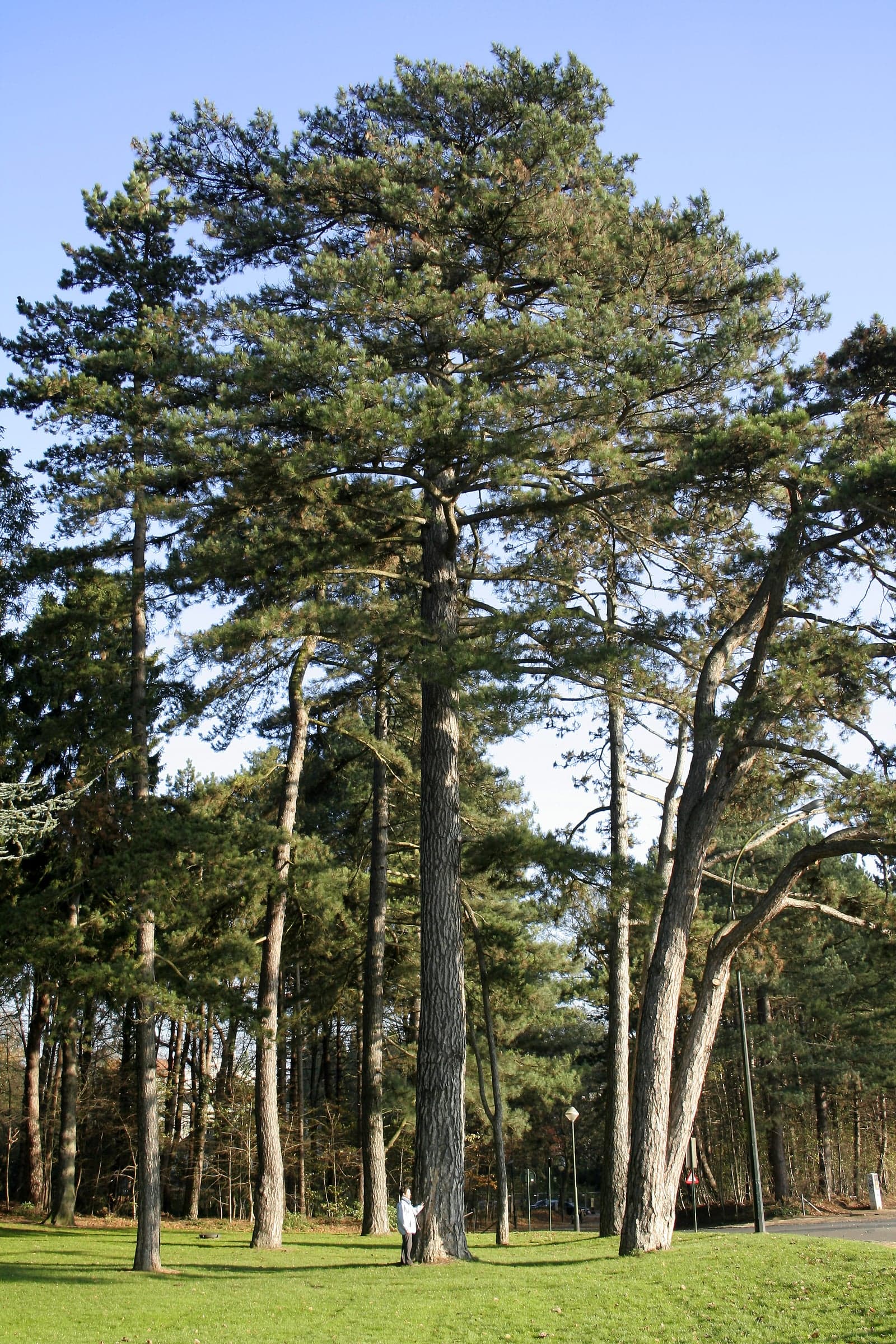
Jean-Pol GRANDMONT, via Wikimedia Commons

Pinus nigra grows across southern Europe and Asia Minor in several regional subspecies, from Spain and Corsica through the Alps and Balkans to Turkey. It has also been planted widely outside that range as a hardy reforestation species. Slab stock reaching KORENA is usually Balkan or Austrian grown.

  • Not listed in the CITES Appendices and assessed by the IUCN as Least Concern. It is widely planted for reforestation and erosion control across southern Europe, so supply is stable and certification coverage is reasonable. Balkan sourced material is common in the EU market and documentation is generally straightforward.

  • Black Pine: Qoxra
    Qoxra

    It is also slightly harder, at 2,920 N against 2,420 N on the Janka scale, though both are soft enough that the difference rarely decides anything.

    Reading a Black Pine slab#

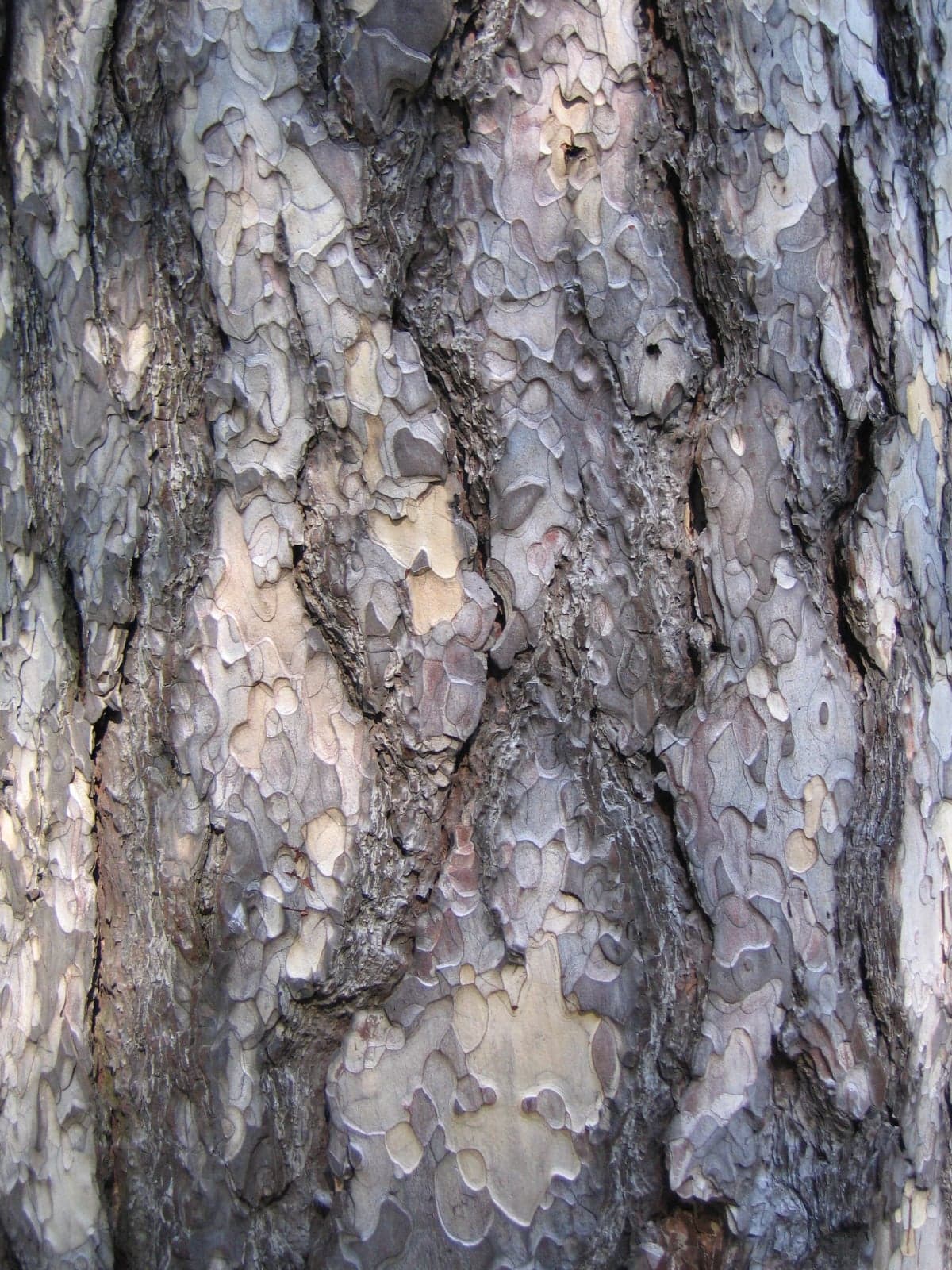
    Colour range is narrow: pale yellow to light brown heartwood against a wide band of pale sapwood, with modest contrast between them. As with the other pale conifers, structure carries more information than colour.

    The knots are the pleasant surprise. Black Pine tends to produce smaller and more evenly distributed knots than Scots Pine, which gives a calmer, more regular surface across a wide slab. Fewer large knots also means fewer of the weak points that move independently of the board around them.

    Ring spacing follows the usual rule. Tighter rings from slower growth mean a denser, stiffer, more stable board.

    At the bench#

    If you have worked Scots Pine you already know how this behaves. It cuts cleanly with hand and machine tools, glues reliably, and finishes without argument.

    Its density is slightly lower than Scots Pine at 475 kg per cubic metre, and the practical consequence is that arrises bruise a little more easily. Sharp tools and light finishing cuts are worth the discipline, and a card scraper produces a better surface than aggressive sanding.

    Resin is present at roughly the level of Scots Pine, which is to say noticeable but manageable. Blades want periodic cleaning rather than constant attention.

    Knots remain the one place to slow down. They are hard and resinous, and a planer knife meeting one at speed can tear or spit it out.

    Finishing#

    It takes oil, wax and clear finishes readily, and wax over bare timber gives the same honest result it gives on Scots Pine.

    Two cautions carry over unchanged from the other pines. Pigment stains blotch because of the density difference between earlywood and latewood, so use a conditioner or switch to a dye. And every knot must be sealed with shellac before priming for a painted finish, because resin stays mobile for years and will migrate through ordinary primer to appear as brown rings long after the work looked finished.

    Where Black Pine is the right answer#

    Painted furniture, panelling, carcass work, shelving and interior joinery, particularly where a wide flat panel has to stay flat, or where the finished colour needs to stay pale rather than warming into honey.

    It is the wrong answer outdoors without treatment, since it is rated moderately durable to non-durable, and it is the wrong answer where the deep amber of aged Scots Pine is actually the effect being sought.

    Sourcing and EUDR#

    Not CITES listed and assessed as Least Concern. Black Pine is planted extensively for reforestation and erosion control across southern Europe, so supply is stable rather than scarce and certification coverage through Balkan and Austrian sources is reasonable. Documentation for EUDR purposes is generally straightforward, and KORENA listings record the originating yard and region on the passport.

    Not untreated. The heartwood is rated moderately durable to non-durable, similar to Scots Pine, so exterior use requires preservative treatment or a maintained finish. European Larch is the species in this group to reach for when the piece is exposed.

    Are the knots a problem?

    +

    Less so than in Scots Pine. Black Pine knots tend to be smaller and more evenly spread, which gives a calmer surface and fewer large weak points. They are still hard and resinous, so approach them with light cuts and seal them with shellac before any painted finish.

    Tnaqqis volumetrikuBidla totali fil-volum minn aħdar sa mnixxef fil-forn. Inqas ifisser aktar stabbli.11.4 %
    Durabbiltà naturali (EN 350)Standard Ewropew għar-reżistenza naturali għat-tmermir, minn 1 (durabbli ħafna) sa 5 (jitmermer faċilment).Class 4 — Slightly durable

    Sorsi

    • The Wood Database — Austrian Pine (Pinus nigra)(aċċessat 2026-08-12)
    • USDA FPL Wood Handbook FPL-GTR-190 (2010)(aċċessat 2026-08-12)
    • Meier, E. — WOOD! Identifying and Using Hundreds of Woods Worldwide (2015)(aċċessat 2026-08-12)

    Vantaġġi

    • Stabbli ħafnaMoviment staġjonali baxx. Tajjeb għal uċuħ wesgħin u ġonot preċiżi.
    • Tajjeb għal min jibdaFaċli fuq il-bank u mhux iebes tant li jagħmel ħsara lill-għodod.

    Oqgħod attent

    • Mhux għal użu barra mingħajr trattamentId-durabbiltà naturali hija klassi EN 350 4 minn 5. Żommha ġewwa jew taħt finitura miżmuma tajjeb.
    • It-trab jirritaUża estrazzjoni u ilbes maskra waqt ix-xkatlar jew il-magni.

    Agħfas tikketta għad-dettalji.

    Daqqa t’għajn

    Il-livelli jużaw faxex fissi għall-ispeċijiet kollha elenkati minn KORENA, għalhekk jitqabblu direttament. Il-valur imkejjel jidher taħt kull wieħed.
    EbusijaReżistenza għat-tgħaffiġ u l-użuPjuttost artab

    Ebusija Janka: 2,920 N

    41 % aktar artab mill-oak Ewropew

    PiżKemm hi tqila fallakka biex terfagħhaĦafif

    475 kg/m³

    StabbiltàKemm tiċċaqlaq ftit mal-istaġuniStabbli

    11.4 % tnaqqis volumetriku

    XogħolSerrar, inċanar, xkatlar u inkullarFaċli

    medja ta’ 4.0 / 5 fuq il-bank

    Użu barraReżistenza naturali għat-tmermir, EN 350Għal ġewwa biss

    Klassi EN 350 4

    • Serrar · Tajjeb ħafnaKemm jinqata’ nadif u kemm jgħejja x-xfafar.1 = diffiċli · 5 = eċċellenti
    • Inċanar · Tajjeb ħafnaKemm iħalli wiċċ lixx u kemm iqatta’ l-vina.1 = diffiċli · 5 = eċċellenti
    • Xkatlar · Tajjeb ħafnaKemm jitxkatla malajr u lixx mingħajr ma jimblokka l-karta.1 = diffiċli · 5 = eċċellenti
    • Tornitura · Tajjeb ħafnaKif jinqata’ u jingħata finitura fuq it-torn.1 = diffiċli · 5 = eċċellenti
    • Tinqix · TajjebKemm iżomm dettall ċar taħt skarpell.1 = diffiċli · 5 = eċċellenti
    • Inkullar · EċċellentiKemm iżommu tajjeb il-ġonot bil-kolla.1 = diffiċli · 5 = eċċellenti
    • Żamma ta’ viti / imsiemer · Tajjeb ħafnaKemm iżomm viti u msiemer mingħajr ma jinqasam.1 = diffiċli · 5 = eċċellenti
    • Liwi bil-fwar · TajjebKemm jieħu kurvi wara l-fwar.1 = diffiċli · 5 = eċċellenti

    Għal kemm qed jinbiegħ l-injam ta’ Black Pine madwar l-Ewropa bħalissa, għal kull metru kubu qabel il-VAT. Agħfas prezz għad-dettalji.

    • L-aħjar zkuk fl-irkantZkuk magħżula ta’ kwalità għolja mibjugħa f’irkanti b’offerti, l-aktar lil dawk li jagħmlu l-fuljetta u l-għamara. Il-fallakki jinqatgħu minn zkuk bħal dawn.Il-biċċa l-kbira tal-prezzijiet huma bejn €180 u €180.Ibbażat fuq 26 prezz minn 1 reġjun.L-aħħar data 25 ta’ Set, 2026
    • Zkuk ordinarjiVolumi kbar ta’ injam grezz standard mibjugħ mis-sidien tal-foresti u mill-awtoritajiet forestali tal-istat, l-aktar għall-kostruzzjoni u l-industrija.Il-biċċa l-kbira tal-prezzijiet huma bejn €36 u €77.Ibbażat fuq 36 prezz minn 4 reġjuni.L-aħħar data 23 ta’ Set, 2026

    Zkuk ordinarji skont il-pajjiż

    • Franza · €75 / m³Reġjuni: Bourgogne-Franche-Comté u Grand Est / Alsace6 prezzijietL-aħħar data 15 ta’ Set, 2026
    • il-Bulgarija · €47 / m³Reġjuni: North-West Bulgaria u South-East Bulgaria30 prezzL-aħħar data 23 ta’ Set, 2026

    Għaliex fallakka tiswa aktar minn hekk?

    Dawn huma prezzijiet tal-injam mhux maħdum. Fallakka hija l-aħjar qatgħa ta’ zokk, imnixxfa għal sena jew aktar, imbagħad iċċekkjata u mkejla biċċa biċċa. Parti żgħira biss minn kull zokk issir fallakka.

    Sors: KORENA Timber Index · L-aħħar data 25 ta’ Set, 2026

    Ara l-prezzijiet reġjonali kollha