KORENA
InjamFinished piecesProvvistiImħażenĠurnal

Irċievi avviż

Kull fallakka hija unika. Meta tinbiegħ, tkun marret. Nibagħtulek email meta jittellgħu biċċiet ġodda: wasliet friski, speċijiet ġodda u tavli li jaqblu ma’ deskrizzjoni ta’ proġett.

Ftit emails fix-xahar. Ebda spam, tista’ tneħħi l-abbonament meta trid.

KORENA, injam iebes ta’ kwalità għolja

Biċċa waħda kull darba.

Injam iebes ivverifikat ta’ kwalità għolja, mibjugħ biċċa biċċa. Kull fallakka tiġi ritrattata, imkejla u mibgħuta mill-maħżen sieħeb b’passaport tal-injam.

Ħanut

  • Ara l-prodotti
  • Arkivju tal-mibjugħ
  • Segwi l-ordni

Tgħallem

  • Ġurnal
  • Gwidi tal-ispeċi
  • Glossarju
  • Qabbel
  • Awturi

Għajnuna

  • Dwarna
  • Kif jaħdem
  • Sir maħżen sieħeb
  • Sib fallakka
  • Appoġġ
  • Mudelli ta’ dokumenti
  • Stampa

Ixtri

  • Kundizzjonijiet tal-bejgħ
  • Dritt ta’ rtirar
  • Ritorn u garanzija legali
  • Trasport u kunsinna

Fiduċja

  • Politika tal-privatezza
  • Politika dwar il-cookies
  • Provenjenza tal-injam u EUDR
  • Aċċessibbiltà

Avviż legali

  • Avviż legali / Informazzjoni legali
  • Użu aċċettabbli
  • Proprjetà intellettwali u kontenut

© 2026 KORENA. Id-drittijiet kollha riżervati.

Imħaddma minn Martial Labs Ltd. (BG, EIK 207453941). KORENA huwa isem kummerċjali ta’ Martial Labs Ltd.

Nirrispettaw il-privatezza tiegħek

Nużaw cookies essenzjali biex is-sit jaħdem. Bil-permess tiegħek nużaw ukoll cookies għall-analiżi, kontenut personalizzat u reklami. Tista’ tibdel fehmtek fi kwalunkwe ħin fil-paġna tal-preferenzi tal-kunsens. Ara l-politika dwar il-cookies u l-politika tal-privatezza tagħna.

  1. Paġna ewlenija
  2. /
  3. Speċijiet
  4. /
  5. Douglas Fir

Pseudotsuga menziesii

Douglas Fir

Not a fir, and the stiffest softwood KORENA lists. Bold orange ring figure, structural strength, and a splinter you do not want to ignore.

  • Imkabbar barra l-Ewropa u importat permezz ta’ mħażen Ewropej.
  • Grupp botaniku. L-injam artab ġej mill-koniferi; l-injam iebes minn siġar bil-weraq wiesa’.
  • Il-familja botanika li tappartjeni għaliha l-ispeċi.
Irċievi avviż meta tasalSpeċi ta’ referenza. Bħalissa ebda biċċa fl-istokk.
  • Adattament għall-proġett
  • Fl-istokk
  • Dehra
  • Kif taħdimha
  • Moviment
  • Prezz
  • Sigurtà u provvista
  • Mistoqsijiet
  • Data teknika

Huwa tajjeb għall-proġett tiegħek?

Tajjeb ħafna għal

  • Structural beams and exposed framing
  • Tabletops
  • Flooring
  • Exterior joinery
  • Shelving with long spans

Ebda Douglas Fir fil-ħarġa attwali

Speċijiet simili fl-istokk

Bħalissa m’hemmx Douglas Fir. Dawn l-ispeċijiet jgħoddu għall-istess proġetti u għandhom biċċiet disponibbli.
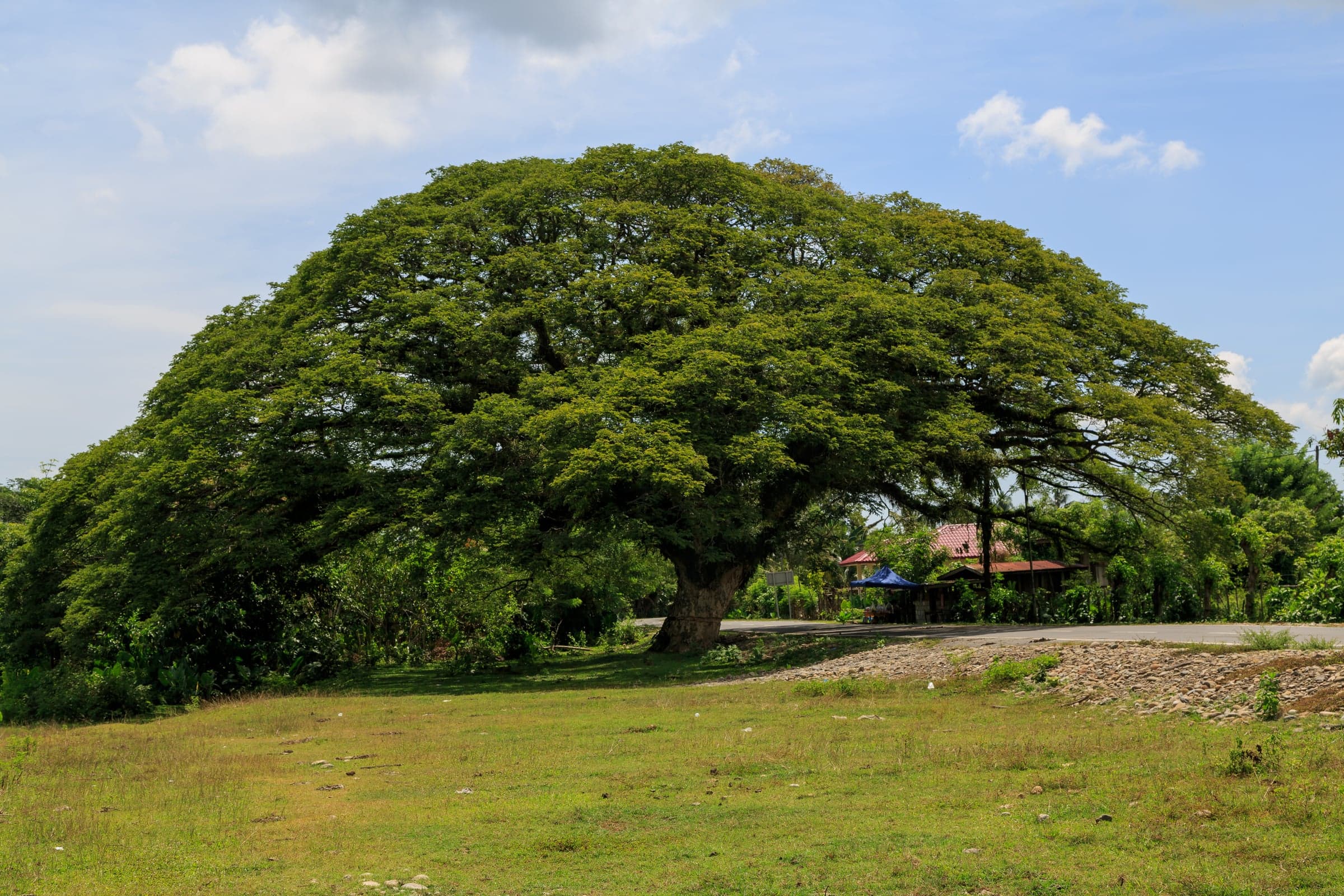
  • Vina ta’ Saman

    Saman

    Samanea saman

    4 biċċiet

  • Vina ta’ European Oak

    European Oak

    Quercus robur

    6 biċċiet

  • Vina ta’ European Walnut

    European Walnut

    Juglans regia

    9 biċċiet

Irċievi avviż dwar Douglas Fir

Nibagħtulek email meta jaslu fallakki friski ta’ Douglas Fir għand KORENA. Kull biċċa hija unika, għalhekk avviż bikri jgħin.

Ftit emails fix-xahar. Ebda spam, tista’ tneħħi l-abbonament meta trid.

Dehra tal-injam

Kif jidher

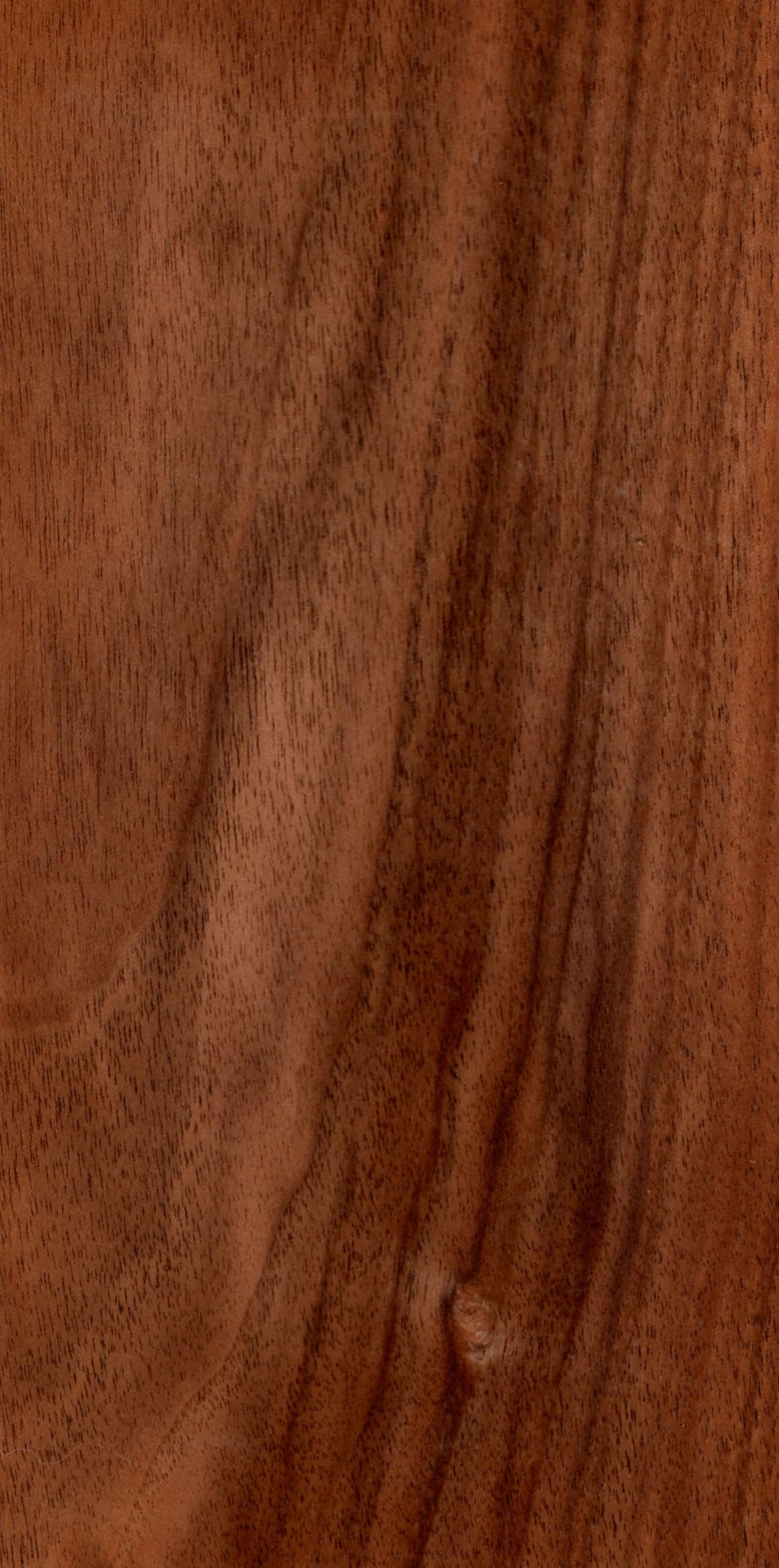
Warm reddish tan to light brown heartwood with a distinctly orange cast, against pale sapwood. The ring figure is bold and high contrast because the latewood bands are dense and dark, giving flatsawn faces a strong flame pattern. It is one of the stiffest softwoods available, which is why it dominates structural engineered timber.

  • Reddish tan to light brown with a warm orange cast
  • Bold high contrast growth ring figure
  • Pale narrow sapwood, deepens with light exposure
  • Straight grain with bold, high-contrast growth rings from dense dark latewood. Reddish tan to light brown with a warm orange cast against pale sapwood.

Kif taħdem bih

Kif taħdmu

Machines well but has a moderate blunting effect on cutters, noticeably more than spruce or pine. It accepts stains, glues and finishes well. The dense latewood bands are the machining challenge: they are much harder than the earlywood between them and can tear out where grain rises, leaving a ridged surface. Sharp tooling and light finishing cuts matter, and a helical head is a real advantage.

Finitura

Takes oil and clear finishes well and the colour deepens attractively toward a richer red brown. Like all species with strong density contrast between earlywood and latewood, it blotches under pigment stain, so a conditioner or dye is the safer route. Its natural colour is warm enough that most makers leave it clear.

Tnixxif

Dries reasonably well but is prone to surface checking in thick sections if pushed, and European grown fast ring stock is more troublesome than slow grown material. Volumetric shrinkage at around 11.6 percent is the lowest in this group, which combined with a favourable tangential to radial ratio makes properly dried Douglas Fir one of the more stable softwoods in service.

Kemm se jiċċaqlaq?

L-injam jintefaħ u jiċkien tul il-wisa’ hekk kif l-arja ssir aktar jew inqas umda. Stima l-moviment staġjonali ta’ wiċċ ta’ Douglas Fir qabel tiddisinja t-twaħħil.

Qatgħa
Fejn se tintuża

Moviment staġjonali mistenni

madwar 8.3 mm

Waħħal il-wiċċ b’buttuni jew brackets b’fetħiet, mhux b’kolla jew viti ssikkati.

Mudell ta’ tnaqqis lineari: wisa’ × (tnaqqis ÷ 28 % saturazzjoni tal-fibra) × bidla staġjonali fl-umdità. Juża tnaqqis tanġenzjali ta’ 7.3 % għal Douglas Fir. Stima għall-ippjanar, mhux garanzija.

Kemm jiswa

Sigurtà u provvista

  • Imkabbar barra l-Ewropa u importat permezz ta’ mħażen Ewropej.
  • Stat fil-Lista l-Ħamra tal-IUCN: il-valutazzjoni globali tal-konservazzjoni għal din l-ispeċi.
  • Reported to cause skin irritation, nausea, giddiness and runny nose, along with an increased likelihood of splinters becoming infected. That last point is worth taking seriously: Douglas Fir splinters are notorious for going septic. Gloves when handling rough stock and proper extraction during machining are advisable.

Aqra l-gwida sħiħaNoti dettaljati dwar id-disinn tal-vina, il-bidla fil-kulur, ix-xogħol u l-istabbiltà.+

What Douglas Fir actually is#

Pseudotsuga menziesii is not a fir. It sits in its own genus, separate from the true firs of Abies, and the name is a historical accident that never got corrected. The distinction is not pedantry. Silver Fir is the softest wood in this catalogue at 1,420 N Janka; Douglas Fir is nearly twice as hard at 2,760 N, considerably stiffer, more durable, and much harder on cutting edges. Expecting one to behave like the other leads to bad decisions.

It is native to western North America and has been planted across Europe since the nineteenth century. That matters when buying, because European plantation stock and North American old growth are the same species performing quite differently.

Reading a Douglas Fir slab#

The colour is the immediate draw: a warm reddish tan with an orange cast that deepens under light toward a richer red brown. Against the pale narrow sapwood the contrast is clean.

The ring figure is the real signature. Douglas Fir lays down dense dark latewood bands against much softer earlywood, and on a flatsawn face that produces a bold flame pattern with high contrast, closer to a ring-porous hardwood than to the quiet figure of spruce.

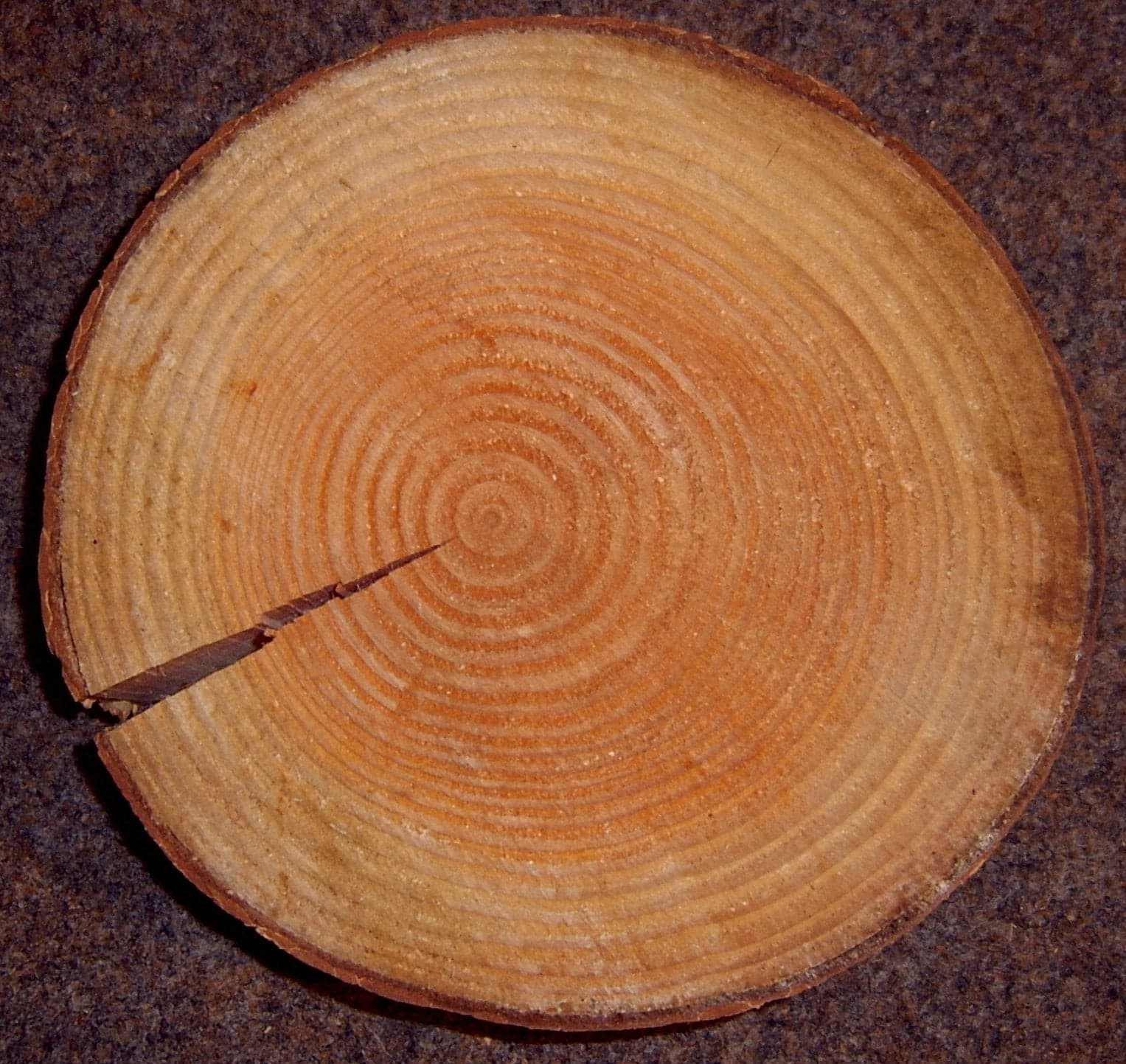
That same contrast is what you must read for quality. Ring spacing separates slow grown material, with a high proportion of dense latewood, from fast grown European plantation stock with wide soft earlywood bands. The slow grown board is stronger, more durable and more attractive. The fast grown one is neither wrong nor a bargain, it is simply a different material, and for structural or exterior work the difference is not cosmetic.

Mistoqsijiet tax-xerrejja

Mistoqsijiet tax-xerrejja

Is Douglas Fir actually a fir?

+

No. Pseudotsuga menziesii is its own genus, distinct from the true firs in Abies such as Silver Fir. The name is a historical misnomer that stuck. The practical consequence is that it behaves nothing like Silver Fir: it is far stiffer, harder, more durable and considerably more difficult on cutting edges.

How stiff is it compared to other softwoods?

+

Its elastic modulus is 12.17 GPa, the highest of any softwood KORENA lists and above European Larch at 11.80 GPa. Stiffness is why it dominates structural glulam and why it is the right choice for a long shelf or an unsupported span where deflection matters more than hardness.

Can I use it outdoors?

+

It is rated moderately durable regarding decay but is susceptible to insect attack, so it sits below European Larch for exterior work. It performs well in protected exterior joinery such as windows and doors under a maintained finish. For unprotected decking or ground contact, larch is the better choice from this group.

Why do Douglas Fir splinters get infected so often?

+

Proprjetajiet mekkaniċi

Data teknika

Valuri ta’ referenza ppubblikati. Fejn is-sorsi ma jaqblux tintwera l-firxa, bil-valur tipiku użat għall-iskali ta’ hawn fuq.

Densità (kg/m³)Massa għal kull metru kubu b’madwar 12 % kontenut ta’ umdità. Injam itqal normalment ikun aktar iebes u b’saħħtu.510 kg/m³
Ebusija Janka (N)Il-forza meħtieġa biex tagħfas ballun tal-azzar sa nofsu fl-injam. Il-kejl standard tar-reżistenza għat-tgħaffiġ.2,760 N
MOR: modulu tal-ksur (MPa)Saħħa fil-liwi: it-tagħbija li fiha travu jinkiser.86 MPa
MOE: modulu tal-elastiċità (GPa)Ebusija fil-liwi: kemm jinżel xkaffa jew wiċċ taħt tagħbija.12.2 GPa
Tnaqqis radjaliTnaqqis tul iċ-ċrieki tat-tkabbir, minn aħdar sa mnixxef fil-forn. Tavli quartersawn jiċċaqalqu hekk.4.5 %
Tnaqqis tanġenzjaliTnaqqis tul iċ-ċrieki tat-tkabbir. Tavli flatsawn u l-biċċa l-kbira tal-fallakki jiċċaqalqu hekk.7.3 %
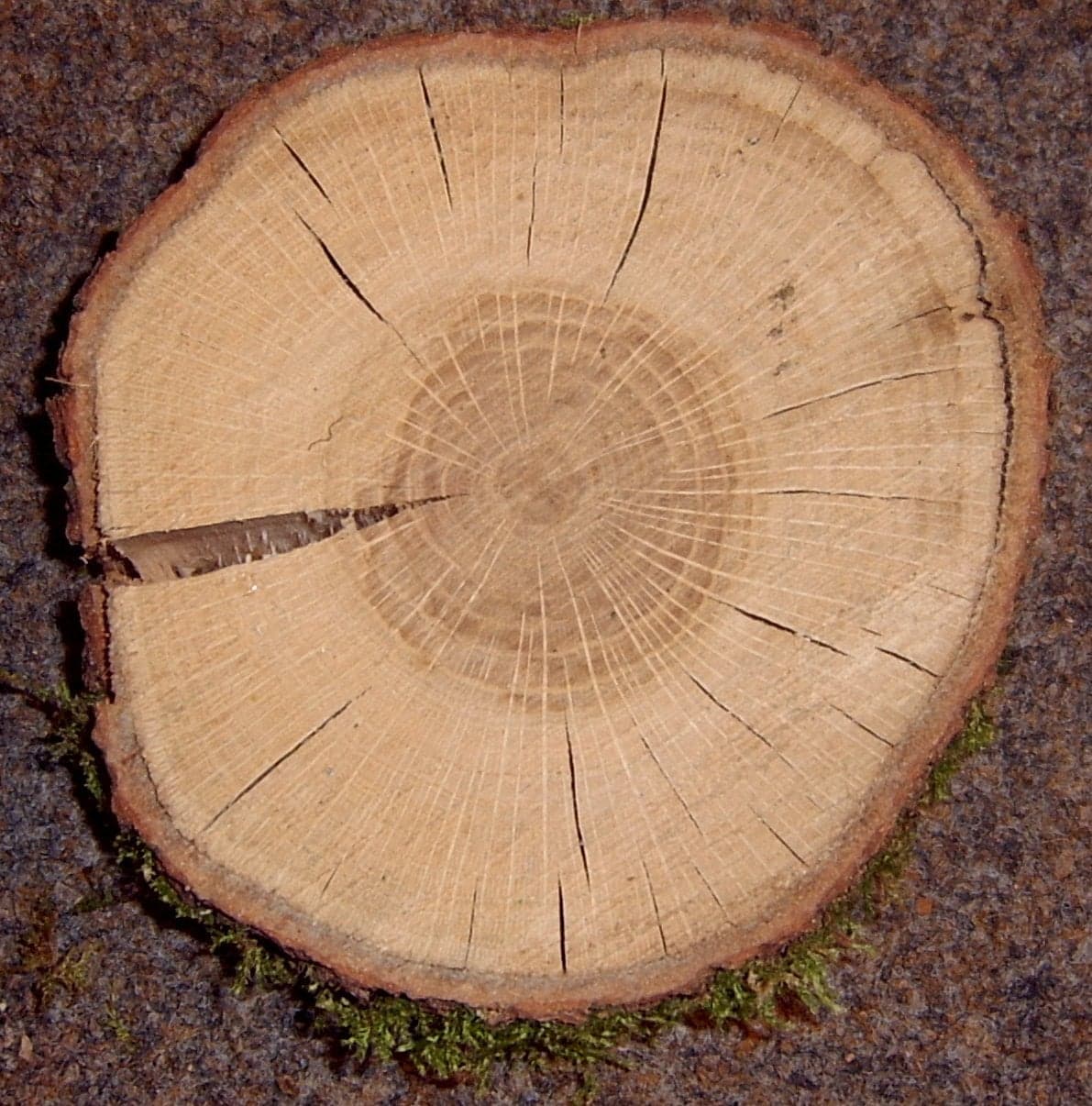
Vina ta’ Douglas Fir

No machine-readable author provided. Lumbar~commonswiki assumed (based on copyright claims)., via Wikimedia Commons

Pseudotsuga menziesii is native to western North America, from British Columbia to Mexico, and is not a European species. It has been planted extensively across Europe since the nineteenth century and much of the slab stock KORENA sees is European grown, which usually means faster growth and wider rings than old growth Pacific Northwest material.

  • Not listed in the CITES Appendices and assessed by the IUCN as Least Concern. It is not native to Europe, so European grown material is plantation stock rather than natural forest. Imported North American old growth carries a longer and more scrutinised supply chain under EUDR. European grown Douglas Fir is generally the simpler documentation path and the lower carbon one.

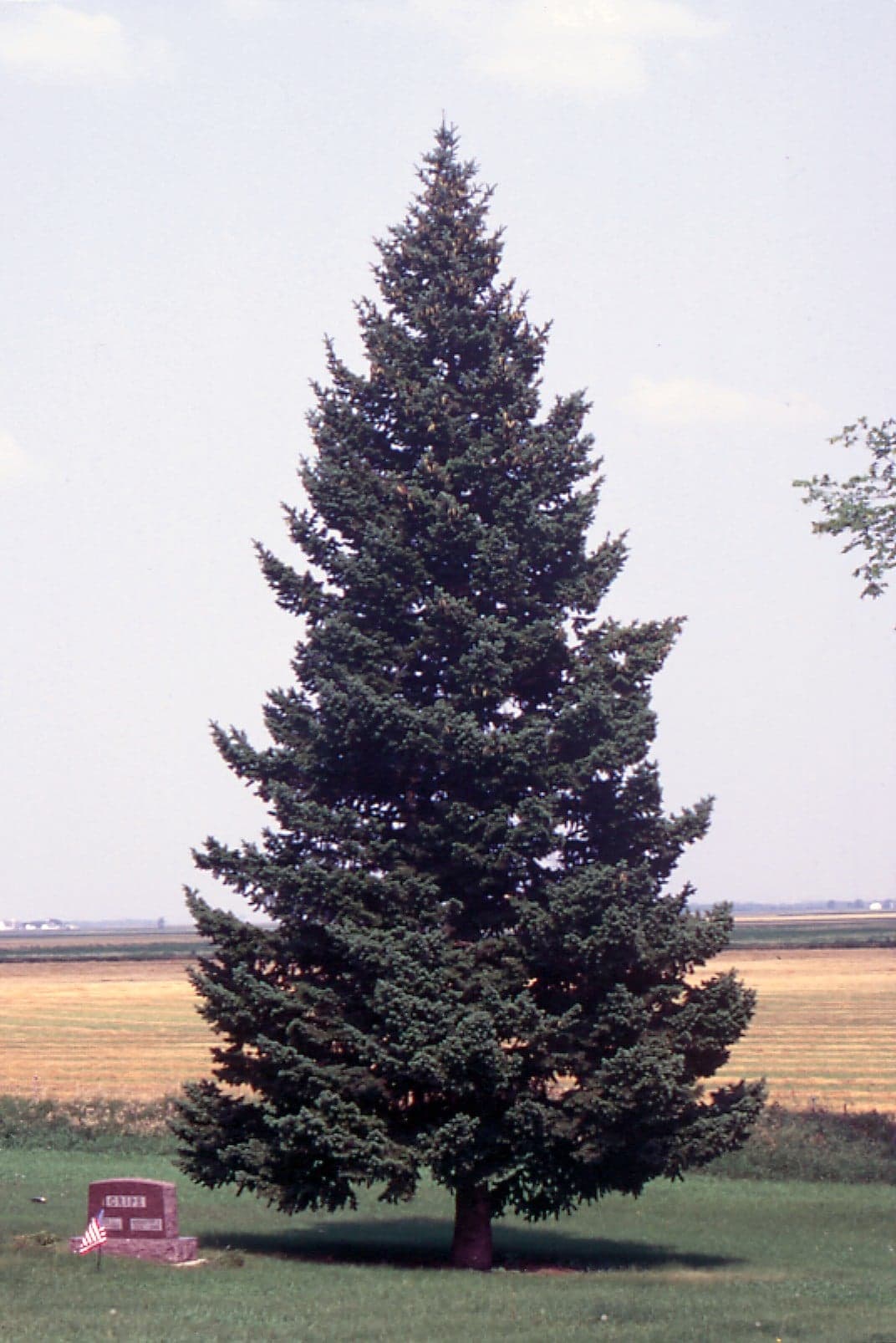
  • Siġra ta’ Douglas Fir

    USDA-NRCS PLANTS Database / Herman, D.E. et al. 1996. North Dakota tree handbook. USDA NRCS ND State Soil C..., via Wikimedia Commons

    At the bench#

    Douglas Fir machines well but it will dull your tooling faster than any other softwood here. Plan for sharpening more often, and accept that a marginal blade produces a markedly worse result on this species than on pine.

    The density contrast between earlywood and latewood is the specific machining challenge. Where the grain rises, a hard latewood band can tear out while the soft earlywood either side cuts cleanly, leaving a ridged or stepped surface that a scraper must fix. Light finishing cuts help. A helical cutterhead helps a great deal more, and on wide slabs it is close to essential if you want a surface that needs minimal sanding.

    Gluing and fastening are straightforward. It takes stains, glues and finishes well, and it holds screws better than the softer conifers here, though pilot holes near end grain remain sensible.

    One practical warning that is not folklore: Douglas Fir splinters carry a documented increased likelihood of becoming infected. Wear gloves handling rough sawn stock, and deal with any splinter promptly rather than leaving it to work its way out.

    Stiffness, and why it matters#

    The number that distinguishes this species is its elastic modulus, 12.17 GPa, the highest of any softwood in the KORENA catalogue and above European Larch at 11.80 GPa. Stiffness is not hardness. Hardness resists denting; stiffness resists bending.

    For a slab that must span a distance without visible sag, a long shelf, an unsupported bench top, an exposed structural beam, stiffness is the property that governs the outcome, and Douglas Fir is the correct answer in this group. It is why the species dominates structural glulam and engineered timber worldwide.

    For a dining table that must resist a dropped pan, hardness governs, and Douglas Fir at 2,760 N is still soft. Choose on the property that matches the failure you actually care about.

    Drying and movement#

    It dries reasonably but is prone to surface checking in thick sections if the schedule is pushed, and fast grown European material is more troublesome in this respect than slow grown stock.

    The payoff is stability in service. Volumetric shrinkage at around 11.6 percent is the lowest of any species in this group, and the tangential to radial ratio at 7.3 against 4.5 percent is comparatively favourable. Properly dried Douglas Fir is one of the more dimensionally reliable softwoods once it is in the room.

    Where Douglas Fir is the right answer#

    Exposed structural work, long spans, tabletops where the orange ring figure is wanted, flooring, and protected exterior joinery such as windows and doors under a maintained finish.

    It is the wrong answer for unprotected exterior work in contact with ground or standing water, where it is rated moderately durable but insect susceptible and European Larch outperforms it. It is also the wrong answer if your tooling is marginal, because this species is unforgiving of dull edges in a way pine is not.

    Sourcing and EUDR#

    Not CITES listed and assessed as Least Concern. The EUDR consideration here is different from the rest of this group because the species is not European. Imported North American old growth carries a longer supply chain with more scrutiny attached. European grown plantation material generally offers both the simpler documentation path and the lower transport carbon, at the cost of the wider rings discussed above. KORENA listings record the yard and region, so which of the two you are buying is visible on the passport rather than inferred from price.

    This is a documented characteristic of the species rather than folklore. Splinters from Douglas Fir carry an increased likelihood of becoming infected, which is why gloves when handling rough sawn stock are worth the inconvenience. Clean and treat any splinter promptly rather than leaving it.

    Is European grown different from American?

    +

    Yes, materially. European plantation Douglas Fir grows faster, producing wider rings, a lower proportion of dense latewood, and lower strength and durability than old growth Pacific Northwest stock. Both are the same species and neither is wrong, but they are not interchangeable for structural or exterior work. Ring count is the thing to look at.

    Tnaqqis volumetrikuBidla totali fil-volum minn aħdar sa mnixxef fil-forn. Inqas ifisser aktar stabbli.11.6 %
    Durabbiltà naturali (EN 350)Standard Ewropew għar-reżistenza naturali għat-tmermir, minn 1 (durabbli ħafna) sa 5 (jitmermer faċilment).Class 3 — Moderately durable

    Sorsi

    • The Wood Database — Douglas Fir (Pseudotsuga menziesii)(aċċessat 2026-08-12)
    • USDA FPL Wood Handbook FPL-GTR-190 (2010)(aċċessat 2026-08-12)
    • Meier, E. — WOOD! Identifying and Using Hundreds of Woods Worldwide (2015)(aċċessat 2026-08-12)

    Oqgħod attent

    • Mhux għal użu barra mingħajr trattamentId-durabbiltà naturali hija klassi EN 350 3 minn 5. Żommha ġewwa jew taħt finitura miżmuma tajjeb.
    • It-trab jirritaUża estrazzjoni u ilbes maskra waqt ix-xkatlar jew il-magni.

    Agħfas tikketta għad-dettalji.

    Daqqa t’għajn

    Il-livelli jużaw faxex fissi għall-ispeċijiet kollha elenkati minn KORENA, għalhekk jitqabblu direttament. Il-valur imkejjel jidher taħt kull wieħed.
    EbusijaReżistenza għat-tgħaffiġ u l-użuPjuttost artab

    Ebusija Janka: 2,760 N

    45 % aktar artab mill-oak Ewropew

    PiżKemm hi tqila fallakka biex terfagħhaĦafif

    510 kg/m³

    StabbiltàKemm tiċċaqlaq ftit mal-istaġuniMedju

    11.6 % tnaqqis volumetriku

    XogħolSerrar, inċanar, xkatlar u inkullarModerat

    medja ta’ 3.7 / 5 fuq il-bank

    Użu barraReżistenza naturali għat-tmermir, EN 350Barra mgħotti

    Klassi EN 350 3

    • Serrar · Tajjeb ħafnaKemm jinqata’ nadif u kemm jgħejja x-xfafar.1 = diffiċli · 5 = eċċellenti
    • Inċanar · Tajjeb ħafnaKemm iħalli wiċċ lixx u kemm iqatta’ l-vina.1 = diffiċli · 5 = eċċellenti
    • Xkatlar · Tajjeb ħafnaKemm jitxkatla malajr u lixx mingħajr ma jimblokka l-karta.1 = diffiċli · 5 = eċċellenti
    • Tornitura · TajjebKif jinqata’ u jingħata finitura fuq it-torn.1 = diffiċli · 5 = eċċellenti
    • Tinqix · TajjebKemm iżomm dettall ċar taħt skarpell.1 = diffiċli · 5 = eċċellenti
    • Inkullar · Tajjeb ħafnaKemm iżommu tajjeb il-ġonot bil-kolla.1 = diffiċli · 5 = eċċellenti
    • Żamma ta’ viti / imsiemer · Tajjeb ħafnaKemm iżomm viti u msiemer mingħajr ma jinqasam.1 = diffiċli · 5 = eċċellenti
    • Liwi bil-fwar · TajjebKemm jieħu kurvi wara l-fwar.1 = diffiċli · 5 = eċċellenti

    Għal kemm qed jinbiegħ l-injam ta’ Douglas Fir madwar l-Ewropa bħalissa, għal kull metru kubu qabel il-VAT. Agħfas prezz għad-dettalji.

    • L-aħjar zkuk fl-irkantZkuk magħżula ta’ kwalità għolja mibjugħa f’irkanti b’offerti, l-aktar lil dawk li jagħmlu l-fuljetta u l-għamara. Il-fallakki jinqatgħu minn zkuk bħal dawn.Il-biċċa l-kbira tal-prezzijiet huma bejn €197 u €203.Ibbażat fuq 52 prezz minn 1 reġjun.L-aħħar data 25 ta’ Set, 2026
    • Zkuk ordinarjiVolumi kbar ta’ injam grezz standard mibjugħ mis-sidien tal-foresti u mill-awtoritajiet forestali tal-istat, l-aktar għall-kostruzzjoni u l-industrija.Il-biċċa l-kbira tal-prezzijiet huma bejn €28 u €158.Ibbażat fuq 8 prezzijiet minn 2 reġjuni.L-aħħar data 15 ta’ Set, 2026

    Għaliex fallakka tiswa aktar minn hekk?

    Dawn huma prezzijiet tal-injam mhux maħdum. Fallakka hija l-aħjar qatgħa ta’ zokk, imnixxfa għal sena jew aktar, imbagħad iċċekkjata u mkejla biċċa biċċa. Parti żgħira biss minn kull zokk issir fallakka.

    Sors: KORENA Timber Index · L-aħħar data 25 ta’ Set, 2026

    Ara l-prezzijiet reġjonali kollha