KORENA
MadeiraFinished piecesMateriaisParquesRevista

Receba notificações

Cada prancha é única. Quando é vendida, desaparece. Enviamos um e-mail quando são anunciadas novas peças: novas chegadas, novas espécies e pranchas adequadas a um projeto.

Alguns e-mails por mês. Sem spam, pode cancelar a qualquer momento.

KORENA, madeiras nobres

Uma peça de cada vez.

Madeiras nobres verificadas, vendidas peça a peça. Cada prancha é fotografada, medida e enviada pelo parque parceiro com um passaporte da madeira.

Comprar

  • Explorar produtos
  • Arquivo de vendas
  • Acompanhar encomenda

Aprender

  • Revista
  • Guias de espécies
  • Glossário
  • Comparar
  • Autores

Ajuda

  • Sobre nós
  • Como funciona
  • Torne-se um parque parceiro
  • Encontrar uma prancha
  • Apoio
  • Modelos de documentos
  • Imprensa

Comprar

  • Termos de venda
  • Direito de livre resolução
  • Devoluções e garantia
  • Envio e entrega

Confiança

  • Política de privacidade
  • Política de cookies
  • Proveniência da madeira e EUDR
  • Acessibilidade

Informação legal

  • Aviso legal / Informação legal
  • Utilização aceitável
  • Propriedade intelectual e conteúdo

© 2026 KORENA. Todos os direitos reservados.

Gerido pela Martial Labs Ltd. (BG, EIK 207453941). KORENA é um nome comercial da Martial Labs Ltd.

Respeitamos a sua privacidade

Usamos cookies essenciais para o funcionamento do site. Com a sua autorização, também usamos cookies para análise, conteúdo personalizado e publicidade. Pode mudar de ideias a qualquer momento na página de preferências de consentimento. Consulte a nossa política de cookies e a política de privacidade.

  1. Início
  2. /
  3. Espécies
  4. /
  5. Black Locust / Robinia

Robinia pseudoacacia

Black Locust / Robinia

Class 1 durability from a tree that grows in Europe. One of the only EU-native options that survives outdoors untreated, and a credible domestic answer to tropical exotics like teak.

  • Cultivada e abatida na Europa.
  • Grupo botânico. As madeiras de coníferas vêm de coníferas; as folhosas vêm de árvores de folha larga.
  • Família botânica a que pertence a espécie.
Receber aviso quando chegarEspécie de referência. Sem peças em stock neste momento.
  • Adequação ao projeto
  • Em stock
  • Aspeto
  • Trabalho
  • Movimento
  • Preço
  • Segurança e origem
  • Perguntas
  • Dados técnicos

É adequada ao seu projeto?

Ótima para

  • Outdoor benches and garden furniture that need to survive without preservative treatment
  • Thresholds, sills, and entry pieces that take weather and wear
  • Fence posts and landscape elements designed as visible objects, not buried hardware
  • High-wear interior tops, kitchen islands, workshop benches, retail counters
  • Tool handles and turned forms where toughness matters
  • Steam-bent components, chair backs, hoops, curved frames

Sem Black Locust / Robinia na seleção atual

Espécies semelhantes em stock

Não há Black Locust / Robinia neste momento. Estas espécies servem para os mesmos projetos e têm peças disponíveis.
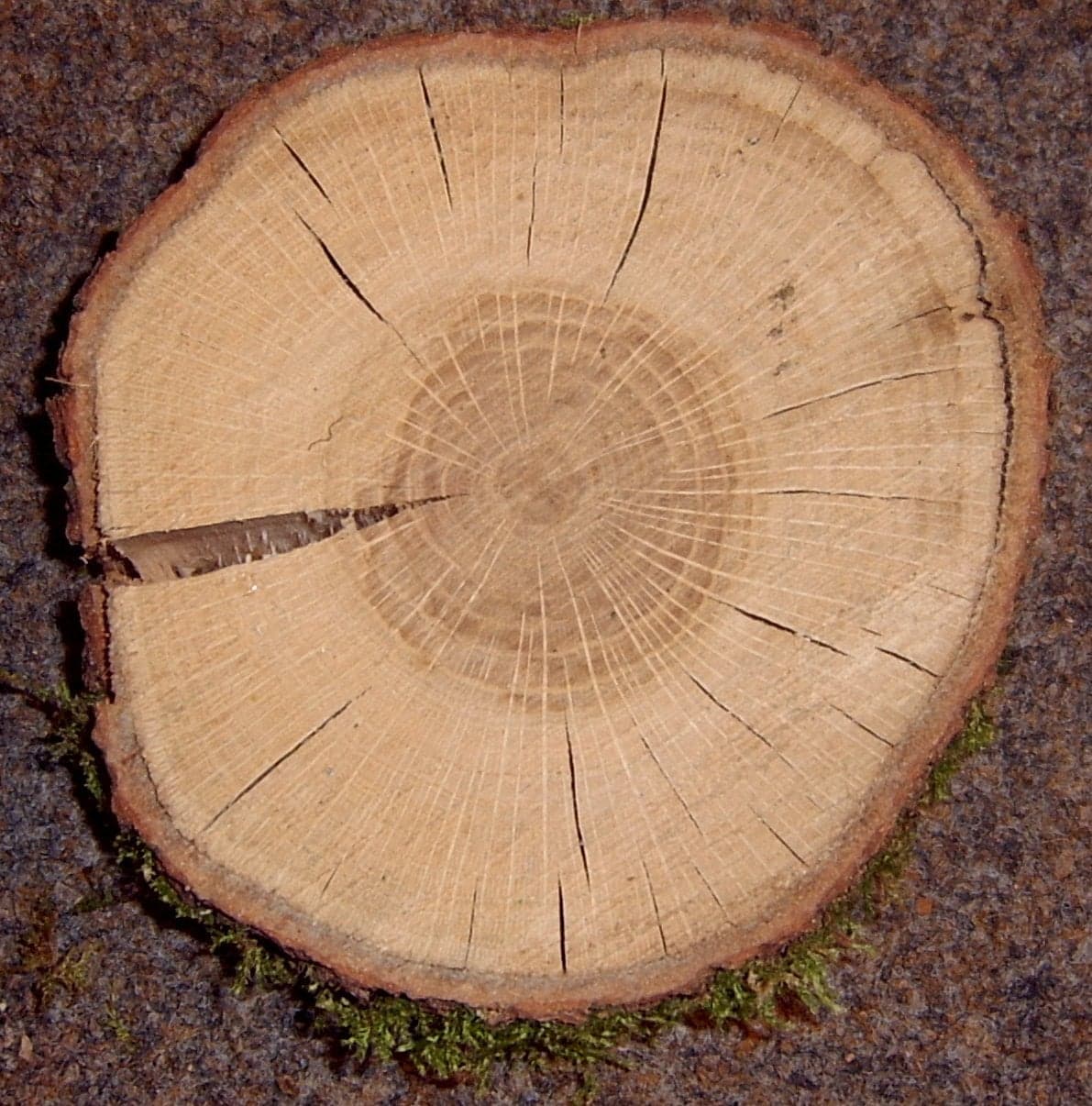
  • Veio de European Oak

    European Oak

    Quercus robur

    6 peças

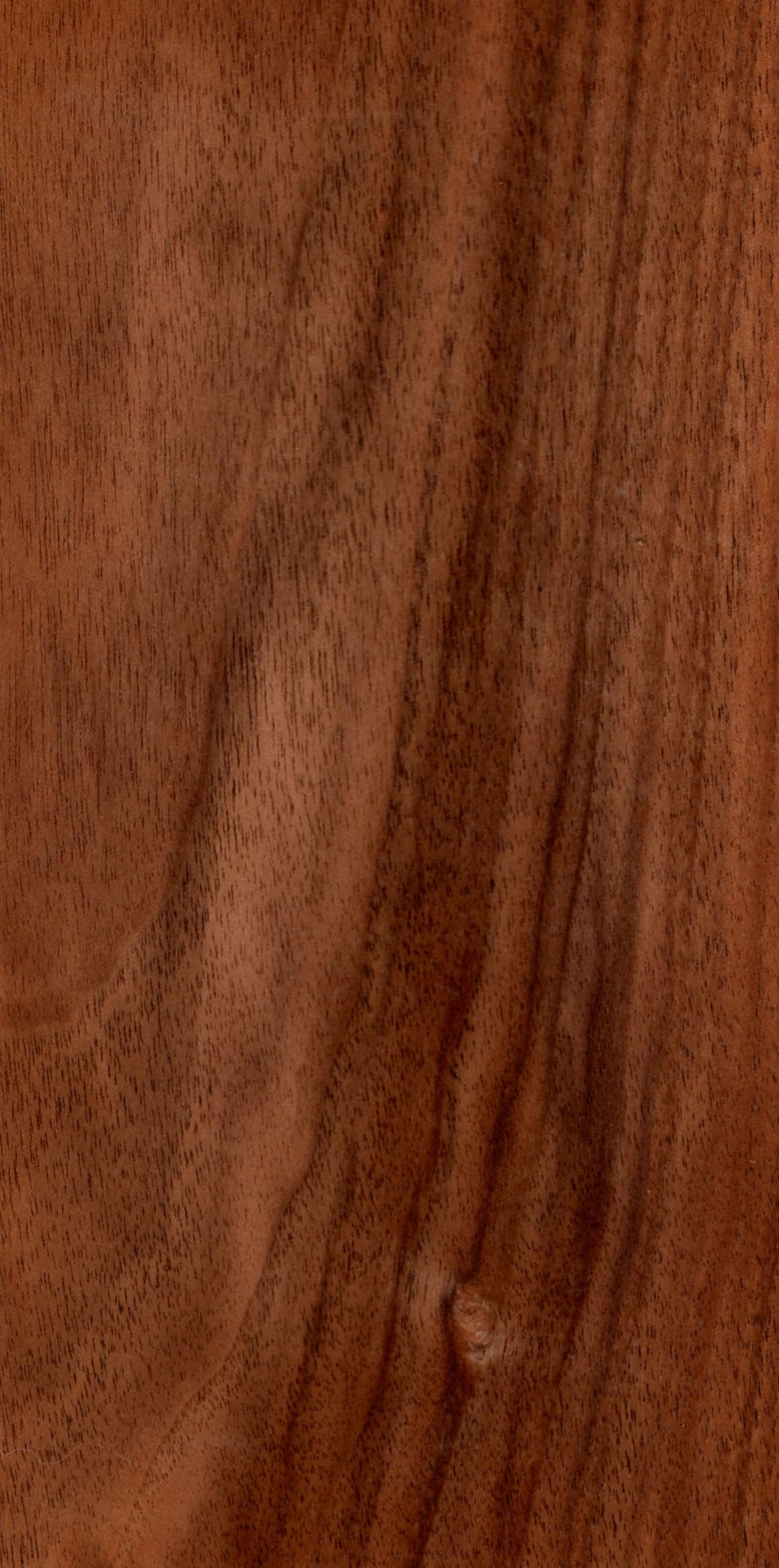
  • Veio de European Walnut

    European Walnut

    Juglans regia

    9 peças

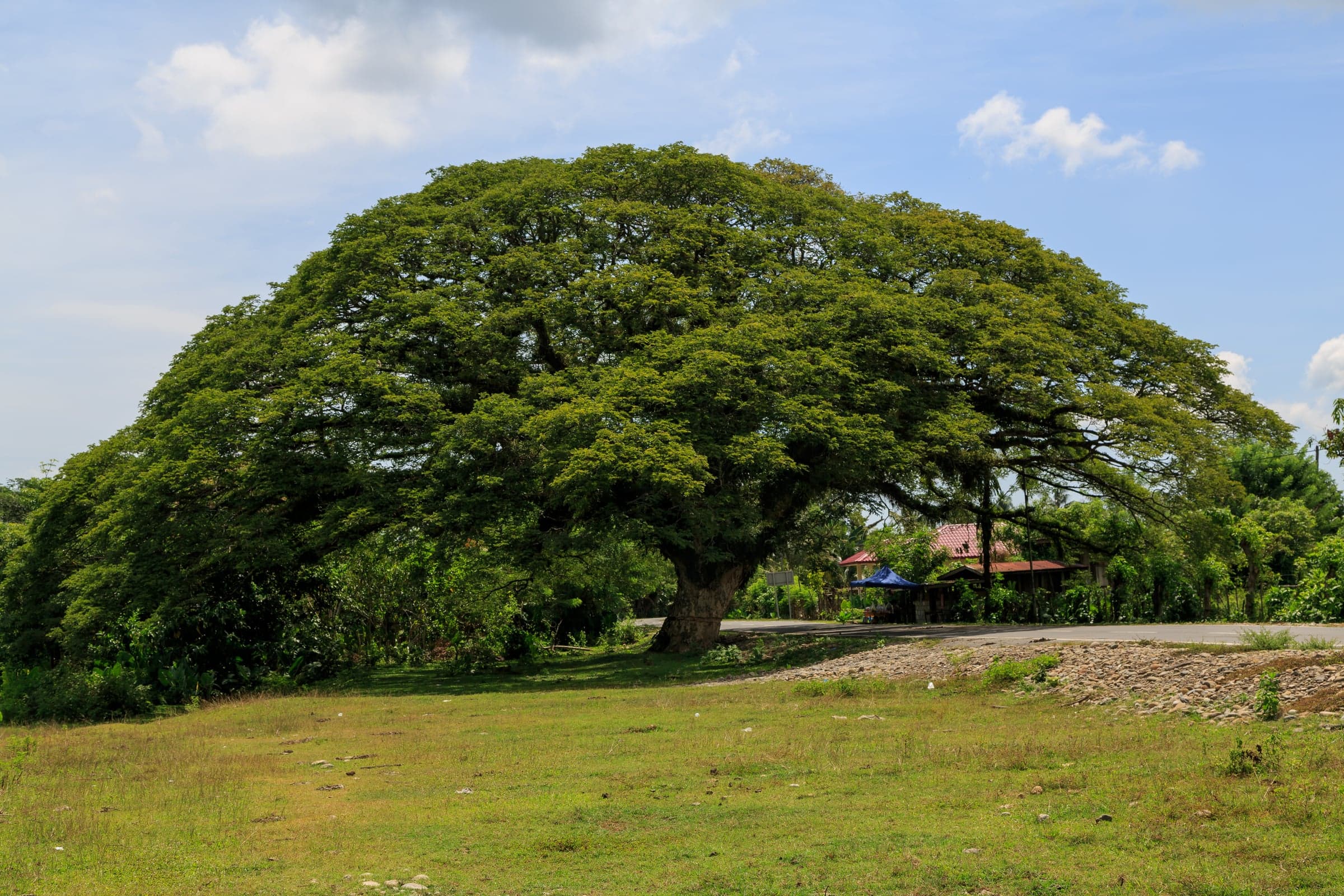
  • Veio de Saman

    Saman

    Samanea saman

    4 peças

Receba notificações sobre Black Locust / Robinia

Enviamos um e-mail quando chegam à KORENA novas pranchas de Black Locust / Robinia. Cada peça é única, por isso é importante saber cedo.

Alguns e-mails por mês. Sem spam, pode cancelar a qualquer momento.

Aspeto da madeira

Qual é o seu aspeto

Straight grain, coarse open texture, and a heartwood that lands somewhere between olive-yellow and greenish-gold when freshly cut. UV does the work over the next few months, the green calms down and the wood warms into a deep amber. Sapwood is narrow and pale yellow. The contrast between the two reads cleanly on wide slabs.

  • Olive-yellow to greenish-gold heartwood when freshly milled
  • Warms to a deep amber over weeks of light exposure
  • Narrow pale yellow sapwood, cleanly demarcated from the heartwood
  • Coarse open pores read clearly under oil finishes
  • Straight grain, coarse texture; very durable.

Trabalhar esta madeira

Como se trabalha

Honest warning, this is a hard, tough wood and it will blunt edges. Carbide tooling is sensible, and HSS needs frequent sharpening. Sawing, planing, and sanding all sit around average difficulty for the effort, but tool wear is well above average. It glues and screws cleanly once you pre-drill, and it turns nicely. The standout is steam-bending. Robinia is one of the best European species for it, on a par with white oak.

Acabamento

Takes oils and hardwax oils well; the open pores welcome them. The early colour shift is dramatic, so finish a test piece and leave it in daylight for a fortnight before committing, what you see on the bench is not what the client will see in a month. UV-blocking finishes slow the amber drift if a greener tone is wanted. Sanding to 180 is usually enough; finer grits can burnish the surface and fight oil uptake.

Secagem

Dries slowly and benefits from patience. Surprisingly stable for its hardness once acclimatised, radial movement around 4–5% and tangential 6.5–8% are modest for a 770 kg/m³ wood. Stack with care, weight the top, and expect some end-checking if rushed. Kiln schedules should be conservative.

Quanto se irá mover?

A madeira incha e contrai-se na largura à medida que o ar fica mais húmido ou mais seco. Estime o movimento sazonal de um tampo de Black Locust / Robinia antes de desenhar as fixações.

Corte
Local onde será usada

Movimento sazonal previsto

cerca de 8,3 mm

Fixe o tampo com fixadores ou suportes com rasgos, não com cola ou parafusos apertados.

Modelo de retração linear: largura × (retração ÷ 28 % de saturação das fibras) × variação sazonal da humidade. Usa uma retração tangencial de 7,25 % para Black Locust / Robinia. É uma estimativa de planeamento, não uma garantia.

Quanto custa

Segurança e origem

  • Cultivada e abatida na Europa.
  • Estado na Lista Vermelha da UICN: a avaliação mundial de conservação desta espécie.
  • Not recommended for direct food contact. The bark, leaves, and seeds carry toxic compounds, and while the heartwood is considered the safer part of the tree, we would not specify it for cutting boards or utensils. The dust is a known irritant and sensitiser, some woodworkers report nausea from prolonged exposure. Run dust extraction and a fitted respirator, not just a paper mask.

Ler o guia completoNotas detalhadas sobre desenho, alteração da cor, trabalho e estabilidade.+

What Robinia actually is#

Robinia pseudoacacia, black locust, is the strongest and most durable timber in this catalogue, and it grows across Europe like a weed.

The numbers are not close. At 7,560 N Janka it is the hardest measured species here. Its modulus of rupture of 130 MPa and elastic modulus of 14.0 GPa are the highest measured figures in the catalogue. And it is rated decay class 1, very durable, matched only by yew.

That combination, tropical grade durability from a fast growing European species, is unusual enough to be worth stating plainly: robinia does what teak and ipe do, without a tropical supply chain.

Why it is not more widely used#

Three reasons, none of them about performance.

It is hard to convert. At this density and hardness it blunts tooling fast and asks a great deal of machines, and small sawmills often decline it.

It grows badly for timber. Robinia is prone to twisting, forking and spiral grain, so long straight clean lengths are scarce even where the tree is abundant. Most of what is cut ends up as fence posts and stakes, applications where its durability is used and its form does not matter.

It has an image problem. In much of Europe it is regarded as an invasive nuisance rather than a timber species, which keeps demand and therefore processing infrastructure low.

Perguntas dos compradores

Perguntas dos compradores

Is Robinia really as durable as tropical hardwood?

+

Yes, and that is its main argument. It is rated decay class 1, very durable, the highest rating in this catalogue alongside yew, and it performs comparably to teak or ipe in ground contact. Because it grows fast across Europe it offers tropical grade durability without a tropical supply chain, which is a rare combination under EUDR.

How hard is it?

+

At 7,560 N Janka it is the hardest measured wood in this catalogue, above hornbeam at 7,260 N and half again as hard as European oak. Its modulus of rupture of 130 MPa and stiffness of 14.0 GPa are also the highest measured figures here. It is a genuinely formidable timber.

Is it toxic?

+

The bark, leaves and seeds are toxic, containing robin and robinin, and the wood is recorded here as not food safe. Dust is irritant. Do not use it for chopping boards, food contact surfaces or anything a child might chew, and run extraction when machining.

Why is it treated as invasive in some countries?

+

Robinia is native to North America and was introduced to Europe in the seventeenth century. It spreads readily by root suckers and fixes nitrogen, altering soil chemistry, and several European countries list it as invasive. That is an ecological concern about planting rather than a restriction on timber, and harvesting established stands is generally viewed favourably.

Propriedades mecânicas

Dados técnicos

Valores de referência publicados. Quando as fontes divergem, é apresentado o intervalo e o valor típico é usado nas escalas acima.

Densidade (kg/m³)Massa por metro cúbico com cerca de 12 % de humidade. A madeira mais pesada costuma ser mais dura e resistente.700–830 kg/m³típico: 770 kg/m³
Dureza Janka (N)Força necessária para pressionar uma esfera de aço até metade da sua profundidade na madeira. É a medida habitual de resistência a mossas.7,000–8,200 Ntípico: 7560 N
MOR: módulo de rutura (MPa)Resistência à flexão: a carga com que uma viga parte.130–150 MPa
MOE: módulo de elasticidade (GPa)Rigidez à flexão: quanto uma prateleira ou um tampo flete sob carga.14.0–16.0 GPa
Retração radialRetração perpendicular aos anéis de crescimento, do estado verde à secagem em estufa. É este o movimento das tábuas de corte radial.4.0–5.0 %
Retração tangencial
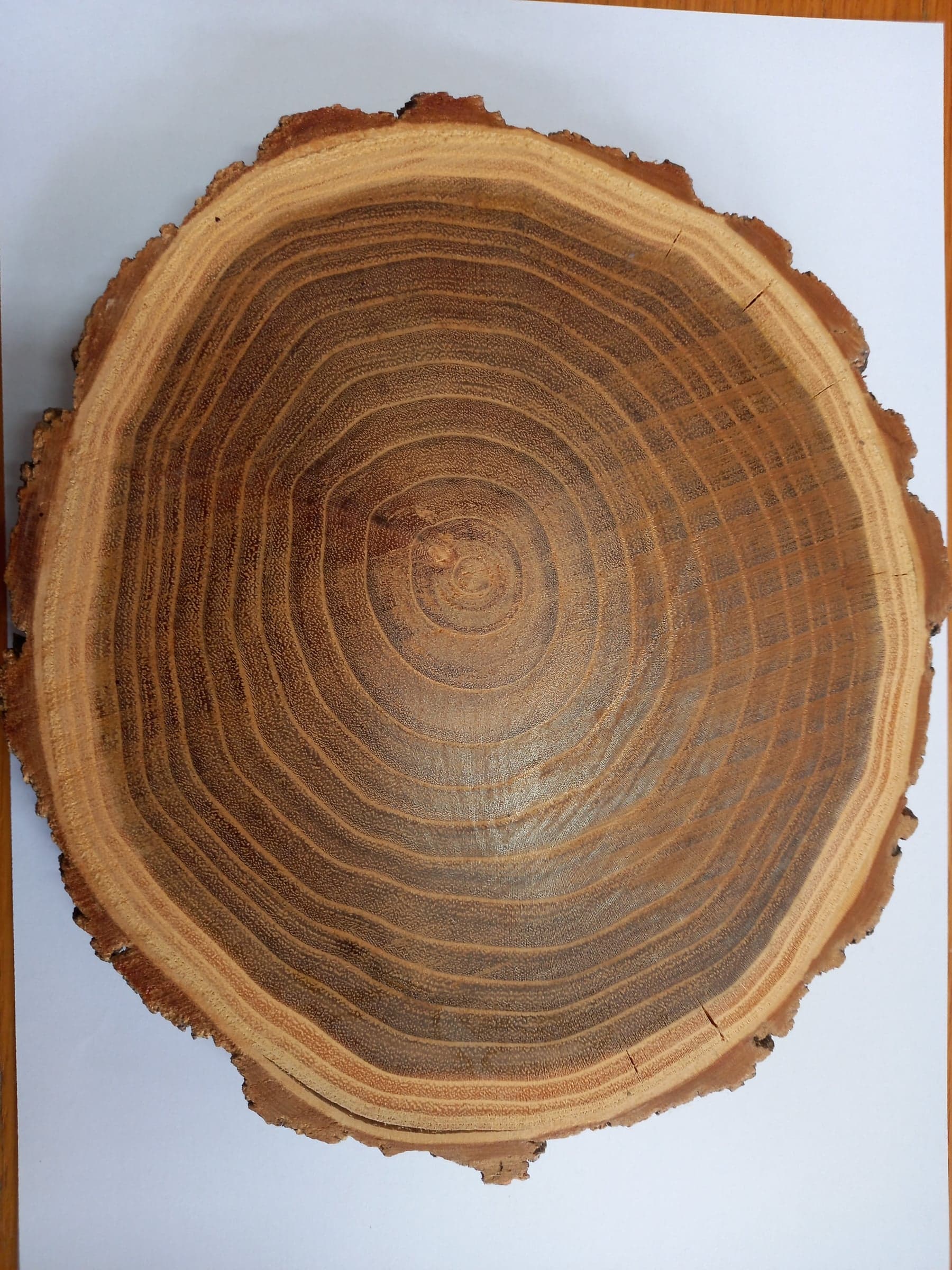
Veio de Black Locust / Robinia

Dexys-2019, via Wikimedia Commons

Pontos fortes

  • Durável no exteriorClasse 1 de 5 segundo a EN 350: resiste à deterioração no exterior sem tratamento.
  • Muito estávelPouco movimento sazonal. Boa para tampos largos e uniões justas.

Originally North American, but naturalised and commercially grown across central and eastern Europe for over two centuries. Hungary, Romania, Bulgaria, and Slovakia all have working forestry programmes around it. For sourcing and EUDR purposes we treat it as European stock, the supply chain sits inside the EU and the paperwork follows.

  • IUCN Least Concern, no CITES listing. Grown commercially across central and eastern EU, often on marginal land where slower-growing natives struggle. Class 1 durability means outdoor pieces last decades without preservative chemistry, which is its own sustainability argument. EUDR-wise, the supply chain is short and EU-internal, provenance is straightforward to document.

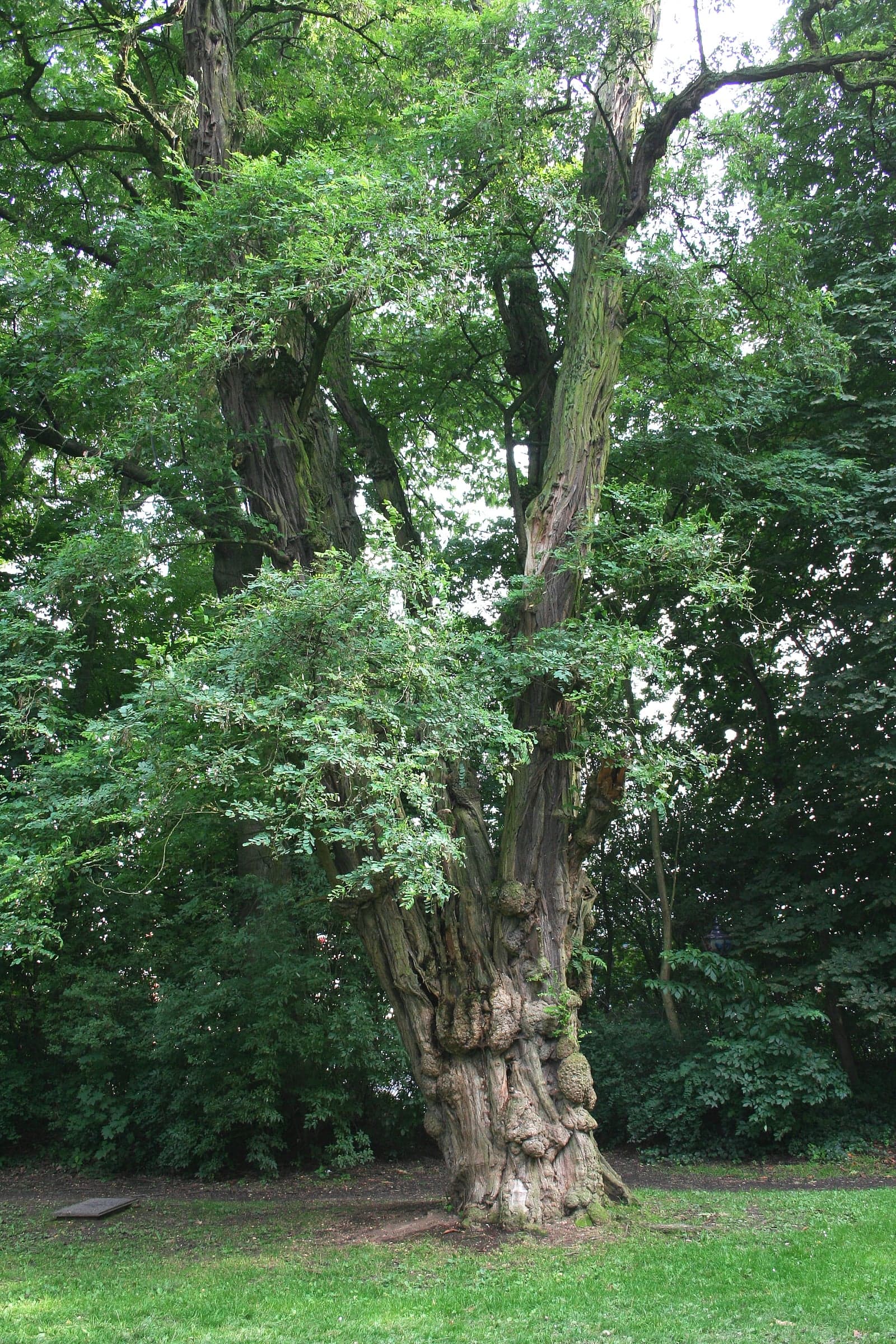
  • Árvore de Black Locust / Robinia

    Jean-Pol GRANDMONT, via Wikimedia Commons

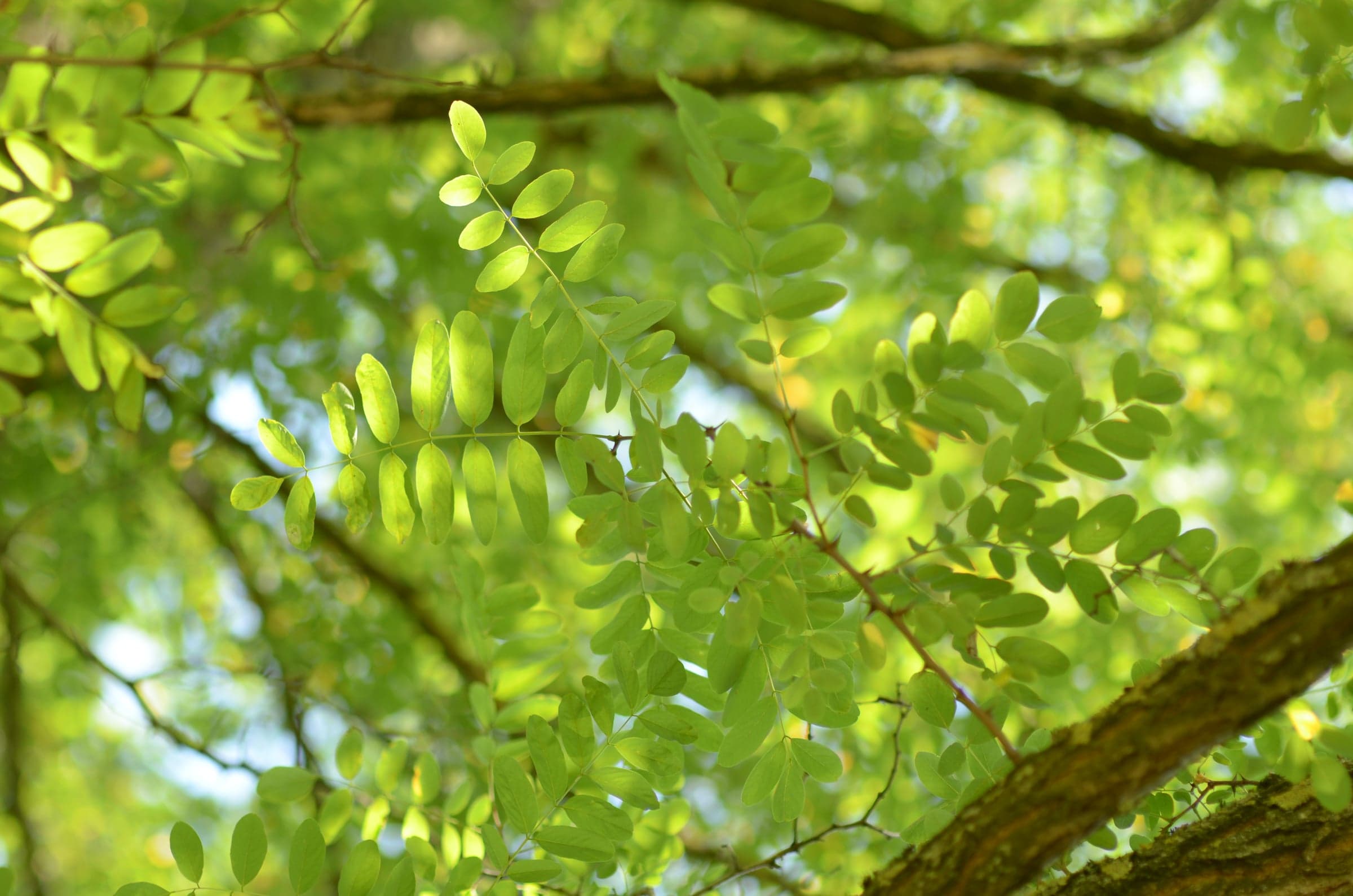
    Black Locust / Robinia: Folha
    Folha
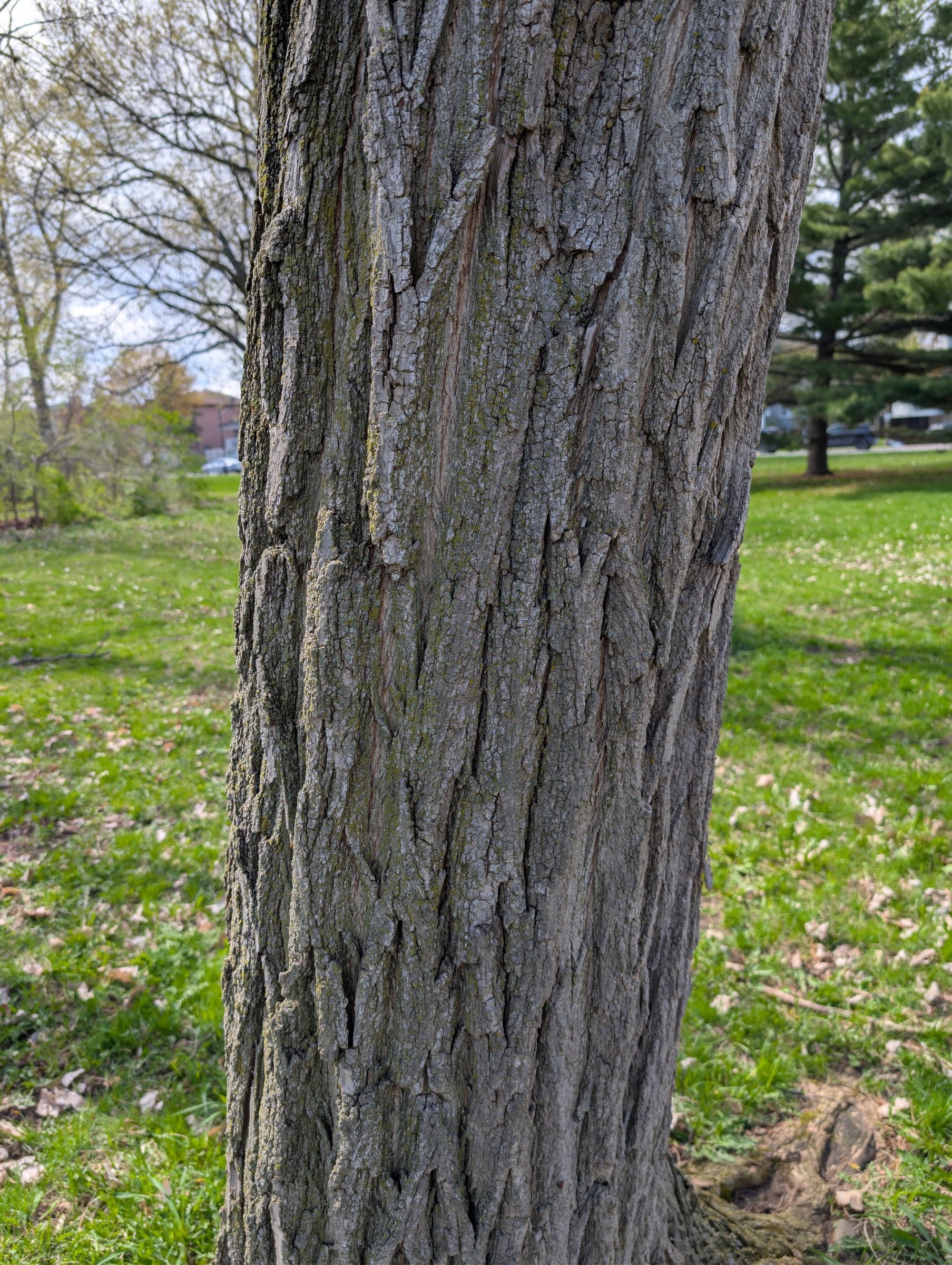
    Black Locust / Robinia: Casca
    Casca

    For slab work, the form problem is the main constraint. Wide clean robinia is genuinely uncommon.

    Reading a robinia slab#

    Heartwood runs greenish yellow when fresh, darkening to a warm golden brown and eventually a russet with light exposure. Sapwood is narrow and pale. The wood has a natural lustre and fluoresces under UV, which is a quick identification test.

    Grain is often wavy or interlocked, and the ring porous structure gives a bold figure not unlike ash or oak.

    Check carefully for spiral grain and twist along the length. It is the characteristic fault of the species and it will show itself after machining if it was not visible before.

    At the bench#

    Expect to work for it. At 7,560 N with frequently interlocked grain, robinia blunts cutters faster than anything else here and tears out where the grain reverses.

    Sharp tooling is not advice, it is the requirement. Light cuts, a high angle plane or a scraper for the final surface, and carbide rather than steel where you have the choice. A helical cutterhead makes a substantial difference.

    It turns nicely and it steam bends excellently, one of the best European species for it. Combined with its durability, that makes it a strong candidate for exterior curved work where oak is the conventional choice but does not last as long.

    It glues and screws well, though pilot holes are essential at this density.

    Toxicity#

    The bark, leaves and seeds are toxic, containing robin and robinin. The wood is recorded in this catalogue as not food safe and the dust is irritant.

    Do not use robinia for chopping boards, food contact surfaces, or anything a child might mouth. Run extraction when machining.

    Stability#

    Volumetric shrinkage of 10.0 percent is among the lowest in this catalogue, with tangential at 6.5 percent against radial at 4.0 percent. That is both a low total and a narrow differential, which means robinia is dimensionally well behaved once dry, unusual for a wood this dense.

    Drying it is another matter: the density and frequent spiral grain make it slow and prone to distortion.

    The invasive question#

    Robinia is native to North America and was introduced to Europe in the seventeenth century. It spreads readily by root suckers and fixes nitrogen, altering soil chemistry, and several European countries list it as invasive.

    That is an ecological concern about planting, not a restriction on timber. Harvesting established stands is generally viewed favourably, and using the wood is not in tension with the conservation position.

    Where Robinia is the right answer#

    Outdoor furniture, decking, garden structures, boat components, fence posts, and any exterior application where a European species with tropical grade durability is wanted. Also steam bent exterior work.

    It is the wrong answer for food contact, for large matched volumes, and where your tooling is not up to it.

    Sourcing and EUDR#

    Not CITES listed and assessed as Least Concern. Abundant across central and southeastern Europe, particularly Hungary, which has the largest managed robinia resource in the world. Supply is straightforward and documentation is simple.

    Can it be steam bent?

    +

    It is one of the best European species for it. Combined with its durability that makes it a strong choice for exterior curved work such as boat parts and garden structures, where oak would be the conventional answer but robinia lasts longer.

    Retração ao longo dos anéis de crescimento. É este o movimento das tábuas de corte tangencial e da maioria das pranchas.
    6.5–8.0 %
    Retração volumétricaAlteração total do volume entre o estado verde e a secagem em estufa. Um valor menor indica maior estabilidade.10.0–12.0 %
    Durabilidade natural (EN 350)Norma europeia de resistência natural à deterioração, de 1 (muito durável) a 5 (perecível).Class 1 — Very durable

    Fontes

    • The Wood Database(consultado em 2026-05-09)
    • USDA FPL Wood Handbook FPL-GTR-190 (2010)(consultado em 2026-05-09)
    • Meier, E. — WOOD! Identifying and Using Hundreds of Woods Worldwide (2015)(consultado em 2026-05-09)

    Resumo

    Os níveis usam intervalos fixos em todas as espécies apresentadas pela KORENA, permitindo a comparação direta. O valor medido aparece por baixo de cada um.
    DurezaResistência a mossas e desgasteMuito dura

    Dureza Janka: 7560 N

    52 % mais dura do que o carvalho-europeu

    PesoPeso da prancha ao levantarMuito pesado

    770 kg/m³

    EstabilidadeGrau de movimento ao longo das estaçõesEstável

    11,0 % de retração volumétrica

    TrabalhoSerrar, aplainar, lixar e colarExigente

    3,4 / 5 de média na bancada

    Uso exteriorResistência natural à deterioração, EN 350Exterior, longa duração

    EN 350 classe 1

    • Serrar · BoaQualidade do corte e desgaste causado nas lâminas.1 = difícil · 5 = excelente
    • Aplainar · BoaSuavidade da superfície e tendência para arrancar fibras.1 = difícil · 5 = excelente
    • Lixar · BoaRapidez com que fica lisa sem entupir a lixa.1 = difícil · 5 = excelente
    • Tornear · Muito boaQualidade do corte e do acabamento no torno.1 = difícil · 5 = excelente
    • Entalhar · BoaNitidez com que conserva os pormenores feitos com goiva.1 = difícil · 5 = excelente
    • Colar · Muito boaFiabilidade das uniões coladas.1 = difícil · 5 = excelente
    • Fixação de parafuso / prego · Muito boaCapacidade de segurar parafusos e pregos sem rachar.1 = difícil · 5 = excelente
    • Curvatura a vapor · ExcelenteCapacidade de formar curvas depois de tratada a vapor.1 = difícil · 5 = excelente

    O preço atual da madeira de Black Locust / Robinia na Europa, por metro cúbico antes do IVA. Toque num preço para ver os detalhes.

    • Melhores toros em leilãoToros selecionados de alta qualidade vendidos em leilões por proposta, sobretudo a fabricantes de folha e mobiliário. É de toros como estes que se cortam as pranchas.A maioria dos preços situa-se entre 143 € e 143 €.Com base em 25 preços de 1 região.Dados mais recentes de 24/09/2026
    • Toros comunsGrandes volumes de madeira redonda corrente vendidos por proprietários florestais e florestas estatais, sobretudo para construção e indústria.A maioria dos preços situa-se entre 11 € e 61 €.Com base em 17 preços de 1 região.Dados mais recentes de 24/09/2026

    Porque custa uma prancha mais do que isto?

    Estes são preços de madeira em bruto. Uma prancha é o melhor corte de um toro, seco durante pelo menos um ano e depois verificado e medido peça a peça. Apenas uma pequena parte de cada toro se transforma numa prancha.

    Fonte: Índice de Madeira KORENA · Dados mais recentes de 24/09/2026

    Ver todos os preços regionais
    Curva bem
    Classificação de 5 em 5 para curvatura a vapor. Permite curvas apertadas.

    A ter em conta

    • Pó irritanteUse extração e máscara ao lixar ou maquinar.
    • Madeira imprópria para contacto com alimentosEscolha outra espécie para tábuas e utensílios de servir.
    • Desgasta os gumesÉ muito dura e densa. Mantenha as ferramentas afiadas e faça furos-piloto para todos os parafusos.

    Toque numa etiqueta para ver os detalhes.