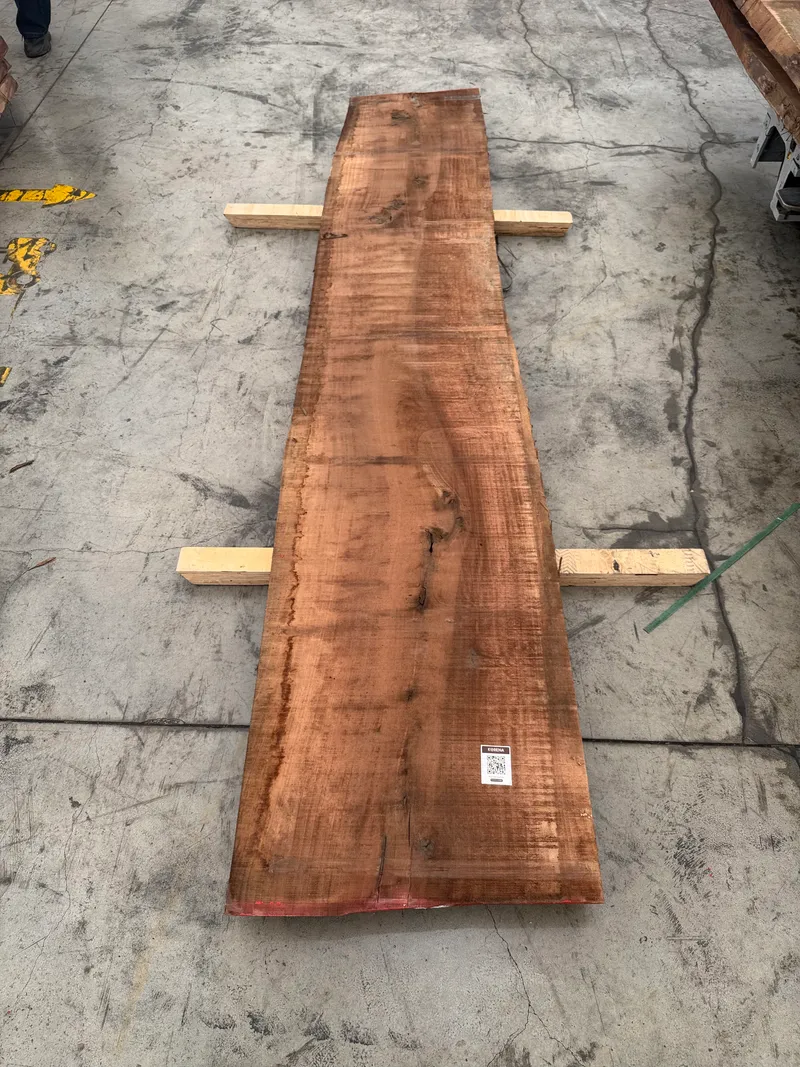
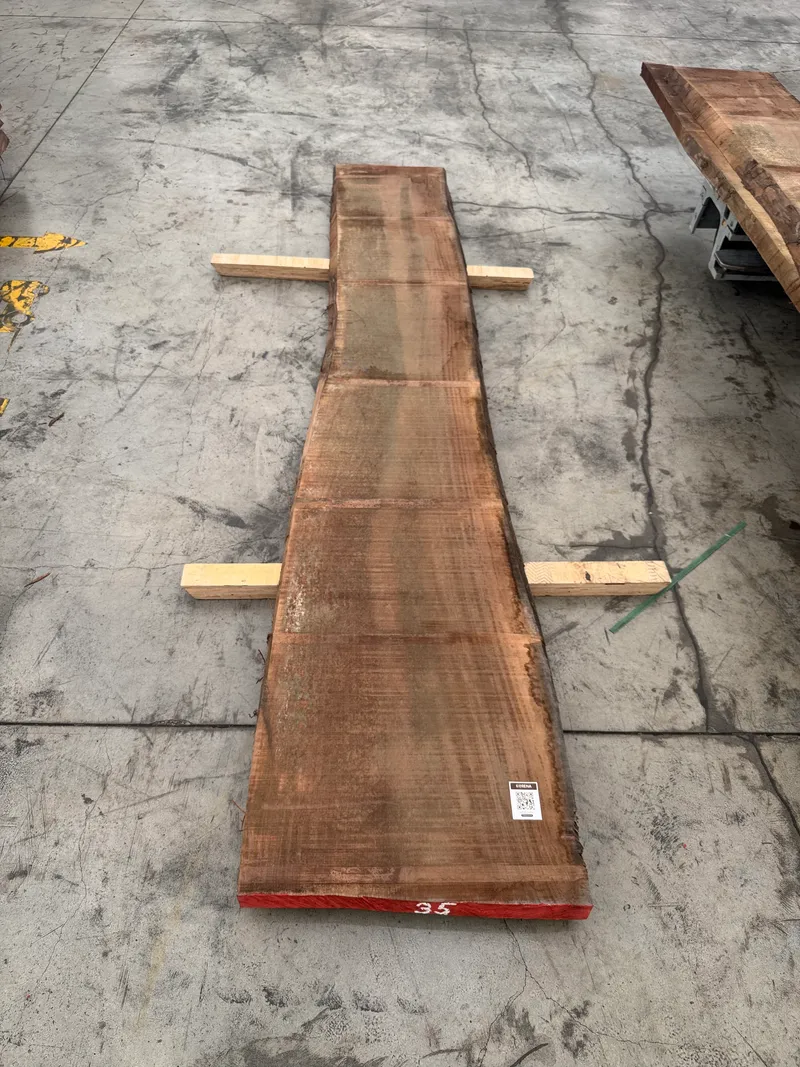
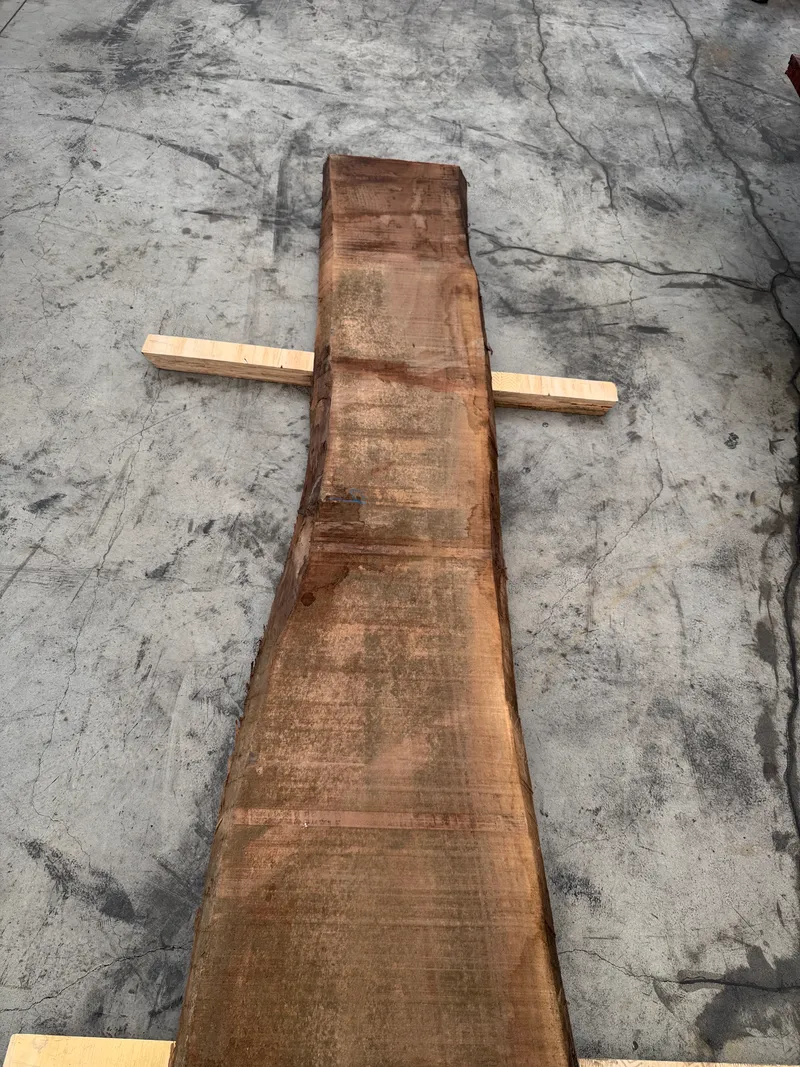
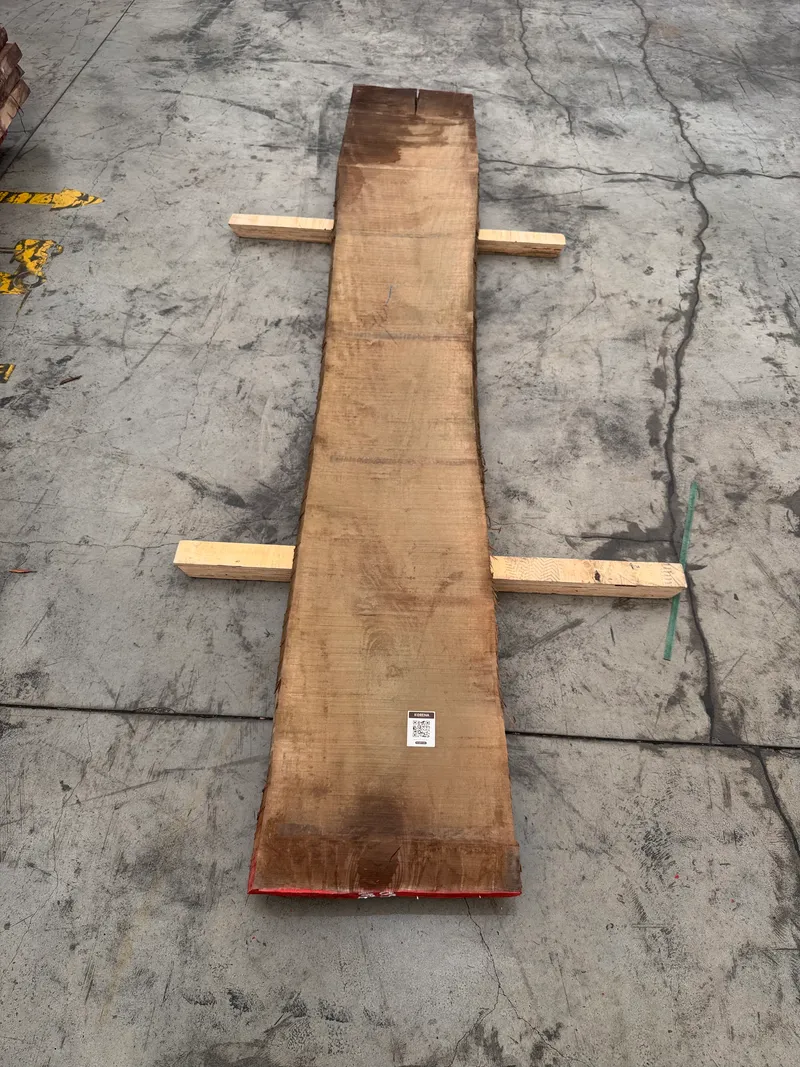
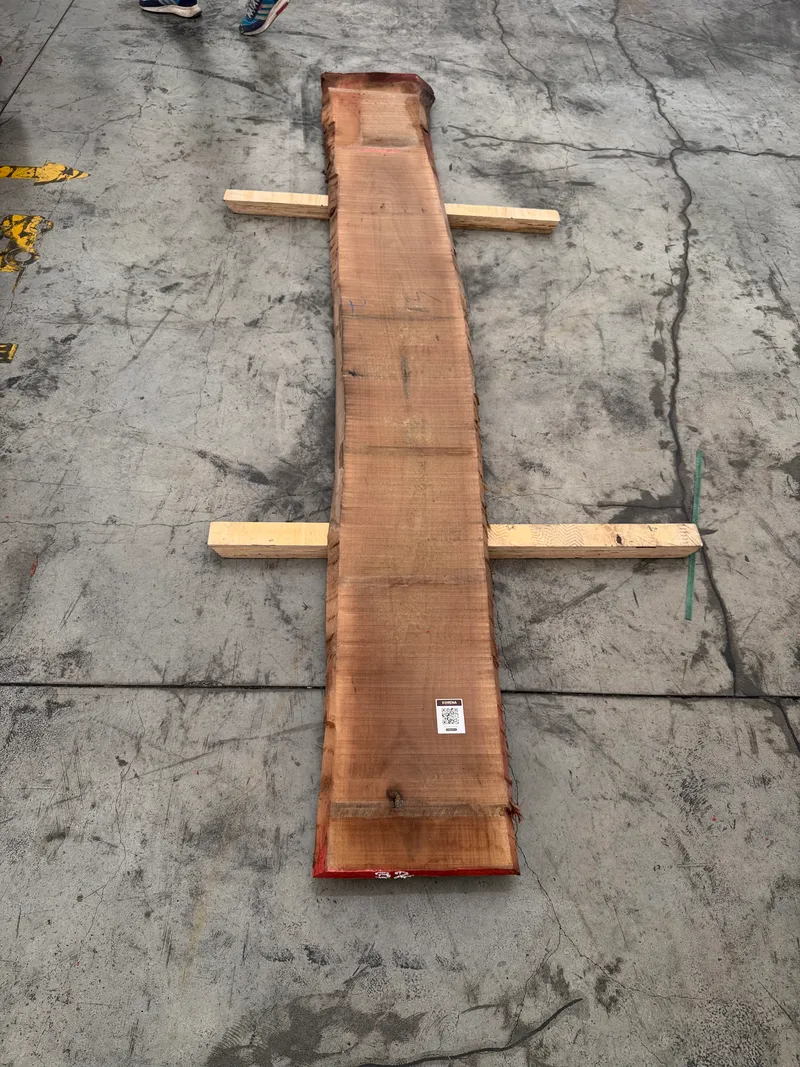
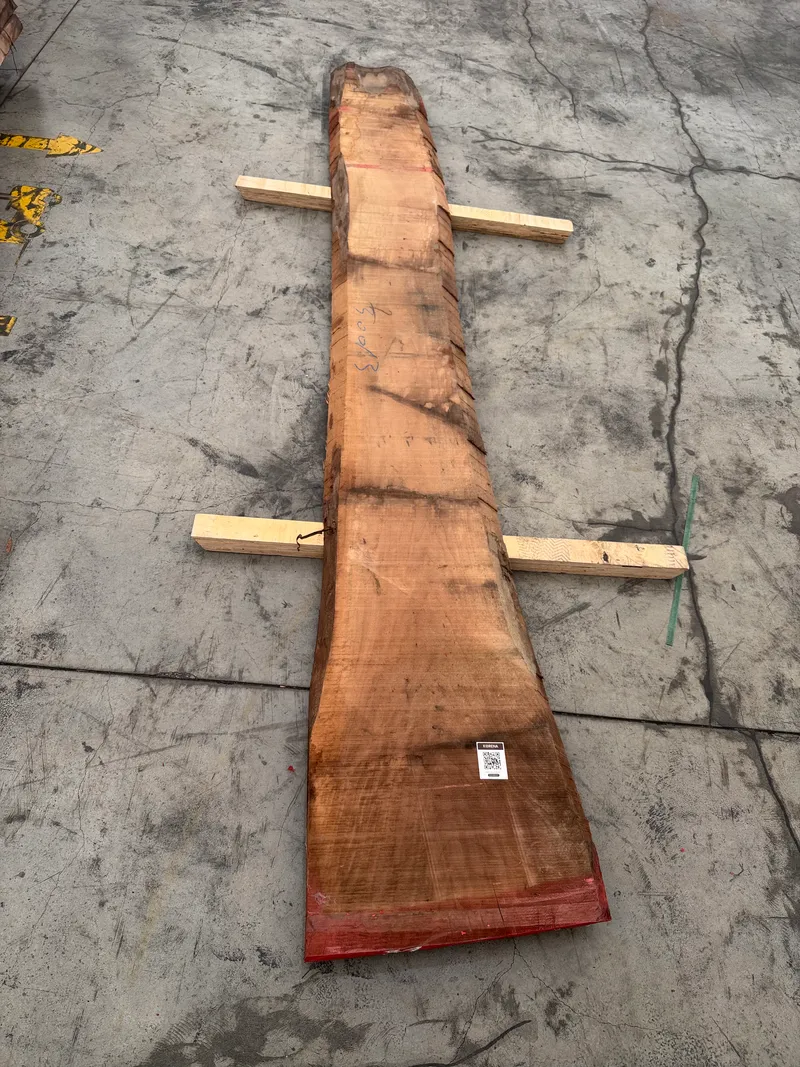
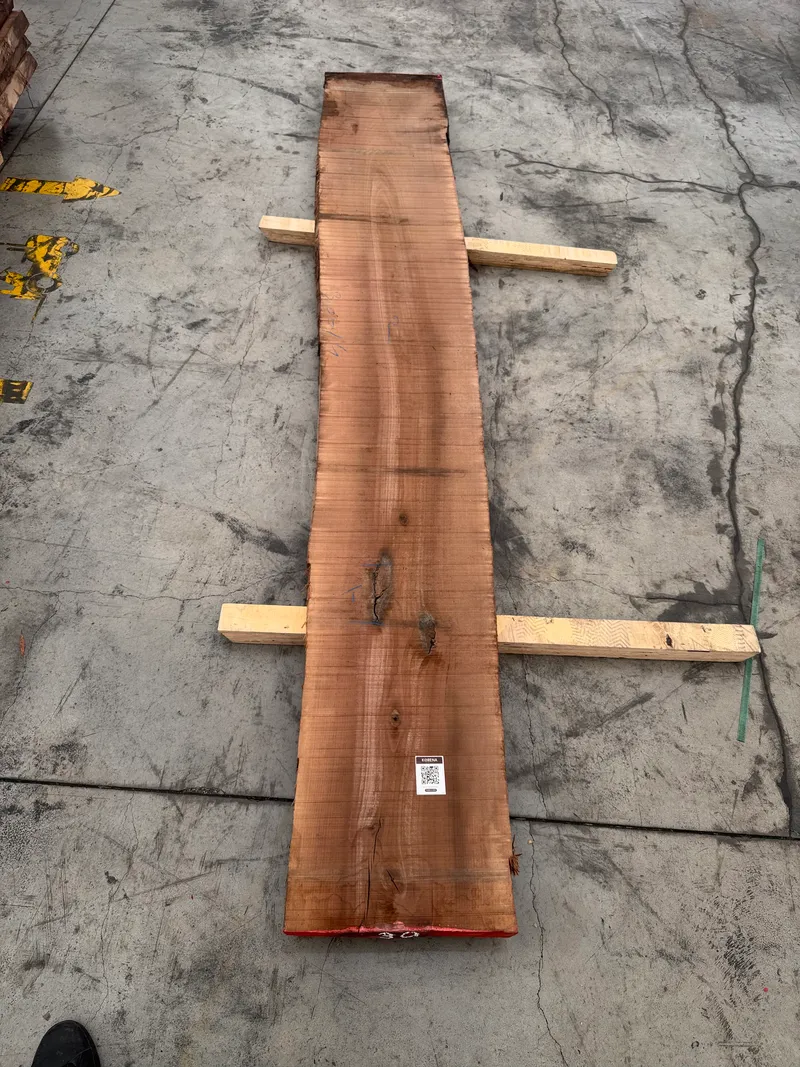
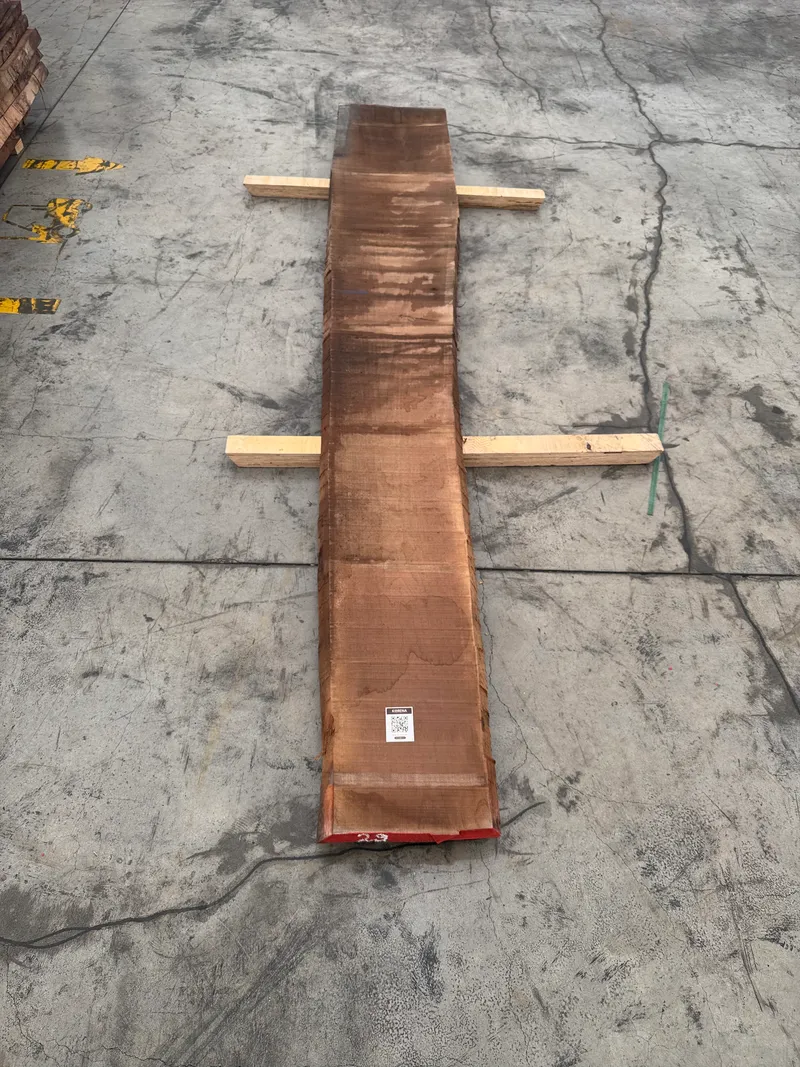
Juglans regia
Warm chocolate-brown hardwood with straight to wavy grain. Works cleanly, finishes beautifully, and reads as the maker's wood across European studios.
Videz lesa
Grain runs mostly straight, with wavy or curly figure where branches and crotches meet. Texture is coarse and uneven, and at around 640 kg/m³ it feels solid in the hand without being heavy on the bench.
Obdelava
Saws, planes, sands, and turns at 4/5, a cooperative wood on hand and machine tools. Wavy or curly sections want sharp irons and a light cut to avoid tear-out; steam-bending is workable but middling at 3/5.
Takes oils, hardwax, and shellac without fuss, a thinned oil coat deepens the brown and lifts any figure. Sands to a fine surface; avoid heavy stain, the natural colour does the work.
Dries at a moderate rate with a tendency to check and honeycomb if pushed. Most EU yards air-dry then finish in the kiln; ask for moisture content and any sticker stain before you commit.
Les se prečno širi in krči, ko zrak postaja bolj vlažen ali suh. Pred načrtovanjem pritrdil ocenite sezonsko delovanje mizne plošče iz lesa European Walnut.
Pričakovano sezonsko delovanje
približno 6,3 mm
Mizno ploščo pritrdite s sponami ali nosilci z utori, ne z lepilom ali trdno privitimi vijaki.
Model linearnega krčenja: širina × (krčenje ÷ 28 % nasičenosti vlaken) × sezonska sprememba vlažnosti. Za les European Walnut uporablja 7,75 % tangencialnega krčenja. To je ocena za načrtovanje, ne jamstvo.
Trenutne prodajne cene za les European Walnut po Evropi na kubični meter brez DDV. Za podrobnosti se dotaknite poljubne cene.
Dust contains juglone and can irritate skin and airways. Wear a mask and run extraction; finished surfaces are food-contact safe.
Juglans regia grows across central and southern Europe, France, Italy, the Balkans, and into Anatolia. EU yards source it from managed orchards and woodland thinnings, with French and Italian stock the most common at trade.
Native to Europe, IUCN Least Concern, and not CITES-listed. Supply is steady from orchard thinnings and managed woodland, though wide single-board slabs in the 80 cm+ range move fast.
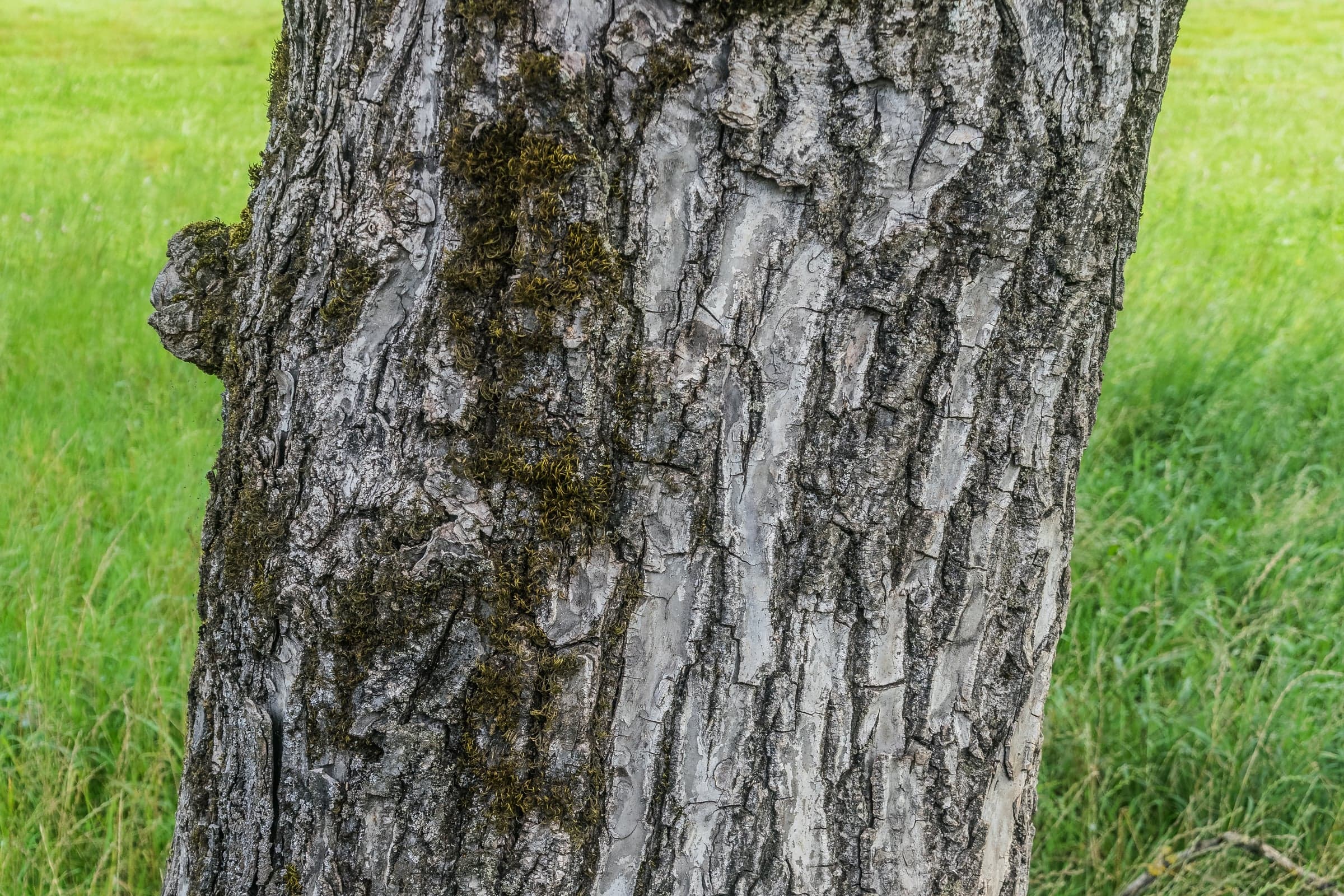
Juglans regia is the premium furniture timber of Europe and has been for four centuries. It combines a colour and figure nothing else here matches with genuinely good working properties and better than average stability, and it is expensive because all three are true at once.
It is grown as much for nuts as for wood. A great deal of slab stock comes from orchard and garden trees felled at the end of their productive life rather than from managed forestry, which is why widths and lengths are irregular and why provenance varies more than for a plantation species.
Colour runs grey brown to mid brown, warmer and lighter than American black walnut, with pronounced streaking and marbling. Sapwood is pale cream and sharply demarcated, and on a live edge slab it is usually left in place as a feature.
Figure is where the value concentrates. Crotch sections, where a trunk divides, produce feather and flame patterns. Stump and root material gives burl. Curly and quilted grain occurs. A plain walnut board and a figured one from the same tree can differ in price by a factor of five.
Look for the streaking pattern, the sapwood line, and any check running from a crotch, which is where drying stress concentrates.
Almost every wood in this catalogue darkens with light. Walnut is the significant exception: it lightens.
Fresh machined walnut carries purple and grey notes that mellow over months and years toward a warmer, lighter honey brown. The dramatic contrast between dark heartwood and pale sapwood softens as the heartwood lightens.
This catches buyers out regularly. If you choose a slab for the deep, almost purple brown it shows on the day it was surfaced, you are choosing a colour that will not persist. A UV inhibiting finish slows the change but does not stop it.
Walnut is a pleasure. At 5,410 N it is hard enough to be substantial without punishing tooling, it machines cleanly, turns well, carves well, glues reliably and takes finish beautifully.
Figured stock is the exception. Crotch and burl grain tears out under a planer, and the answer is light cuts, sharp tooling and a scraper or high angle plane for the final surface. On material this expensive that patience is cheap.
It takes oil finishes particularly well, and a thinned oil coat deepens the brown and lifts the chatoyance in figured sections more effectively than a film finish.
Walnut contains juglone, and the species is a documented sensitiser. Skin and respiratory irritation are reported, and repeated exposure sensitises some people over time. Extraction and a mask matter more here than with most species.
Juglone is also allelopathic, toxic to many plants. Walnut shavings and sawdust should not go into garden mulch or compost, and they should never be used as animal bedding, particularly for horses, where walnut shavings are associated with laminitis.
Volumetric shrinkage of 11.0 percent is among the lower figures in this catalogue, with tangential at 7.0 percent against radial at 4.5 percent.
That is a comparatively narrow differential, and it means walnut behaves better in a wide flatsawn top than oak, ash or beech would. Combined with its appearance, that stability is a large part of why walnut is the premium choice rather than merely the prettiest one.
Decay class 3 makes it moderately durable, which is adequate for protected exterior joinery but not for exposure.
Fine furniture, tabletops, cabinetry, turned and carved work, gunstocks, and any piece where appearance carries the design. It is the species in this catalogue that most rewards a live edge treatment, because the sapwood contrast and the figure are the point.
It is the wrong answer where budget is the constraint and where a large volume of matched material is needed, since consistency across many boards is hard to achieve.
Not CITES listed and assessed as Least Concern. Supply is genuine but limited, and because much of it comes from orchard and garden felling rather than forestry, the chain behind a given slab is shorter and less standardised than for a commodity species. KORENA records the partner yard and region on every listing, which on this species is worth reading.
Vprašanja kupcev
Colour and figure. European walnut, Juglans regia, is lighter and warmer, running grey brown to mid brown with pronounced streaking and marbling. American black walnut, Juglans nigra, is darker and more uniformly chocolate. European is slightly harder at 5,410 N against 4,490 N but slightly less stiff. Most makers choose on appearance, and European walnut is the more variable and figured of the two.
Yes, and it moves in the opposite direction to most woods. Where oak and cherry darken with light, walnut lightens and mellows, losing some of the purple and grey notes toward a warmer honey brown. A UV inhibiting finish slows it. Buying walnut on the strength of its freshly machined colour is a common mistake.
Walnut contains juglone and is a documented sensitiser, with skin and respiratory irritation reported. Extraction and a mask matter here more than with most species. Juglone is also toxic to some plants, so walnut shavings should not go into garden mulch or animal bedding, particularly for horses.
Slow growth, limited size and high demand. Juglans regia is grown as much for nuts as for timber, trees are often felled from orchards and gardens rather than forestry, and clean wide boards are genuinely scarce. Figured material from crotches, stumps and burls commands multiples of plain stock.
Good. Volumetric shrinkage of 11.0 percent is among the lower figures in this catalogue, with tangential at 7.0 percent against radial at 4.5 percent. That relative stability, combined with its appearance, is a large part of why walnut is the premium furniture timber of Europe.
Mehanske lastnosti
Objavljene referenčne vrednosti. Kjer se viri ne ujemajo, je prikazan razpon, za zgornje lestvice pa je uporabljena običajna vrednost.
| Gostota (kg/m³)Masa na kubični meter pri približno 12 % vlažnosti. Težji les je navadno trši in močnejši. | 590–680 kg/m³običajno 640 kg/m³ |
|---|---|
| Trdota po Janki (N)Sila, potrebna, da se jeklena kroglica do polovice vtisne v les. Standardno merilo odpornosti proti udrtinam. | 4,900–5,800 Nobičajno 5410 N |
| MOR: upogibna trdnost (MPa)Upogibna trdnost: obremenitev, pri kateri se nosilec zlomi. | 100–130 MPa |
| MOE: modul elastičnosti (GPa)Upogibna togost: koliko se polica ali mizna plošča povesi pod obremenitvijo. | 9.0–12.0 GPa |
| Radialno krčenjeKrčenje prečno na letnice od svežega do popolnoma suhega lesa. Tako delujejo radialno rezane deske. | 4.5–5.5 % |
| Tangencialno krčenjeKrčenje vzdolž letnic. Tako delujejo tangencialno rezane deske in večina plohov. | 7.0–8.5 % |
| Prostorninsko krčenjeSkupna sprememba prostornine od svežega do popolnoma suhega lesa. Nižja vrednost pomeni večjo stabilnost. | 11.0–13.0 % |
| Naravna trajnost (EN 350)Evropski standard naravne odpornosti proti trohnenju, od 1 (zelo trajno) do 5 (netrajno). | Class 3 — Moderately durable |
Pošljemo vam e-pošto, ko v KORENA prispejo novi plohi iz lesa European Walnut. Vsak kos je edinstven, zato je zgodnje obvestilo pomembno.
Trdota po Janki 5410 N
9 % trši od evropskega hrasta
Za podrobnosti se dotaknite oznake.
640 kg/m³
12,0 % prostorninskega krčenja
4,0/5, povprečje obdelave
EN 350, razred 3
Zakaj ploh stane več?
To so cene surovega lesa. Ploh je najboljši izrez hloda, sušen najmanj eno leto ter nato pregledan in izmerjen kos za kosom. Samo majhen del posameznega hloda postane ploh.
Vir: KORENA Timber Index · Najnovejši podatki: 24. sep. 2026
Prikaži vse regionalne cene